

If you have an outdoor space, you’ve probably realized the role of patio furniture arrangement ideas in making your outdoor space look beautiful. They shape the way you use it. Ultimately, your patio deserves a well-planned layout that can encourage conversation, traffic flow, or simply comfort. Your patio furniture arrangement can not just determine how you use your outdoors, but whether you are going to use it at all.
It’s no wonder that, according to the U.S. Houzz outdoor trends study, 83% of renovated outdoor spaces include a dedicated lounging or seating area. Homeowners are done treating the patio as an occasional-use space. Now, we are designing patios as outdoor living rooms. This means they are designed to be just as inviting and functional as the interiors of our homes.
So, if you’ve tried, like me, to rearrange your patio before a BBQ party at home, you’ve probably done the usual trick of pushing every chair against the edge of the deck. Sure, that might make it look like you're maximizing the space, but the truth is that it makes the patio feel empty and disconnected. After all, have you ever been to a BBQ party where people are drifting away from each other? That doesn’t exist. People naturally drift together for a conversation, to drink coffee around a table, or just because it’s part of human nature. So, pushing each item of furniture apart for the sake of having more space is the most unnatural patio arrangement you could have!
This guide is here to help you if you want to spice up your outdoors. You’ll discover 7 designer-inspired patio furniture arrangement ideas as well as practical tips and expert guidance.
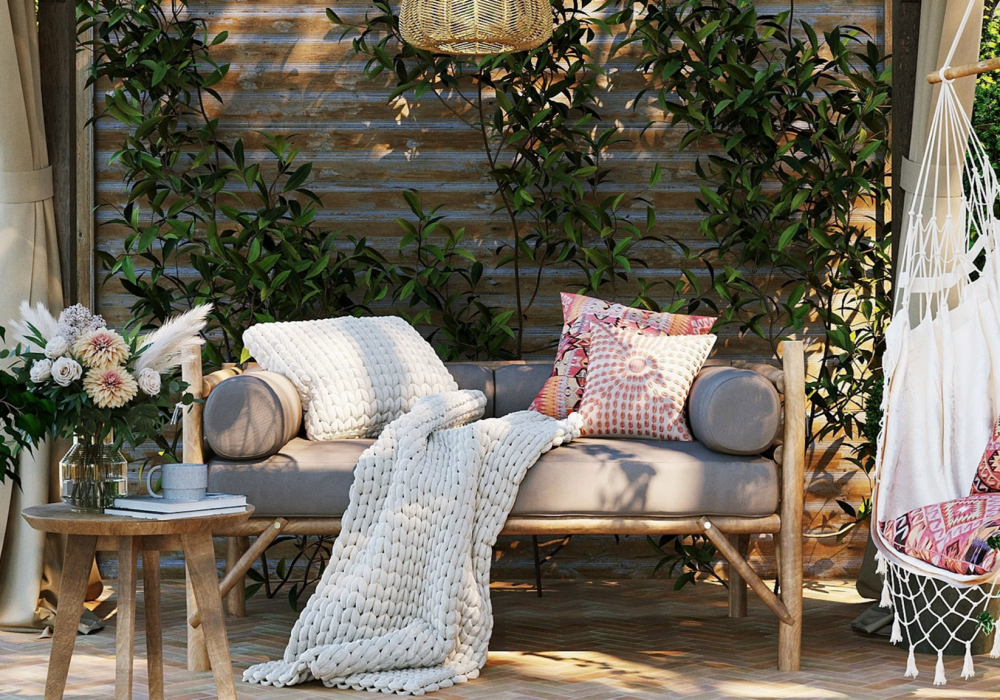
Source Unsplash - CC0 License
Patio Furniture Arrangement Idea #1: Design Around How You Use the Space
It’s easy to start shopping for an outdoor sofa or a dining set. But if you don’t consider how you’ll actually use your outdoor space, you may end up with a patio you never set foot on. The most successful patio furniture arrangement ideas begin with your lifestyle. The layout should support your everyday routine instead of just filling the empty square footage.
Start with Activities
It may sound counterproductive not to start thinking about furniture, but it’s the best way to create a patio you’ll love and use. Think about what you want your patio to do.
For instance, if you love entertaining, your layout should focus on encouraging conversation. This means grouping seating around a central feature such as a table or a fire pit.
If, on the other hand, you want it to be a place for relaxing, a comfortable lounge arrangement with deep seating is likely to take priority over a large dining table.
Families with young children tend to prioritize open floor space for play with seating close enough for supervision.
In short, the patio serves different purposes. More often than not, the patio can serve multiple purposes, which means it becomes important to focus on patio furniture arrangement ideas that can accommodate the activities that matter the most to you.
Choose One Clear Focal Point
Here’s one important rule to remember: Every inviting seating arrangement needs a natural anchor. When you’re indoors, the anchor could be the TV or the fireplace. But when you’re outdoors, your focal point needs to be an element of your layout:
- Coffee table
- Fire pit
- Garden view
- Etc.
Once you’ve established the focal point, you can arrange the seating so that it naturally faces inward. This avoids the unnatural layout with the furniture at the edge of the deck. This setup instantly creates a more intimate and intentional atmosphere.
A modular seating arrangement is especially effective for this type of layout. A set that combines generous seating with a balanced configuration is ideal for gathering around a focal point.
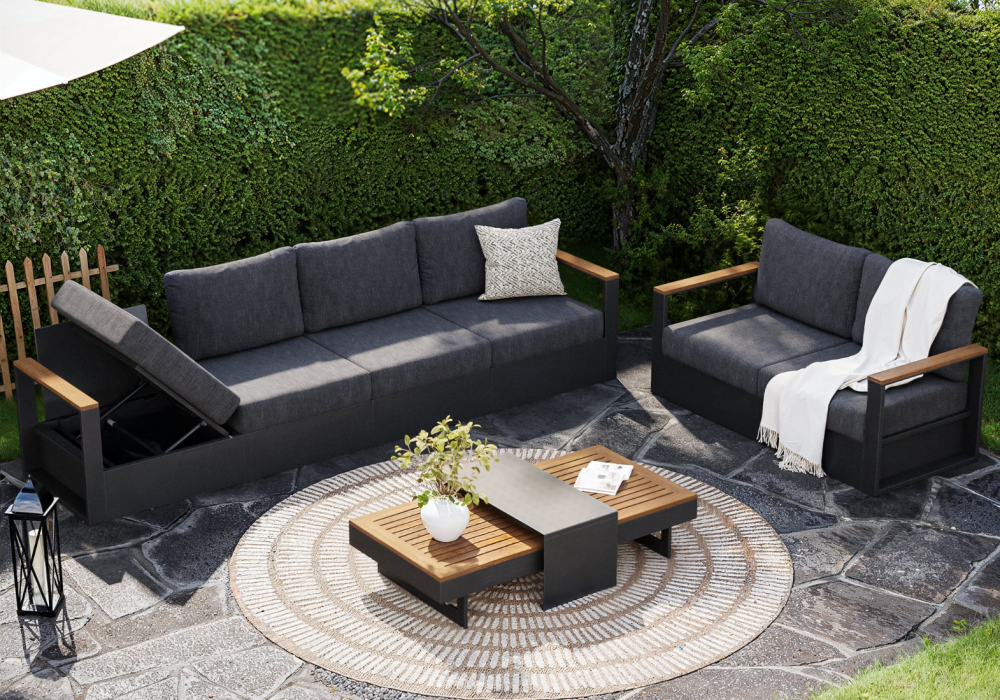
Source Homary
Patio Furniture Arrangement Idea #2: Match the Layout to Your Patio Size
Let the size of your outdoor space determine the layout. According to the National Association of Home Builders, the average patio in a new U.S. home measures around 320 square feet. But that doesn’t mean that all patios, even in modern homes, are built the same. There are significant geographic variations to consider. For example, if you live in the West South Central, the average patio size tends to be under 200 square feet, while in East North Central, it’s more than double that. So, of course, the best layout for one specific size may not work for another.
Small Patios
Every piece of furniture needs to serve a purpose here. You can’t fit a full outdoor living room into the space, so you should focus on creating one comfortable and inviting seating area.
Aim to pull the seating slightly inward around a compact table to create a balanced layout that doesn’t sacrifice valuable floor space.
Typically, furniture with a lighter visual footprint works better. So, you should focus on pieces with open frames or woven materials that will make your patio feel less crowded. This woven outdoor sectional sofa set is a great example of a modular design that keeps an open and airy appearance without sacrificing comfort.
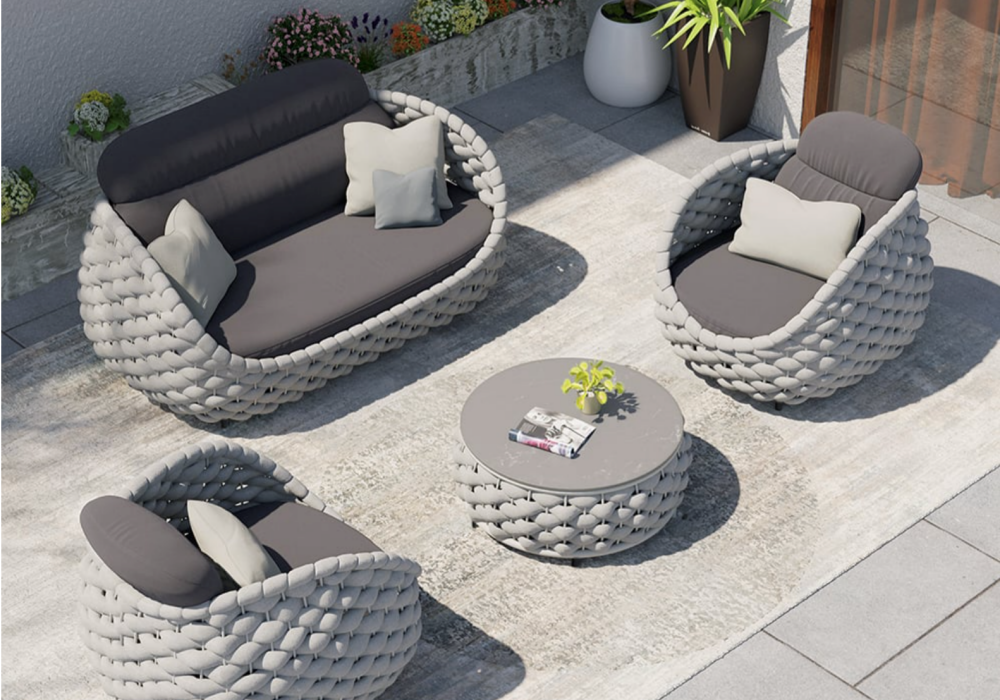
Source Homary
Medium Patios
You’ve got more freedom to create a balanced outdoor living space.
A three-seat sofa paired with a couple of accent chairs creates the inviting layout you need while leaving enough room for circulation. You can also pair it with additional accessories to anchor the arrangement, like you would with indoor decor.
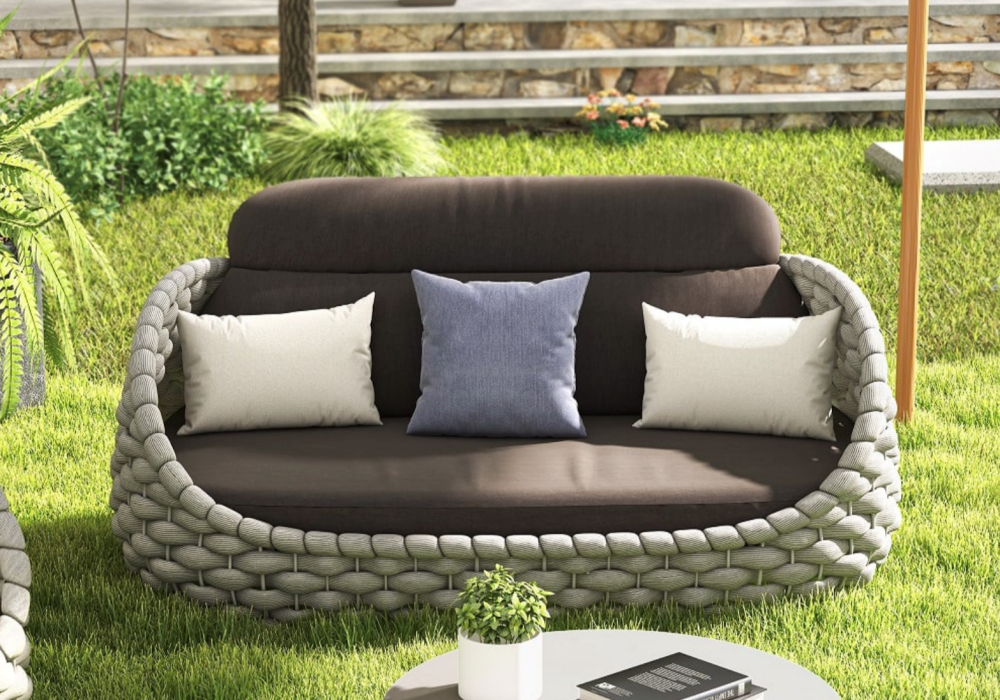
Source Homary
Large Patios
A spacious patio presents an interesting challenge, as you need to prevent the area from feeling too open and disconnected.
The best approach is to create multiple outdoor “rooms” and separate them with decorative elements like planters or rugs:
- One zone dedicated to conversation
- One zone for dining
- One quiet zone (reading or relaxing)
Large sectionals are also great for defining gathering spaces and creating a focal point for entertaining. Here, you don’t want to scatter seating across multiple zones. Instead, you can use the sectional to create the lounging zone. This will leave the remaining space available for other activities.
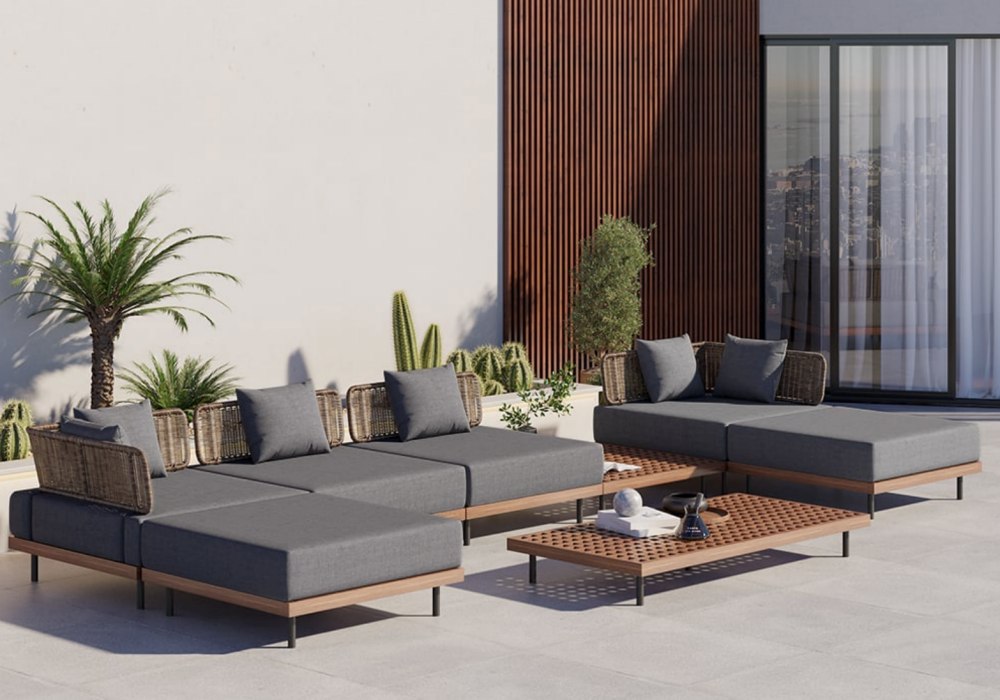
Source Homary
Patio Furniture Arrangement Idea #3: Bringing Seating Together
Your patio needs a layout that encourages people to interact naturally.
The first rule of making your outdoor space useful is to create a space for gathering and conversations. This means that you don’t want to leave the center of the patio empty. Instead, you need to position furniture around the center focal point, whether a rug, table, etc.
Treat your patio like an outdoor living room, which means pull sofas and chairs toward the center, even if it’s only by a foot. Seats should be close enough that people can talk comfortably while still having enough personal space. L-shaped sectionals and setups are best for this purpose.
Patio Furniture Arrangement Idea #4: Zoning
Let’s be clear from the start. You don’t need to create zones in small and medium patios. But breaking up a large patio into distinct zones can make it more welcoming and less overwhelming.
A Lounging Zone
The lounge area is the heart of an outdoor living space. The typical lounge zone arranges sofas and chairs around a central focal point.
What’s a good focal point?
- Coffee table
- Fire pit
- Landscaping feature
It’s a good idea to look for an outdoor sectional sofa with an integrated fire pit if you want to naturally bring your focal point. This helps create an inviting centerpiece that defines the entire lounge area from the start.
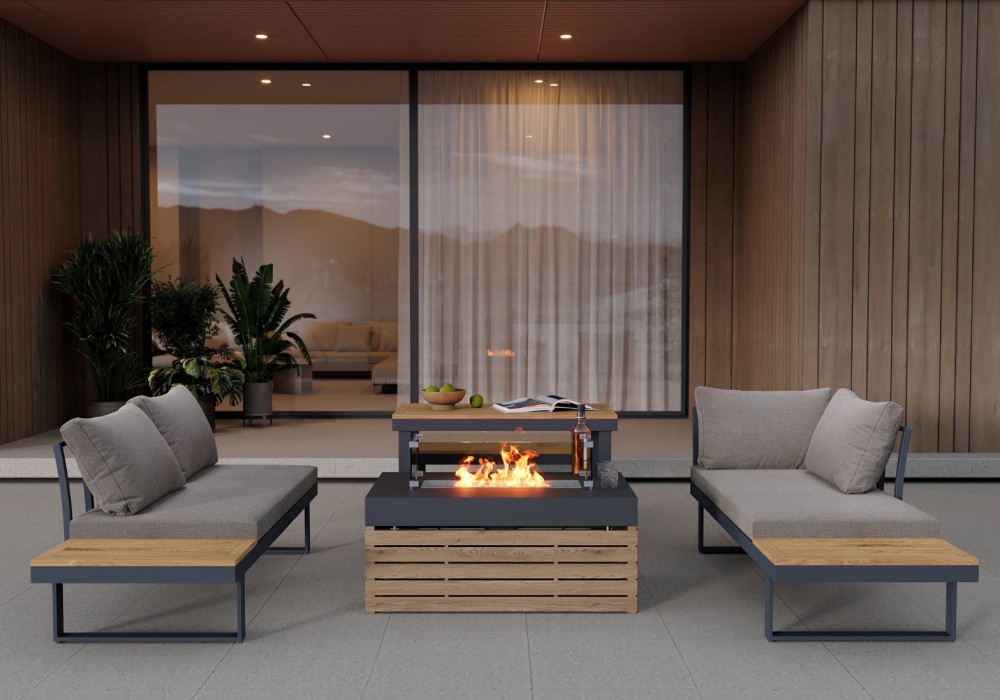
Source Homary
A Dining Zone
It’s a good idea to separate your dining and lounging zones, as this can avoid the cluster effect. It’s a fantastic way to improve the flow of the space.
Do you need physical dividers? No, an outdoor rug between the seating area or even changes in lighting can be enough to create a subtle division.
One last tip: Keep the dining area close enough to the house for easy serving, particularly if you enjoy eating outdoors.
Connect the Spaces Naturally
While zoning your patio helps with the layout, that doesn’t mean zones shouldn’t be connected. You can achieve this by repeating colors, materials, or accessories across the patio to unify the design. This can add the visual continuity you need.
Approach it like an open-plan design to give each zone its purpose and identity while maintaining cohesion.
Patio Furniture Arrangement Idea #5: Traffic Flow
Beautiful patio furniture is one thing, but if you can’t navigate around it comfortably, it’s a design fail. One of the signs of successful patio furniture arrangement ideas is the fact that they prioritize movement as much as seating.
Walkways
You need to arrange furniture in a way that respects natural paths through the patio. It’s never a good idea to force your guests to squeeze between chairs to move! So, your patio layout should always incorporate generous walkways that connect seating areas, dining spaces, and the garden.
This is even more important if your patio regularly hosts larger gatherings.
Necessary Clearance
While it’s easy to focus entirely on the seating arrangement, you also want to consider clearance around patio doors and outdoor cooking areas.
It’s worth considering how the patio changes throughout the day, especially for families with young children. Some areas may be used by children playing during the day, while during the evening, you may choose to keep the patio door open to aerate the house. What does this mean? Your layout should include safe clearance.
Patio Furniture Arrangement Idea #6: Layer Comfort with Accessories
Your patio layout can feel empty without carefully chosen accessories. Here, the goal is not to fill every available surface with layers of decor, rugs, and so on. But your patio needs some layers to get that lived-in vibe that makes it feel inviting and warm.
Anchor the Layout
You can use a central element to anchor the seating arrangement and make it feel intentional, in the same way you would in your living room.
An outdoor rug can define the space and visually connect sofas, chairs, and tables. As a rule of thumb, the front legs of your seating should rest on the rug to create that grounded look you need.
Similarly, seats without a coffee table can leave the patio feeling empty. The table is a practical addition, of course. Where else are you going to put drinks, snacks, books, etc.? But it is also an obvious focal point for gathering.
Add Height & Texture
You can create visual interest without making the patio feel cluttered.
Outdoor cushions and throw blankets instantly soften the furniture and add personality.
Tall planters can frame the seating area and give it some privacy.
The bottom line: Pick accessories that complete your style, rather than adding new aspects to it.
Patio Furniture Arrangement Idea #7: Flexible Furniture
You’re not going to use your patio in the same way every single day. So your furniture arrangement shouldn’t need to be fixed. It’s a good idea to opt for furniture that can adapt to different occasions and needs to allow your patio to evolve without constantly having to redesign the space.
Modular seating is the easiest way to achieve this level of flexibility. This type of furniture allows you to rearrange individual sections as you see fit, which is a game-changer for growing families and people hosting parties.
It’s also worth thinking beyond your current needs. Do you expect your lifestyle to change? As mentioned, if you are focused on growing the family, it’s worth investing in adaptable furniture that can support you both today and tomorrow. Ultimately, nobody wants ot have to buy new patio furniture every couple of years!
Lastly, you can (and should) rearrange your furniture with the seasons. You’re going to use your patio differently in summer or in fall. So, your furniture should be easy to move around.
Expert Tips to Avoid Patio Furniture Arrangement Mistakes
Here’s what you want to avoid to keep your outdoor space comfortable:
- Pushing all the furniture against the edges: No, this doesn’t create more space; it makes the patio feel awkward.
- Choosing oversized furniture: This can be overwhelming for small spaces. Focus on furniture that suits the scale of your area.
- Ignoring traffic flow: You need clear walkways between seating areas, doors, grills, and gardens.
- Forgetting about shade: Nobody is going to use your patio if it’s exposed to direct afternoon sun. It’s worth considering umbrellas, pergolas, or even nearby trees to keep the setup comfortable.
- Adding too many accessories: A couple of accessories add style. More than that, you’re only bringing clutter onto the patio.
Our team at Homary is here to help with design advice if you are unsure about the best patio furniture arrangement ideas for your home.
FAQs
How much space should I leave between patio furniture?
As a rule of thumb, leave enough room for people to move comfortably, but close enough for conversation.
Should patio furniture face the house?
This isn’t necessary. Whenever possible, you want to arrange furniture to take advantage of the best view.
What’s the best layout for a small patio?
Aim to bring the seating slightly inward to make the space feel more welcoming. Most small patios revolve around a compact conversation area with a loveseat or a small sectional sofa and a table.