

When Home Stops Staying in One Place
Modern living is no longer defined by static rooms or fixed boundaries. The living room, once seen as a strictly indoor environment, is increasingly evolving into a space that extends beyond its original walls.
As noted by industry perspectives such as idgcayman, our outdoor spaces are becoming extensions of our interior living spaces. And honestly, if you think about how people actually live today, this shift just makes sense.
We’re not really “staying inside” or “going outside” anymore—we’re moving between moments. Morning coffee by the window, late afternoon light spilling into the living room, or stepping out for a breath of fresh air and coming back in without even thinking about it.
In this context, furniture is no longer limited by placement. Instead, it is defined by movement—how easily it transitions between indoor comfort and outdoor openness without losing its function or identity.
And that’s really what this idea is about: not two separate spaces, but one continuous way of living.
The Idea of One Piece, Multiple Lives
Modern furniture is increasingly expected to serve more than one purpose. A single piece should not only fit into a room—it should quietly adapt to how you actually live.
In everyday interiors, this becomes especially clear.
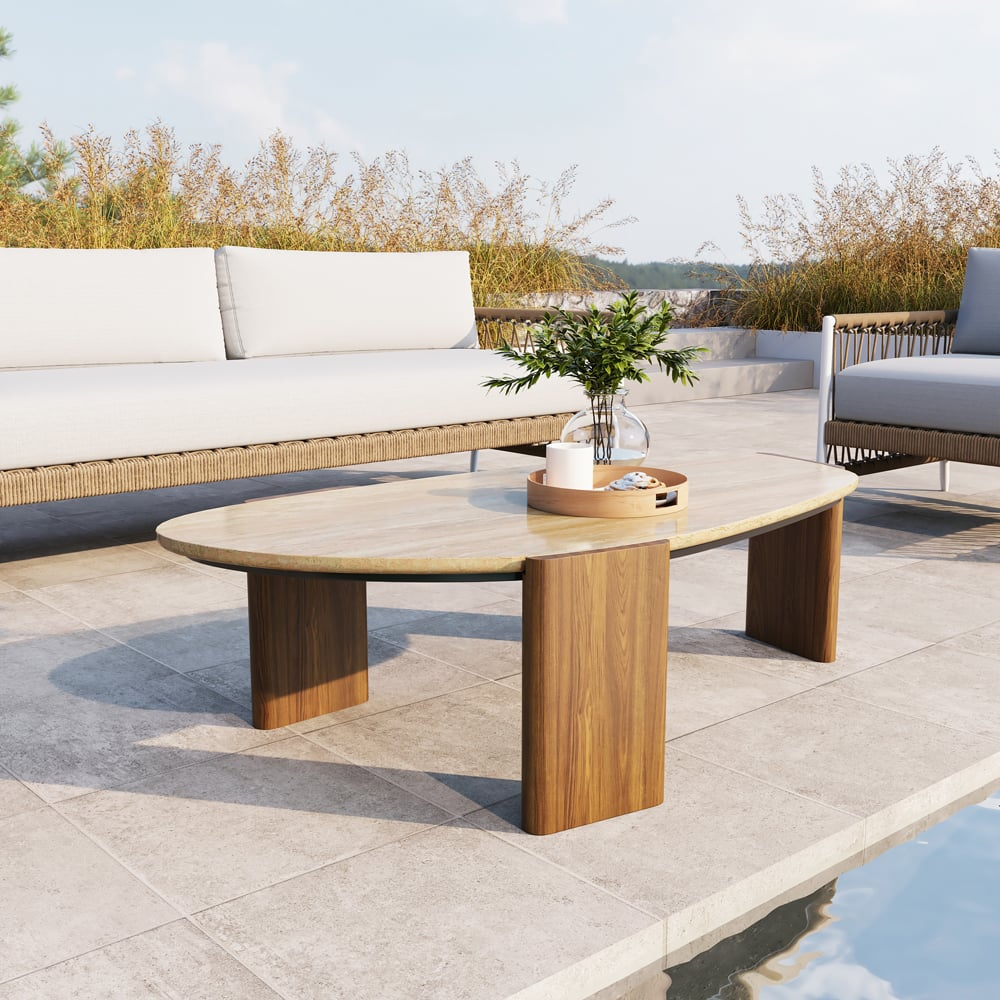
A modern coffee table in the living room is no longer just a center surface in the traditional sense. It’s where daily life naturally happens—coffee, laptops, casual meals, even those quiet moments when you just sit down and pause for a second.
And here’s the interesting part: when the environment opens up—towards a balcony or patio—that same piece doesn’t feel out of place. It naturally continues to function in the same way.
That’s what “multiple lives” really means. Not artificially adding more functions, but enabling a kind of natural flexibility that aligns with real routines.
Morning to Night: How Living Room Spaces Shift
A well-designed living area is never static. It evolves continuously throughout the day.
In the morning, it may serve as a calm setting for coffee and light reading. During the day, it shifts into a flexible workspace or a casual zone for connection. By evening, it transforms again into a social environment for relaxation and hosting.
Furniture must support these transitions without disruption.
A central table plays a stabilizing role in this flow, grounding different activities while remaining visually consistent. Seating arrangements also need to be adaptable, especially in homes where interior areas connect directly to open-air extensions.
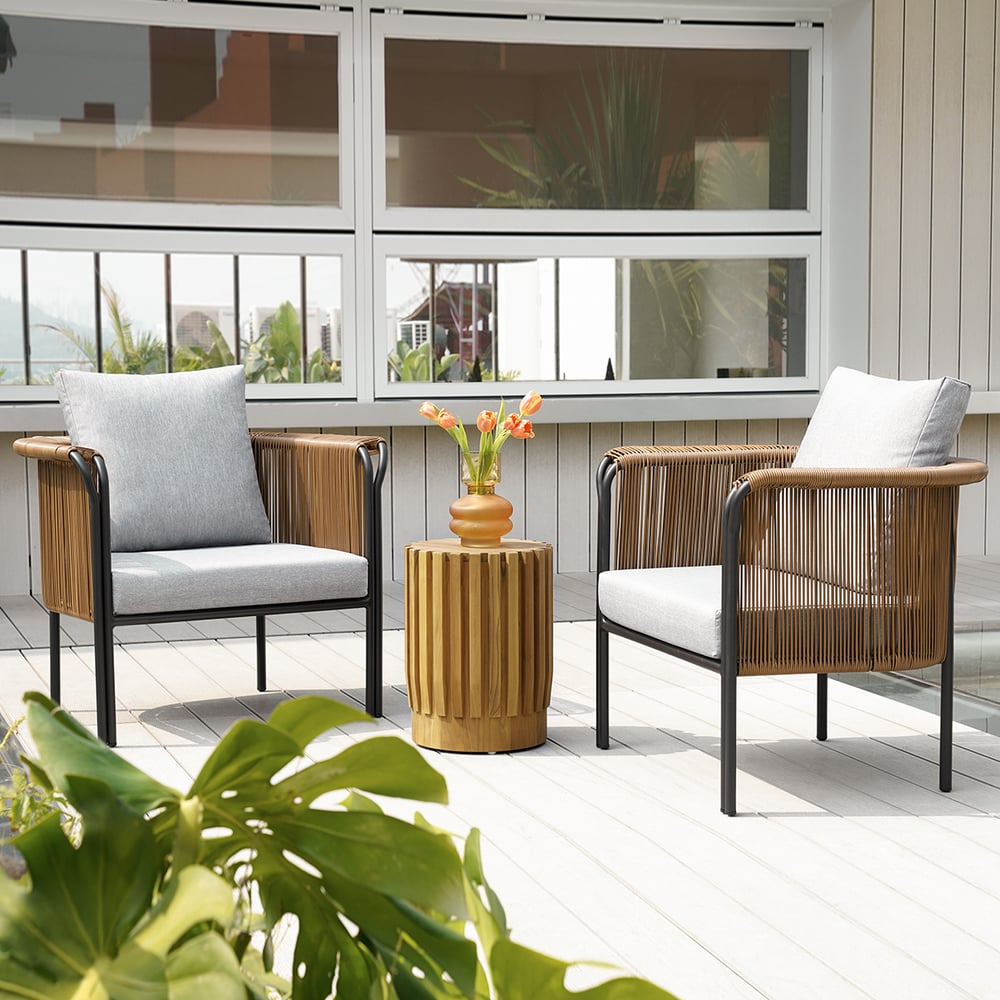
Compact combinations such as a small table and chair setup help bridge these transitions, allowing users to move naturally between indoor and outdoor use without restructuring the space.
Indoor Comfort Meets Outdoor Freedom in the Living Room
This is probably one of the most noticeable shifts in contemporary home design: the line between inside and outside is becoming increasingly fluid.
Balconies, terraces, and patios are no longer treated as separate zones. Instead, they feel like a natural continuation of the main living area.
And once you start living this way, furniture decisions naturally change too.
A compact table-and-chair setup can easily become your indoor breakfast corner in winter, and your outdoor evening spot in warmer seasons. No need to overthink it—just reposition and let it adapt.
Even a central living room table, when thoughtfully designed, doesn’t feel restricted to a single setting. It remains visually and functionally consistent whether placed beside a sofa or closer to an open doorway leading outside.
It’s less about matching separate spaces, and more about maintaining a consistent feeling across them.
Featured Living Room Pieces Designed for Flexibility
To support this kind of lifestyle, furniture needs to be genuinely adaptable—not just in concept, but in everyday use.
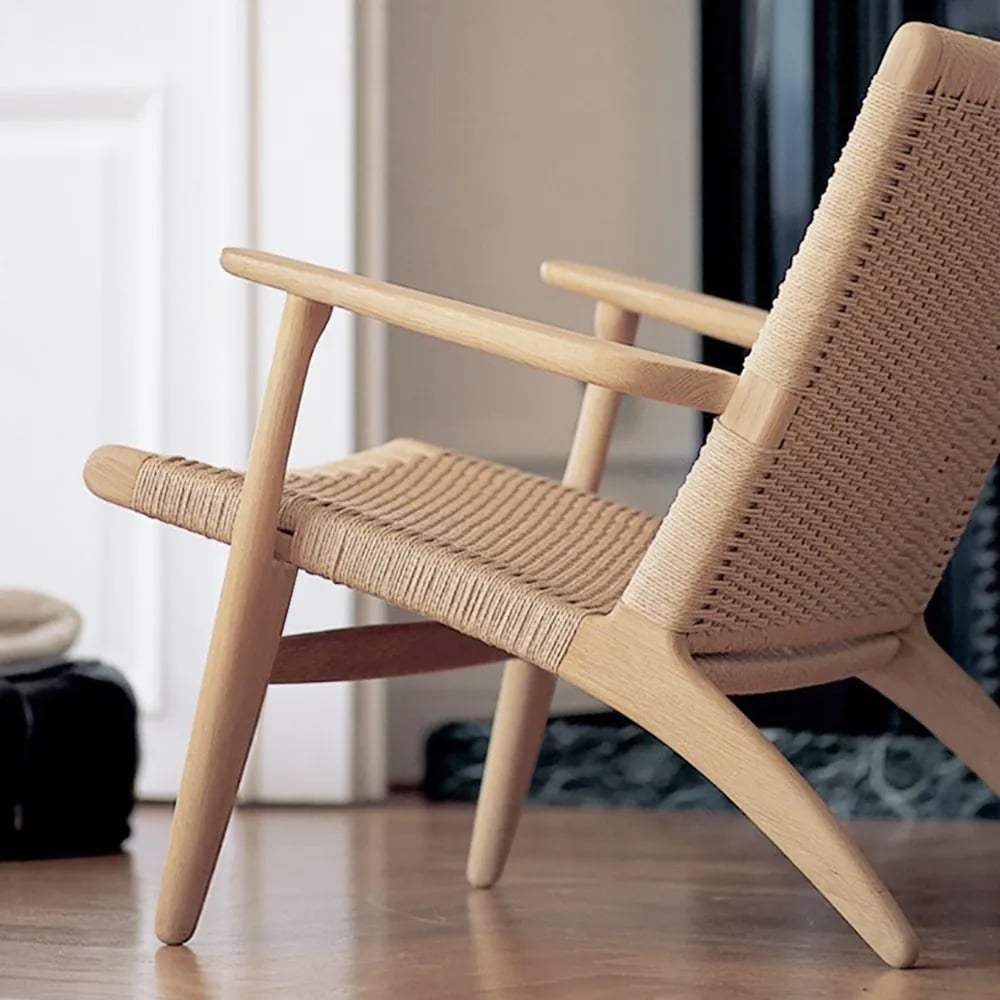
A lounge chair in natural wood with woven detailing brings this idea to life. Its warm material expression allows it to sit comfortably in an interior setting, while its durable construction makes it equally suitable for more open environments. Whether placed beside a sofa or near a sunlit opening, it maintains both comfort and visual continuity.
A compact woven side table with a stone top further enhances this flexibility. In a living area, it functions as a practical surface and subtle storage element. When moved toward an open-air setting, it becomes a lightweight support piece for relaxed moments and casual gatherings.
Paired seating in weather-resistant woven materials extends this adaptability even further. Indoors, they serve as additional guest seating. Outdoors, they naturally form part of a relaxed social arrangement that encourages informal interaction.
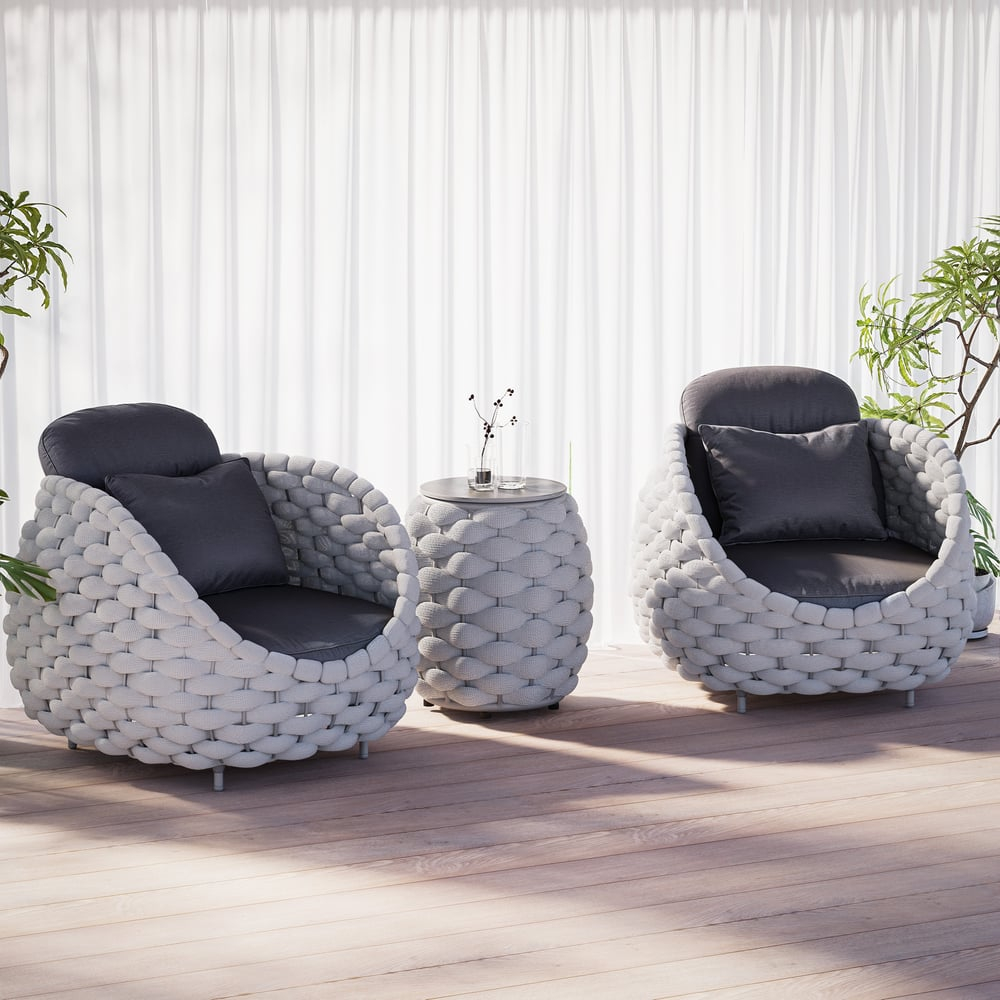
Together, these pieces reflect a clear principle: furniture should not be confined by location, but enriched through movement between environments.
Design That Moves With Your Living Room Lifestyle
Good furniture design today isn’t just about how something looks—it’s about how it behaves in everyday life.
And everyday life is not fixed.
A living room might be a workspace one hour and a social space the next. Sometimes both at once.
That’s why the central table becomes so important. It’s the anchor. Everything else moves around it.
Surrounding pieces—chairs, side tables, seating sets—should be able to shift between indoor and outdoor use without feeling like they belong to a different “set.”
When that happens, the space starts to feel more like one system, instead of separate rooms.
And honestly, that’s when a home starts to feel effortless.
How to Build a Living Room That Expands Beyond Walls
If there’s one mindset shift here, it’s this: stop thinking in zones, start thinking in movement.
Instead of asking “what goes in this corner,” it’s more useful to ask:
- How do I use this space in the morning?
- Where do I naturally move in the afternoon?
- What happens when I open the door to the outside?
Furniture should follow those patterns.
A central table connects everything. Seating should be easy to reposition. And the overall setup should feel just as natural indoors as it does when it extends outside.
No forced transitions. Just flow.
Explore Living Room Furniture That Extends Your Home
A modern home isn’t defined by size. It’s defined by how flexibly it supports your life.
At Homary, our collection is built around this idea of movement—furniture that doesn’t stay fixed in one role or one space.
From sculptural lounge chairs to adaptable side tables and versatile seating sets, each piece is designed to support both indoor comfort and outdoor living.
Explore our outdoor collection and see how one piece can quietly take on multiple lives in your home.