

Do you ever feel frustrated that your furniture doesn’t last as long as others’? After just a few months of use, you may already notice wear, stains, or even damage. In fact, this is often closely related to daily usage habits and maintenance practices. Let’s break it down with some practical advice!
1. Large Living Room & Bedroom Furniture
Large pieces such as sofas, beds, and tables are the most common items in our homes, forming the foundation of everyday living. Because they take up so much space and are used so frequently, any signs of damage or wear—like sagging cushions, scratched surfaces, or faded fabrics—become immediately noticeable. Even if you personally don’t mind, these imperfections can disrupt the overall harmony of the room and reduce comfort. When guests come over, a worn sofa or wobbly table may leave the impression that the home is not well cared for, which is why regular maintenance and timely updates are so important.
Common Causes of Damage:
- Prolonged exposure to sunlight causing wood to crack or fade
- Sofas sinking or fabrics wearing out due to frequent use
- Improper moving leading to loose legs or surface scratches
Maintenance Tips:
- Avoid direct sunlight exposure; use curtains or blinds as protection
- Rotate sofa cushions regularly to distribute pressure evenly
- Lift furniture instead of dragging it when moving; add non-slip pads underneath
- Wipe wooden surfaces monthly with professional wood wax or care oil
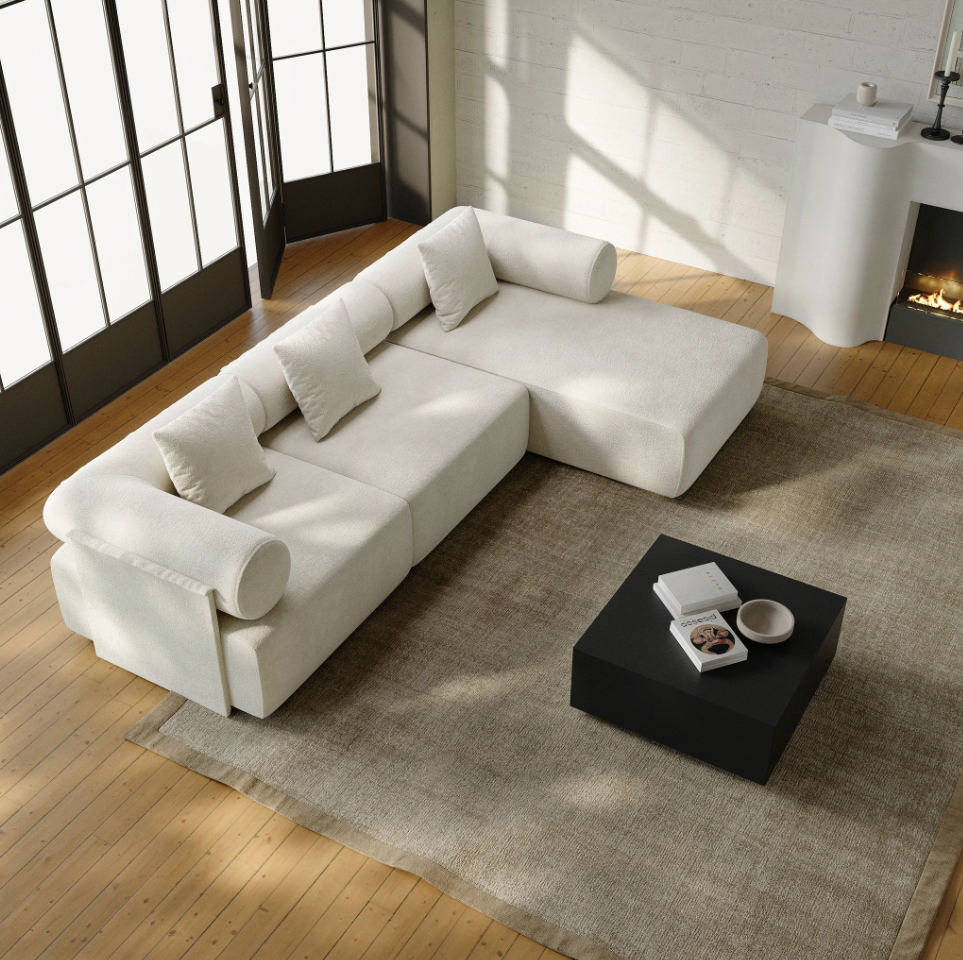
( Source of the images: Serene 2794 mm 3-Piece Modular Chenille Velvet L-Shaped Sectional Chaise Sofa )
2. Decorative Small Furniture
Decorative items—like anime figures, art sculptures, paintings, or collectible crafts—are often chosen for their emotional or aesthetic value rather than for function. Each piece, no matter how small, carries personal meaning: a memory from a trip, a gift from a loved one, or simply a reflection of your taste and personality. Unfortunately, many of these treasures end up neglected, sitting on shelves or tucked into corners, where they collect dust or slowly fade with time. Without proper care or thoughtful display, they risk losing both their visual impact and the sentimental joy they were meant to bring into your daily life.
Common Causes of Damage:
- Accidental drops leading to breakage
- Dust accumulation affecting appearance or even corroding materials
- Humid environments causing metals to rust or wood to mold
Maintenance Tips:
- Place items securely, avoiding high or unstable surfaces
- Dust regularly with a soft cloth; avoid harsh cleaning agents
- Apply anti-rust oil on metal pieces; keep wooden items dry and well-ventilated
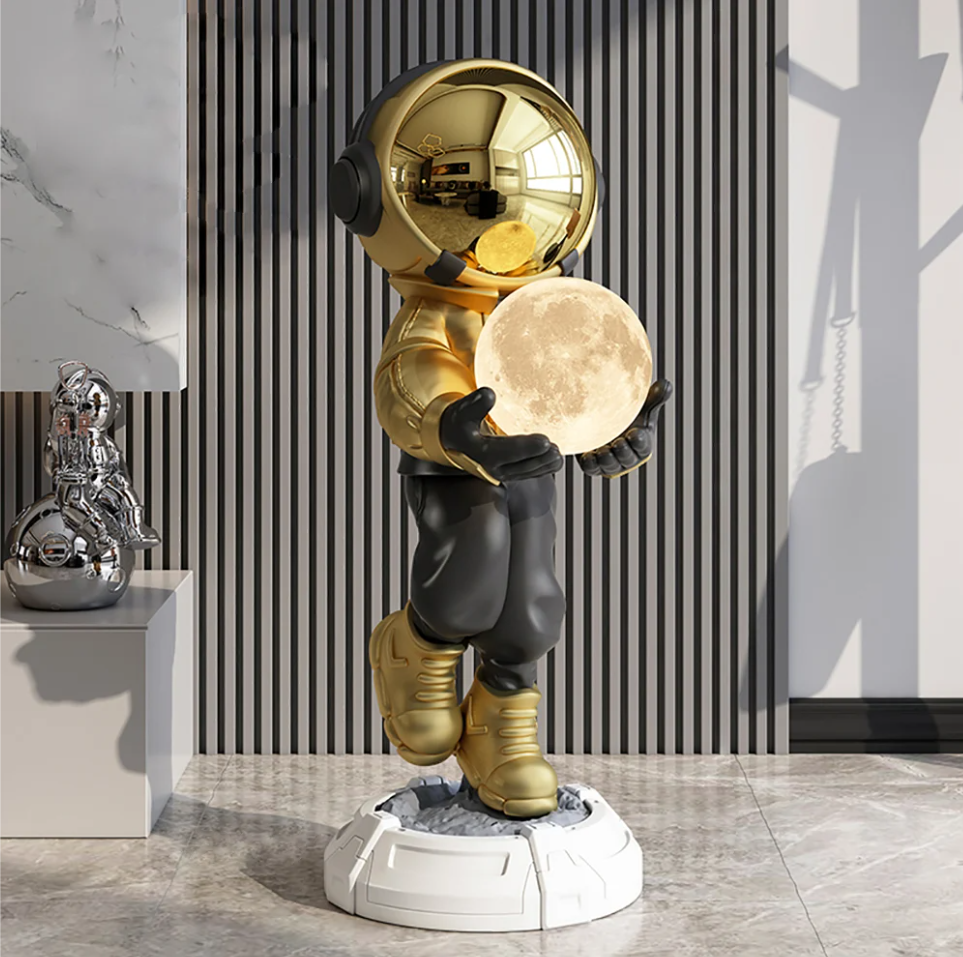
( Source of the images: 732 mm Astronaut Floor Sculpture Figurine Ornament Art Decor with Ball Lamp USB Charging )
3. Bathroom Furniture
Bathroom furniture is especially tricky to maintain since it’s constantly exposed to high humidity, splashes of water, and temperature fluctuations. Over time, cabinets may swell or warp, mirrors fog up and lose their clarity, and metal hardware begins to rust or corrode. These issues not only affect the look of the bathroom but also its functionality, making everyday use less pleasant. What makes it more troublesome is that bathroom furniture is often built-in or tightly fitted, so replacing it isn’t as simple as swapping out a chair or table. This is why proper care, regular cleaning, and moisture protection are essential to extending the life of bathroom pieces.
Common Causes of Damage:
- Prolonged humidity leading to mold, swelling, or rusted fittings
- Residual cleaning products corroding surfaces or mirrors
- Poor drainage causing water accumulation that damages the base
Maintenance Tips:
- Keep the bathroom well-ventilated; use an exhaust fan regularly
- Use mild, neutral cleaners instead of strong acids or alkalis
- Place waterproof pads under furniture to prevent water damage
- Check hardware regularly and replace rusted parts promptly
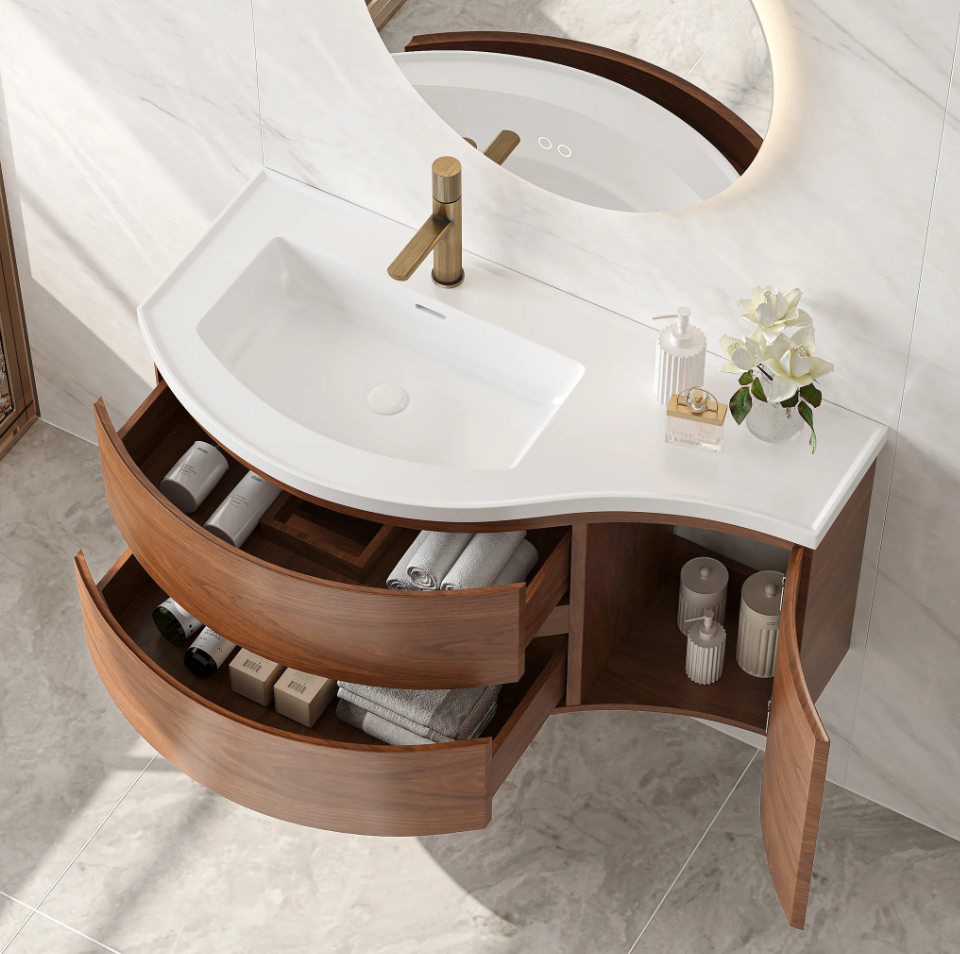
( Source of the images: 889 mm Floating Curved Bathroom Vanity Half-Circle Bathroom Cabinet Walnut )
4. Kitchen Furniture
The kitchen is second only to the bathroom when it comes to furniture wear and tear, as it faces constant exposure to oil, heat, moisture, and heavy daily use. Countertops can get scratched from chopping or stained from spills, while cabinets may swell from steam or loosen over time due to frequent opening and closing. Hardware such as handles and hinges often bear the brunt of this activity, becoming squeaky or unstable. And let’s be honest—a cluttered or damaged kitchen doesn’t just spoil the look of the space, it can also dampen the joy of cooking and hosting.
Common Causes of Damage:
- High cooking heat causing cracks or discoloration on countertops
- Oil stains penetrating materials when not cleaned in time
- Direct contact with knives or cookware causing scratches
Maintenance Tips:
- Always use heat-resistant mats; avoid placing hot pots directly on surfaces
- Clean up grease and oil immediately after cooking
- Use a cutting board to protect countertops from knives
- Apply specialized kitchen cleaners regularly for deep maintenance
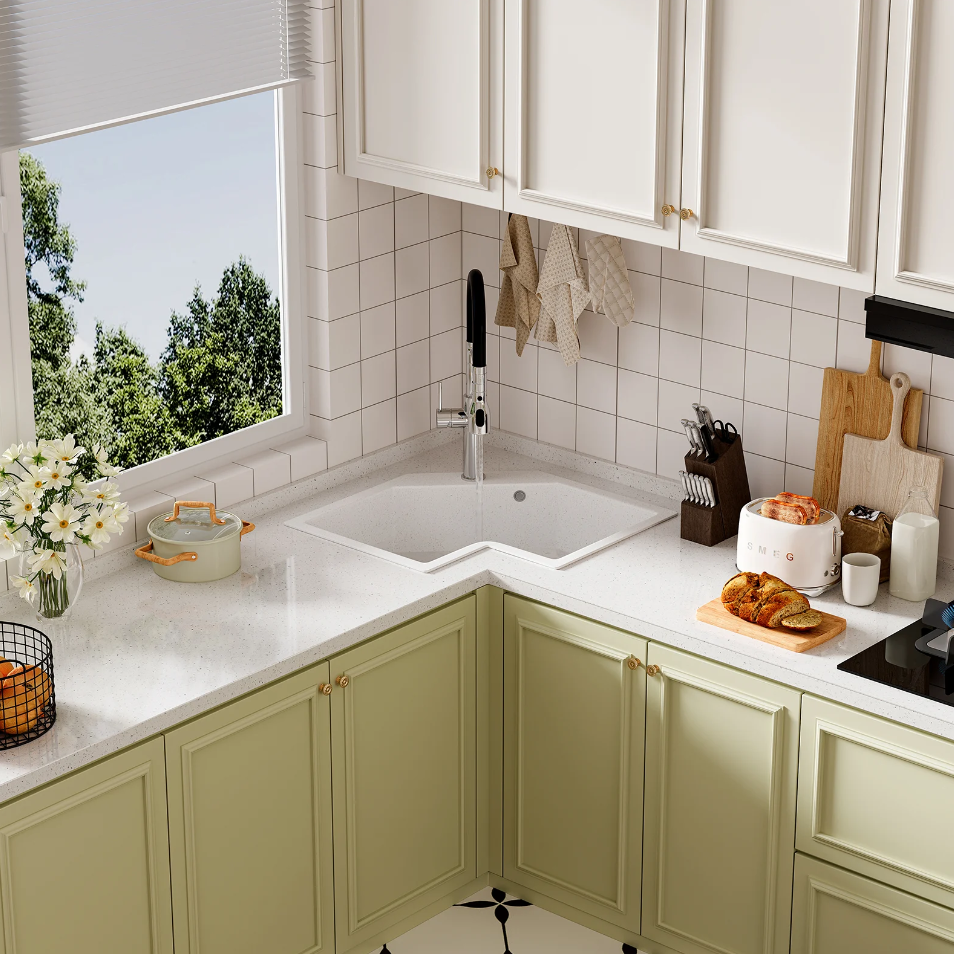
( Source of the images: Drop In Corner Irregular Kitchen Sink White 635 mm Quartz )
Furniture durability isn’t just about materials—it’s about how you use and care for it every day. With the right habits, your furniture can stay beautiful and functional for years to come.