

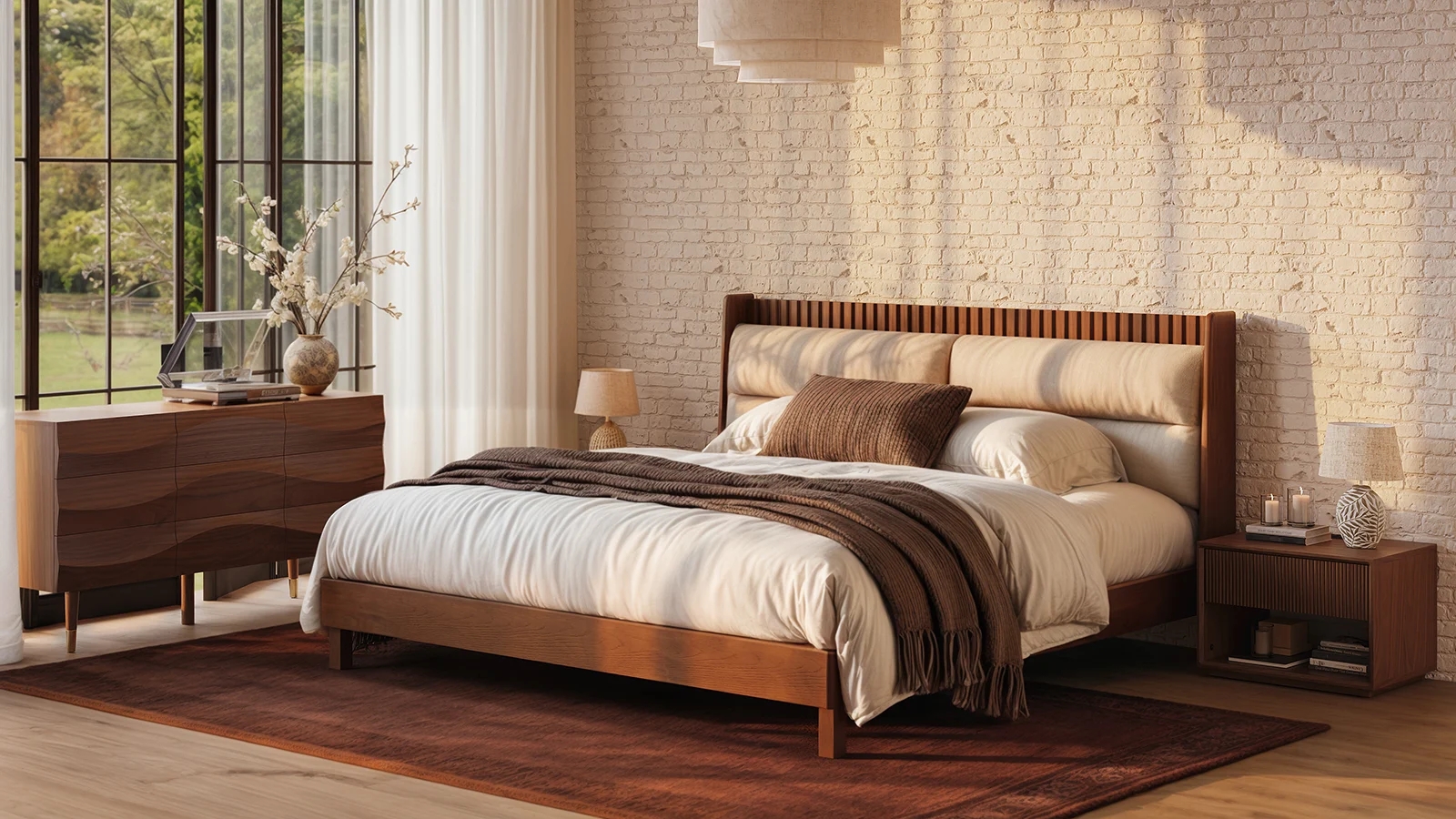
If your bedroom feels “off,” it’s often not about your decor style. It’s about where the big pieces sit—especially your bed, mirrors, and (increasingly) a desk tucked into a corner.
A feng shui bedroom layout doesn’t require crystals, strict rules, or moving heavy furniture across the room. Think of it as a placement framework: you’re arranging the room so it feels safer, calmer, and easier to rest in.
This guide focuses on the furniture decisions that make the biggest difference—bed placement feng shui, mirror placement, and feng shui bedroom desk placement—with rental-friendly, kid/pet-safe, under-$200 fixes when the “ideal” layout isn’t possible.
The one rule that guides a feng shui bedroom layout: the commanding position
Most feng shui rules get easier when you learn one concept: the commanding position.
In plain terms, it means your most important spot (your bed, or your desk chair) should be placed so you can see the door, but you’re not directly in line with it. Many modern guides describe the bed’s commanding position as being placed diagonally from the door, giving you sight of the entrance without feeling exposed—see Naturepedic’s explanation of the “commanding position” (2026).
Why it matters (even if you’re not “into” feng shui): when you can see the entry and feel supported from behind, your body tends to relax. It’s the bedroom version of picking a seat in a cafe where you can watch the door.
Pro Tip: If you only change one thing in your feng shui bedroom layout, change the sightline and support around the bed. It’s the highest-impact move.
Bed placement feng shui rules (plus realistic compromises)
Your bed is the visual and functional center of the room—so it’s also where feng shui rules are most consistent.
Rule 1: Put the bed in command—see the door, but don’t line up with it
Do: place the bed where you can see the bedroom door from the pillows.
Don’t: place the bed so the foot points straight at the door (often called the “coffin position”). You’ll see this advice echoed across mainstream design sources; for example, Homes & Gardens frames the commanding position as the bed placement rule that changes how you approach layouts (their 2025 piece on the bed placement feng shui rule).
If you can’t move the bed (no heavy lifting):
- Adjust what you can control: shift the nightstands, lighting, and rug so the bed feels anchored and the entry path doesn’t point aggressively at the bed.
- Add a visual “soft break” in the line between door and bed: a runner rug, a low bench, or even a laundry basket that lives elsewhere (yes, clutter counts).
Rule 2: Give the headboard a solid backing
A solid headboard against a solid wall is one of the most repeated recommendations because it creates a sense of stability.
Do: use a sturdy headboard and keep it flush to the wall.
Don’t: rely on an open or wobbly setup if you can avoid it.
If your bed sits under a window:
- Use curtains at night and aim for a headboard that feels substantial.
- Keep the window area visually calm—minimal decor on the sill, no messy cords.
Rule 3: Avoid “pressure” over the bed (and keep it safe for kids/pets)
Even without feng shui, heavy objects above a bed are a bad idea.
Do: keep the wall above your headboard light—art that’s well secured, not heavy shelves.
Don’t: mount heavy shelves or large objects over the bed.
If you have kids who climb or a pet that jumps, treat this as a non-negotiable safety rule.
Rule 4: Aim for balance on both sides (even if it’s not perfectly matched)
In many rooms, symmetry is the easiest way to create calm.
Do: try to give the bed two sides—two nightstands, or at least two “landing zones” for essentials.
Don’t: cram one side against a wall unless you truly have no other option.
If your bedroom is small:
- Use slimmer nightstands, wall-mounted shelves, or one full nightstand plus a compact stool/shelf on the other side.
- Consider a set that keeps cords and clutter contained. For example, Homary has nightstand options with drawers and built-in charging—useful when you’re trying to keep surfaces clear.
Mirror placement rules (and what to do if you can’t move the mirror)
Mirrors are where feng shui gets strict—mostly because a mirror can change how your bedroom feels instantly.
Rule 1: Avoid a mirror facing the bed
This is the most consistent mirror rule: don’t place a mirror where it reflects you in bed.
Why it matters (practically): a mirror adds movement and visual stimulation in a room that’s supposed to cue rest.
If you can’t remove the mirror (rental or fixed closet doors):
- Cover it at night with a fabric panel or curtain.
- Angle it so it doesn’t reflect the bed.
- Reposition the bed’s sightline with a taller headboard or a canopy-style frame (even a simple fabric canopy can change what’s visually “active”).
Rule 2: Don’t put mirrors where they bounce energy straight back out the door
Many feng shui sources discourage mirrors directly facing a door. If you’re working with a tight layout, a safer default is a side wall placement.
Rule 3: Keep mirrors from reflecting clutter
A mirror doubles whatever it reflects.
Do: position mirrors where they reflect light, calm surfaces, or a pleasant view.
Don’t: position a mirror to reflect piles of laundry, open shelving chaos, or your work setup.
Kid/pet note: secure mirrors like you mean it
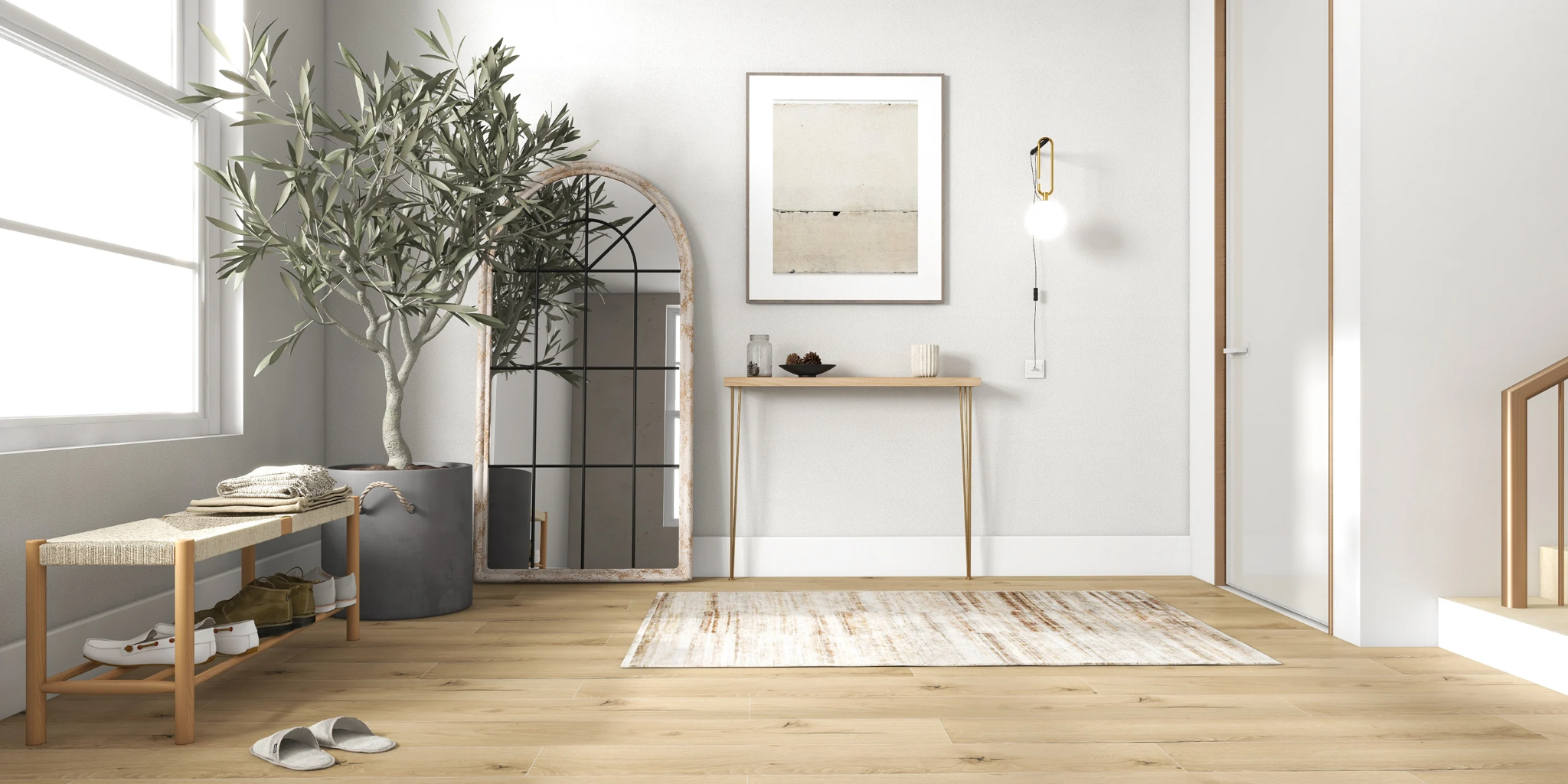
Floor mirrors look great—and they can also tip or shatter.
If children or pets use the room, consider choosing a mirror style that’s stable and placing it where it’s less likely to be bumped. If you want a full-length look, you can browse options like Homary floor-standing mirrors, then prioritize secure placement and stability.
Feng shui bedroom desk placement rules (for a small office corner)
A desk in a bedroom is common now—and it’s exactly where layout stress shows up: cords, screens, and “work mode” bleeding into rest.
The good news: the desk uses the same guiding rule as the bed.
Rule 1: Put your desk in command (see the door, don’t sit with your back exposed)
Do: place your desk so you can see the door while seated.
Don’t: sit with your back to the entry if you can avoid it.
This “command position” idea is described in office feng shui guides as well; for example, YardiKube explains the desk command position as seeing the entrance without being directly aligned with it (see their 2024 guide to the “best feng shui office layout”).
If the desk must face a wall (common in small rooms):
- Add a small mirror angled to see the entry without reflecting the bed.
- Use a supportive chair and keep the area behind you visually “solid” (a bookcase, a closed storage cabinet, or even a curtain).
Rule 2: Keep work energy contained
If you’re trying to sleep better, the main desk rule is simple: reduce visual reminders of work.
Low-effort ways to do that:
- Use a lidded box or basket to hide cords and adapters.
- Close the laptop when you’re done.
- Keep paper piles off the nightstand.
Rule 3: Use a vanity-as-desk strategy when space is tight
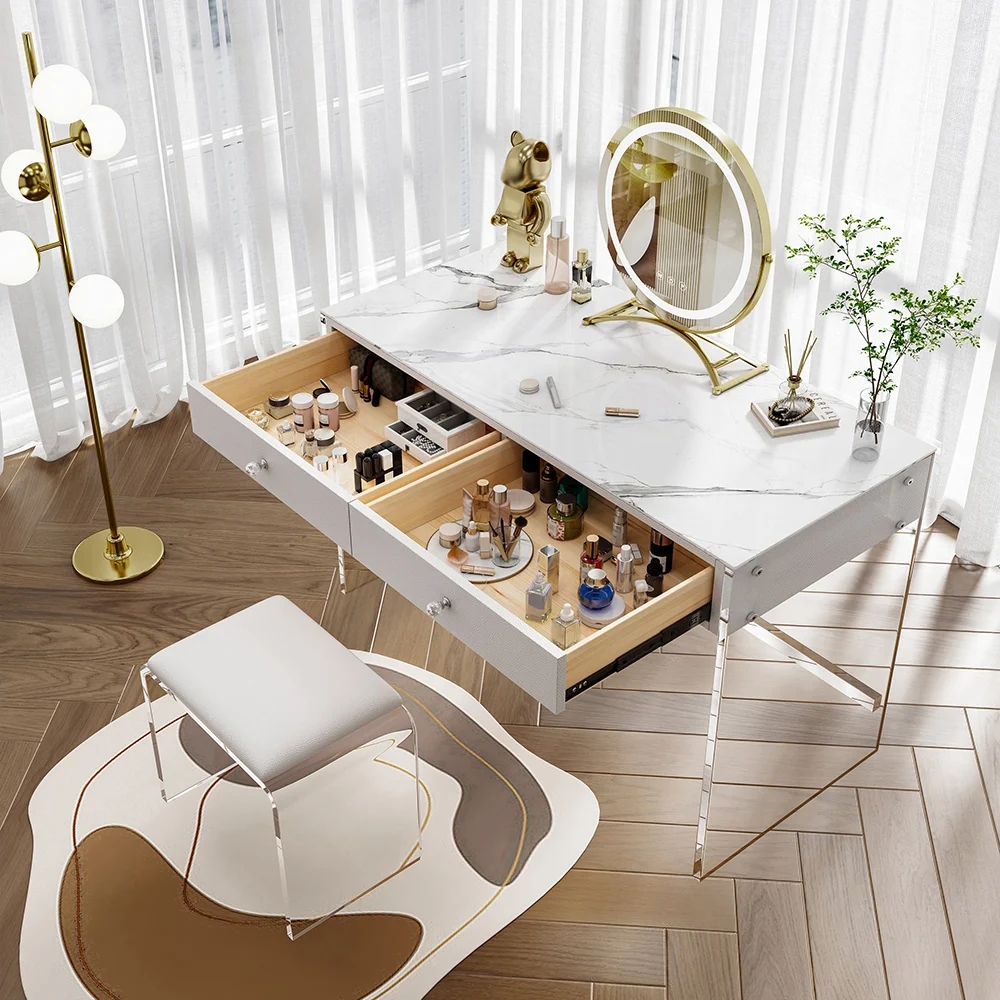
In a bedroom, a compact vanity can double as a desk—often with better storage and a smaller footprint.
If that’s your setup, look for designs with drawers so you can put work items away quickly. For examples, you can check compact vanity desk options from Homary.
The kid/pet-safe feng shui checklist (non-negotiables)
Good “energy flow” shouldn’t come at the expense of safety. If children or pets spend time in the room, treat these as baseline rules.
Anchor tall furniture
The American Academy of Pediatrics’ HealthyChildren.org recommends steps like anchoring furniture, using drawer stops, and keeping heavy items lower to help prevent tip-overs (see their 2021 guidance on preventing furniture and TV tip-overs).
Practical application:
- Anchor dressers and tall shelving.
- Avoid putting heavy items on top of tall furniture.
- Keep tempting objects off the top of furniture (kids will climb for them).
Keep walkways clear
A calm bedroom layout includes clear pathways:
- door → bed
- bed → closet
- bed → bathroom
This matters for feng shui flow and for midnight trips when you don’t want a pet toy underfoot.
Avoid sharp corners and unstable pieces near the bed
If you can’t swap furniture, soften corners with:
- corner guards
- a small round stool instead of a sharp-edged side table
- moving the piece a few inches to open up the walkway
Under-$200 upgrades that improve a feng shui bedroom layout fast
If you can’t move heavy furniture, think in layers: light, textiles, and visual order.
Add warm, layered lighting
Lighting is one of the quickest ways to change how a room feels.
CORT recommends using table and floor lamps to brighten and soften a small bedroom, and notes feng shui advice to avoid low-hanging suspended fixtures.
Budget-friendly approach:
- One warm bulb bedside lamp
- One floor lamp in a dark corner
Make the nightstands do more work
A cluttered surface reads as “unfinished business.”
Quick fix:
- Clear the top of your nightstand (leave only the essentials).
- Add a small tray so loose items feel contained.
Control cords (especially near the bed and desk)
Cords create visual noise.
Under $25:
- cable clips
- a cord box
- adhesive hooks to route cables behind furniture
Use textiles to make the room feel grounded
If you can’t change furniture placement, you can change cues:
- a rug that visually anchors the bed
- heavier curtains at night if the bed is near a window
- calmer bedding colors (neutral/earthy)
FAQ
Is it bad feng shui to have a mirror facing the bed?
Many feng shui guides recommend avoiding a mirror that reflects the bed, and Homes & Gardens includes this in their feng shui mirror rules (updated 2026). If you can’t move the mirror, covering it at night is a common workaround.
What if my bed has to be in line with the door?
Do the best compromise: shift the bed slightly off-axis if you can, and soften the straight “line” with a rug, a bench, or a visual buffer. Keep the pathway uncluttered so the room still feels calm and functional.
Can I put a desk in my bedroom according to feng shui?
Yes—just try to place the desk so you can see the door and you don’t sit with your back exposed. The goal is to reduce the feeling of being “on edge” while working.
How do I do feng shui in a rental without drilling or repainting?
Focus on what’s reversible: lighting, curtains, decluttering, cord management, and small furniture swaps (like a slimmer nightstand). These changes often have an outsized impact on how the room feels.
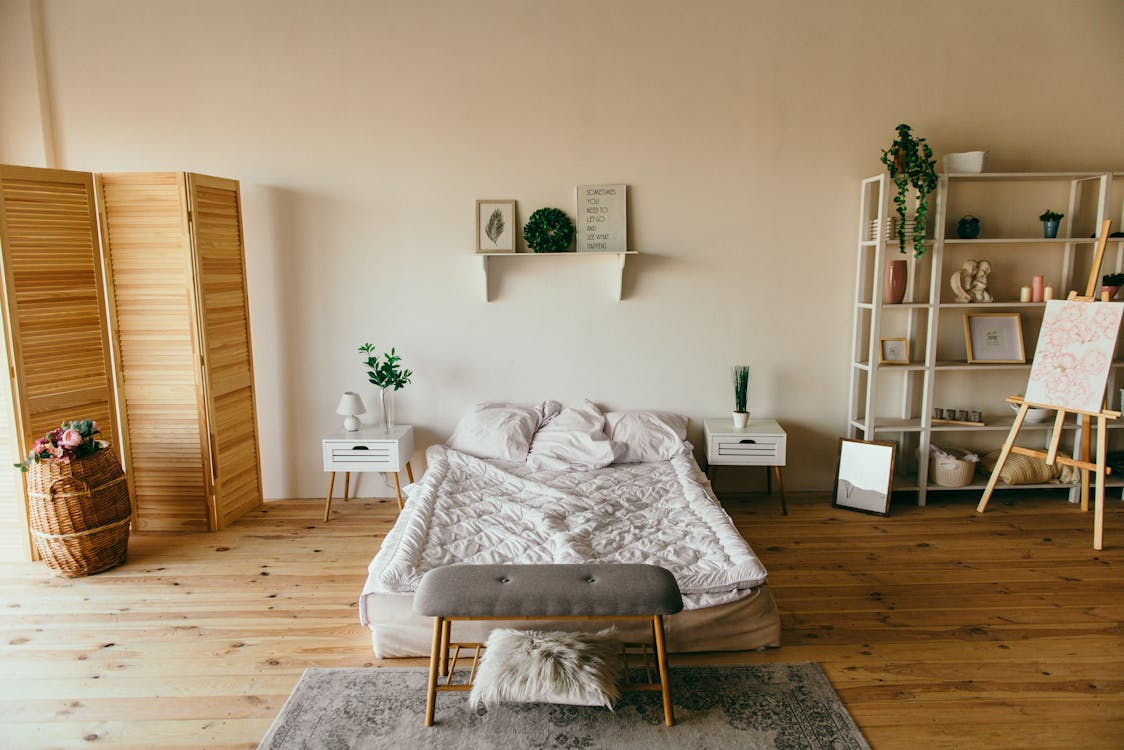
Source: Pexel
Next steps (a simple 10-minute reset)
If you want a quick win tonight:
- Stand in your bedroom doorway and note where your eyes land first.
- Make sure the bed feels supported (solid headboard/wall) and not aggressively lined up with the door.
- Cover or angle any mirror that reflects the bed.
- Clear one surface (nightstand or desk) so the room reads as “done.”
If you need a few practical pieces to make the layout work without heavy moves, start with the highest impact items: a compact nightstand for balance, a stable mirror that won’t face the bed, or a small desk/vanity with drawers to hide work clutter.