

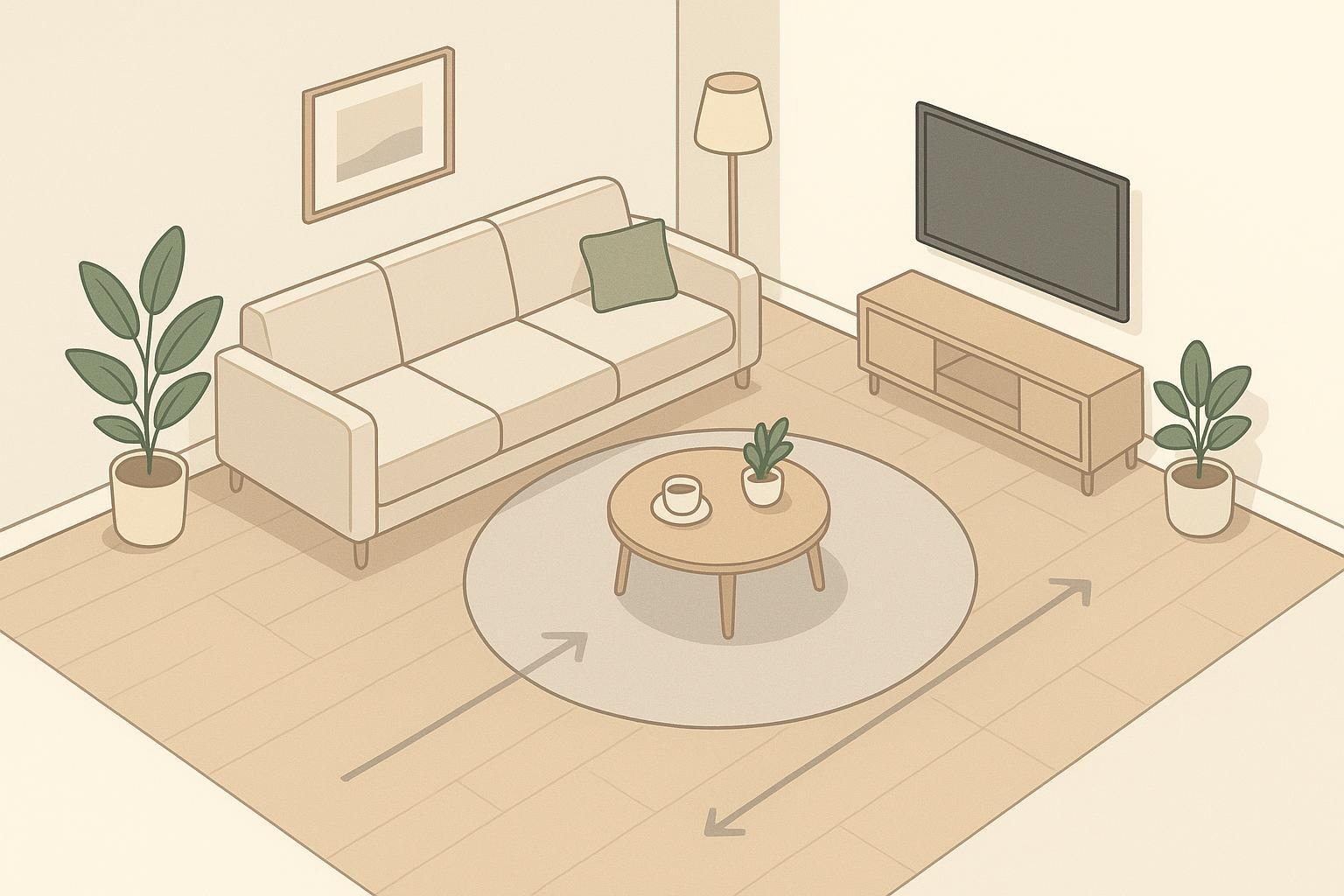
A living room can be perfectly “nice” on paper and still feel… nothing. You sit down and can’t relax. The room feels cramped even when it’s clean. Or the TV takes over everything, and the space stops feeling like a place people actually live.
Feng shui is one way to troubleshoot that feeling—less as superstition, more as a practical lens: Can you see what’s coming? Can you move through the room easily? Does the layout support conversation, rest, and daily life?
This guide walks you through a feng shui living room layout step by step, with special notes for small apartments, open concept spaces, and TV-focused rooms.
Before you move anything: a 5-minute “flow audit”
You’ll make better layout decisions if you start with the room’s reality (doors, windows, traffic paths) instead of your wish list.
- Stand at the main entrance to the living room. Where does your eye go first?
- Trace the natural walking path from entry → seating → adjacent rooms.
- Notice the pinch points (where you have to sidestep furniture).
- Identify your true focal point. In most rooms it’s either the TV, a window view, or a fireplace.
- Measure two things:
1) the longest wall
2) the “usable rectangle” where seating can go without blocking doors
Pro Tip: If the room is open concept, do the audit twice—once from the home’s main entry and once from the “living zone” entry. Open plans often have two energy/traffic routes.
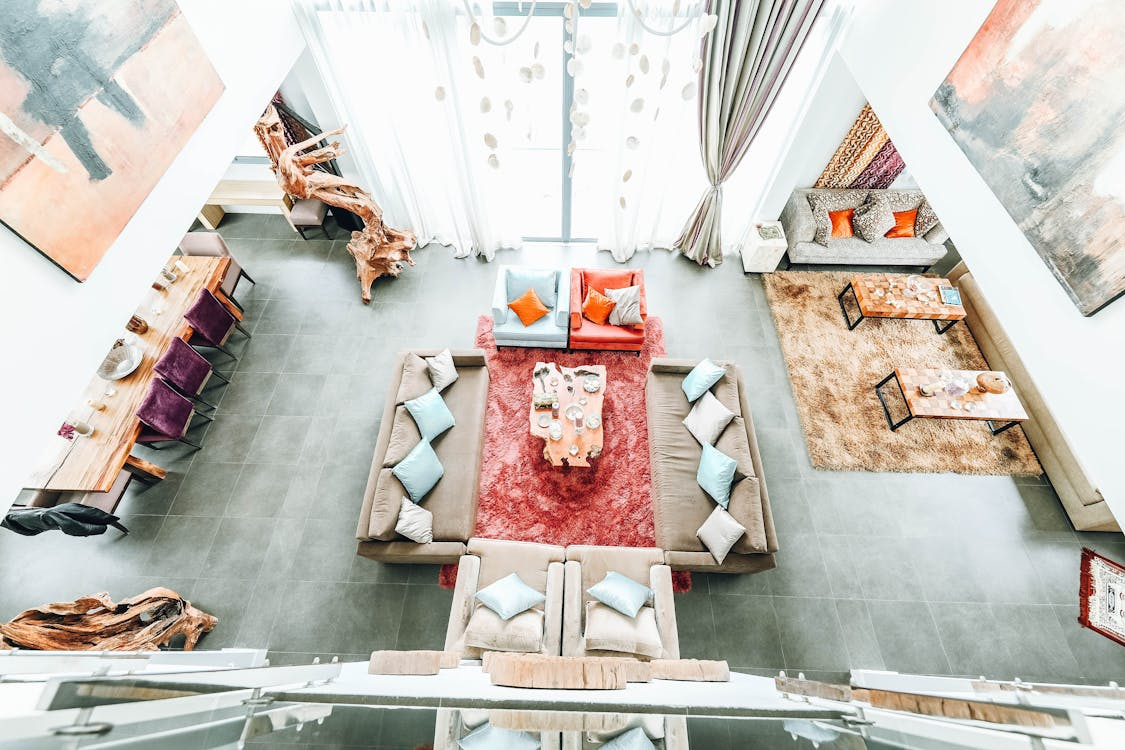
Source: Pexel
The core rule: put your main seat in the “command position”
In feng shui, the command position means your primary seat (usually the sofa) has a clear view of the entrance without being directly in line with it. Many feng shui living room guides emphasize this because it tends to create a feeling of ease: you’re not startled by someone entering, and you don’t feel exposed.
What it looks like in real rooms
- Best case: sofa backed by a solid wall, angled or positioned so you can see the door.
- Good-enough case: sofa floats, but you “ground” it with a console table or low shelf behind it.
- Try to avoid: sofa directly in line with the doorway (like it’s in the path of a rushing current).
Livingetc’s sofa placement piece adds a helpful nuance: the sofa doesn’t have to be pressed flush to the wall; leaving a little breathing room can improve circulation and comfort. It also suggests using a console table behind a floating sofa to create support (Livingetc, 2024) in “Feng Shui Sofa Placement: How to Get the Layout Right”.
If your sofa must go under a window
Sometimes small apartments don’t give you a choice. If the sofa ends up under a window:
- Use substantial curtains or shades to create a feeling of support when closed.
- Add a sofa table behind it (even a slim one) to “anchor” the seat.
- Prioritize lighting on the sides of the sofa (not only overhead) to keep the area feeling stable at night.
Step-by-step feng shui living room layout (use this order)
This is the simplest process I’ve found for arranging a feng shui living room layout without getting stuck in endless micro-adjustments.
Step 1: Protect the entry path
Your entry path is the room’s “on-ramp.” If the first few feet are cluttered or blocked, the whole room feels tight.
- Keep the first sightline reasonably open.
- Avoid placing a large chair, tall shelf, or sharp-cornered table right where people naturally walk.
- If your living room entry is a straight shot into the seating area, soften it with a rug, plant, or round-edged piece that gently redirects movement.
Step 2: Place the sofa (anchor the room)
Set the sofa first. Everything else supports it.
- Aim for command position.
- Give the sofa a sense of backing (wall, console table, or even a low bookcase).
- Leave enough space that you can walk past the sofa without turning sideways.
Step 3: Build a conversation “U” or “L”
A feng shui living room should invite people to sit down and connect—not feel like a waiting room.
- Add one of these:
- Two chairs facing the sofa, or
- One chair + one ottoman, or
- A loveseat if the room allows
The goal is to create a shape that holds people in the space (U or L) while leaving a clear route through the room.
Step 4: Choose a coffee table that doesn’t “cut” the space
Many feng shui interior guides recommend rounded shapes to soften harsh edges.
If you live in a small apartment or have kids/pets, this advice also happens to be practical.
If you’re browsing ideas, here are neutral examples:
Step 5: Define the “zone” (especially in open concept rooms)
In open concept spaces, feng shui often comes down to zoning: making the living area feel like a “room” without building walls.
Use two or three of these together:
- A rug that fully fits under the front legs of seating
- A sofa as a divider (back facing dining/kitchen, living zone in front)
- Lighting that belongs to the living zone (floor lamp + table lamp)
- A console table behind the sofa
Step 6: Balance activity and calm (TV, lighting, and clutter)
Once the furniture is placed, tune the energy:
- Lighting: use a mix of ambient, task, and accent lighting so the room can shift from bright/daytime to warm/evening.
- Clutter: don’t treat this as a moral issue; treat it as airflow. If you constantly have to move items to sit down, the room can’t feel restful.
Feng shui living room layout for a small apartment
Small spaces magnify everything: clutter shows faster, awkward pathways feel tighter, and oversized furniture makes the room feel like it’s shrinking.
Real Homes’ small living room feng shui tips highlight basics like choosing appropriately sized furniture, mindful seating, and regular decluttering in their piece “5 small living room Feng Shui tips pros say will add zen” (Real Homes, 2024).
The small-space layout template
Use this as your default “feng shui living room layout small apartment” plan:
- Sofa on the longest wall or floated with a console table behind it
- One chair (not two) unless the room can handle it
- Round coffee table (or two nesting tables) to reduce sharp edges
- One tall plant in a dead corner
- One floor lamp + one table lamp for warmth
⚠️ Warning: If you only have one big purchase left, choose the right-size sofa. A too-large sofa will break flow more than any decor “fix” can solve.
If you need seating ideas that stay compact, browsing sofas and loveseats can be helpful for scale comparison.
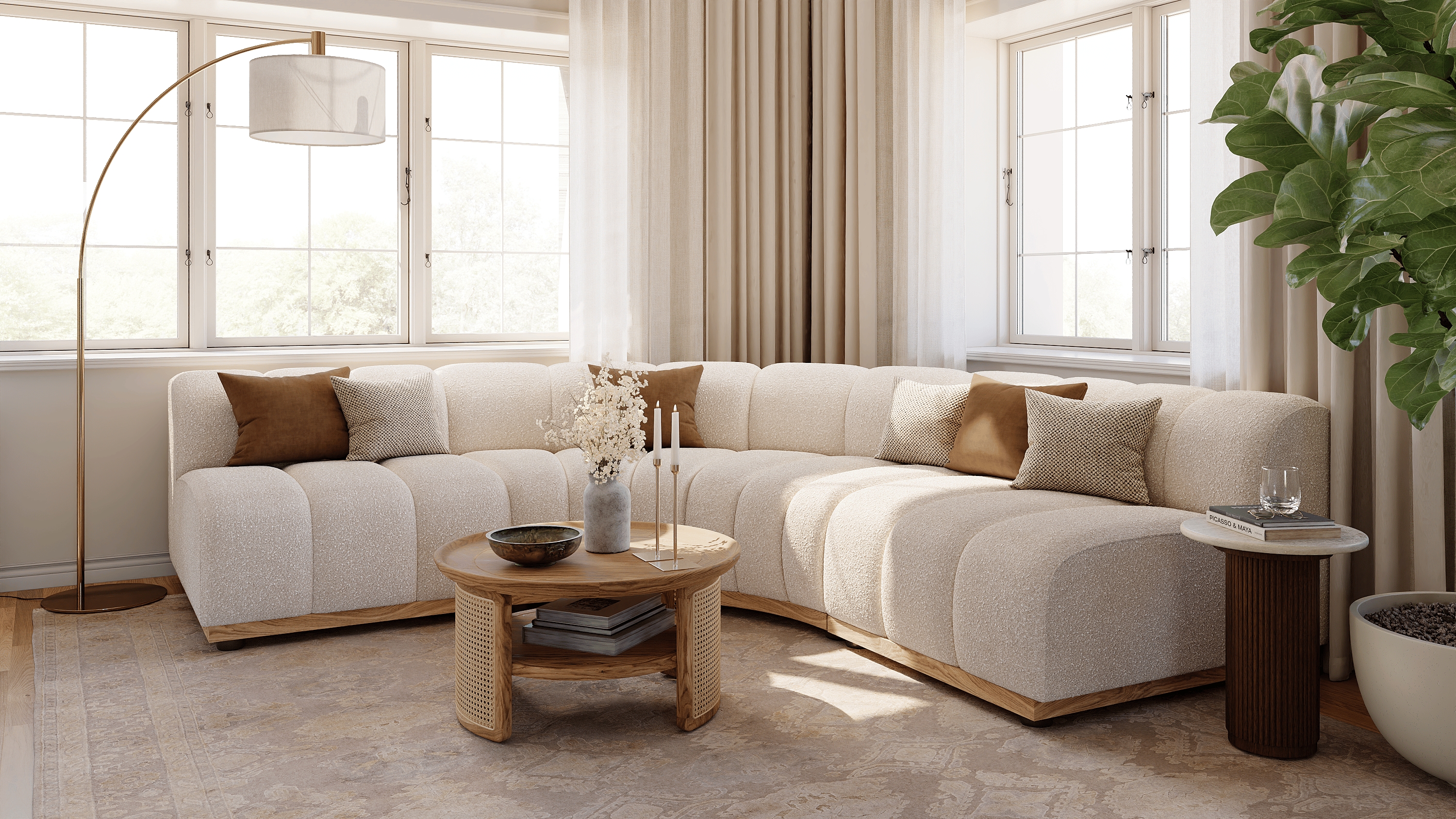
Source: Homary “Sofa & Loveseat” Inspiration
Feng shui open concept living room layout
Open concept living rooms can feel amazing—or oddly exposed. Feng shui-friendly open concept planning is about:
- clear routes people naturally take
- anchored seating (so the living zone doesn’t feel like furniture floating in a warehouse)
- a defined center (rug + coffee table + lighting)
One practical open-plan overview with zoning and flow ideas is Planner 5D’s “Feng Shui Living Room Layout: 6 Arrangements to Try Now” (Planner 5D, 2026).
Open concept layouts can feel amazing—or oddly exposed. Feng shui-friendly open concept planning is about:
- clear routes people naturally take
- anchored seating (so the living zone doesn’t feel like furniture floating in a warehouse)
- a defined center (rug + coffee table + lighting)
Quick zoning checklist
- Can you walk from the entry to the kitchen without cutting through the center of your seating area?
- Does the sofa back create a “soft boundary” for the living zone?
- Does the rug make the living space feel intentional?
If the answer is no, start by rotating the sofa or adding a console behind it.
Feng shui living room layout with TV
A TV adds a second kind of “gravity” to the room. It naturally becomes the focal point—even if you don’t want it to.
The goal isn’t to pretend the TV doesn’t matter. It’s to keep the room from turning into a TV shrine, so the space still supports conversation, rest, and everyday life.
The best TV placement rule nobody talks about: windows
Cliff Tan’s feng shui TV advice (via Hisense) is refreshingly practical: don’t place a TV opposite a window (reflections) or in front of a window (backlighting). A right-angle placement can reduce glare and make the room feel calmer. See “TV room feng shui tips with Cliff Tan” (Hisense, updated 2026).
Make the TV part of the room, not the whole room
A few easy fixes:
- Use a media unit with closed storage (hides visual noise).
- Put something alive nearby (a plant or textured object) to soften the hard rectangle.
- Avoid perfectly symmetrical “shrines” around the TV if it makes the wall feel overly rigid.
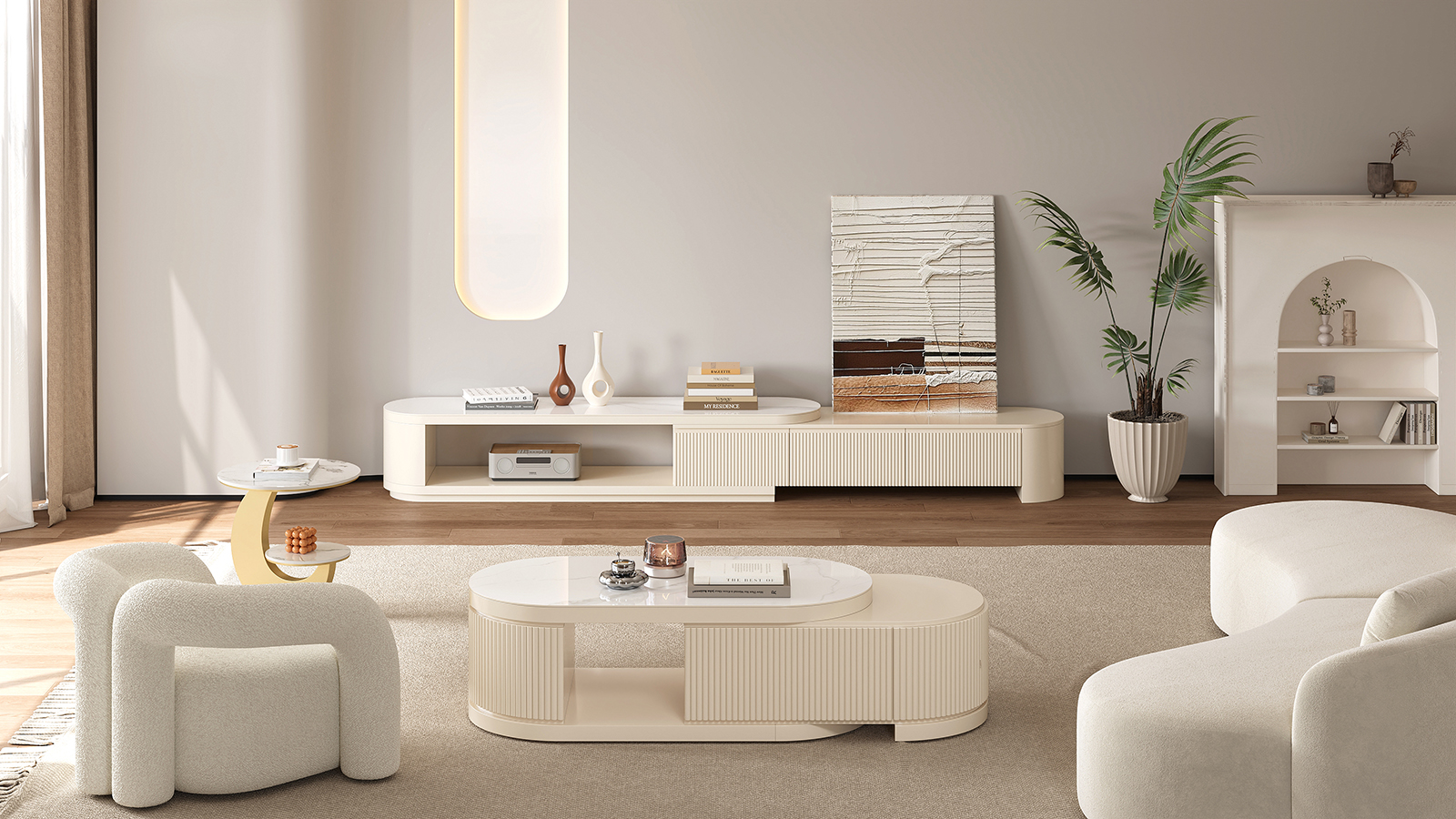
If you want to browse neutral examples of living-room storage and media furniture, this hub is a decent starting point: living room furniture (TV stands and media console).
Mirrors in feng shui: use them like lighting, not like magic
Mirrors can make a room feel brighter and more expansive. They can also create a weird, jumpy feeling if they reflect too much movement.
A common guideline in living room feng shui writing is: use mirrors to reflect something positive (light, art, a calm view), and avoid placing a mirror directly opposite the main entrance. Castlery’s guide calls this out directly in its FAQ and mirror tip section: “9 Feng Shui Tips for the Living Room” (Castlery, 2024).
Practical mirror placement ideas:
- Place a mirror perpendicular to a window to bounce light deeper into the room.
- Let a mirror reflect a plant, artwork, or a warm lamp—not a cluttered shelf.
- If you can’t see the door from the sofa, a carefully placed mirror can help (Livingetc mentions this as a workaround in their sofa placement piece linked earlier).
The five elements, explained in a way you can actually use
You’ll see the “five elements” mentioned in feng shui living room content a lot: wood, fire, earth, metal, water.
You don’t need to redesign your entire home around them. Use them as a quick balance check:
- Too much metal/water feeling (cold, stark, blue/gray, glass)? Add wood (plants, warm wood tones) or earth (beige, terracotta, linen).
- Too much fire feeling (harsh lighting, lots of red, too stimulating)? Add softer textures and calmer tones.
- Too much wood/earth (heavy, dark, overly dense)? Add light (more lamps), reflective accents, or negative space.
Common feng shui layout mistakes (and quick fixes)
Layout Mistakes | Quick Fixes |
Sofa with its back to the door | Fix: rotate the sofa, or add a mirror so you can see the entry. |
Furniture blocking the natural walkway | Fix: pull the coffee table closer to seating; shift chairs inward; create a clean lane. |
Everything pushed against the walls | Fix: bring seating onto a rug and create a defined center. |
TV dominates every sightline | Fix: reduce glare with window-aware placement; add closed storage; soften with texture. |
Clutter hotspots (entry table, under the coffee table, behind the sofa) | Fix: add one “drop zone” basket and commit to clearing it weekly. |
FAQ: Feng shui living room layout questions people actually have
What is “qi” (or “chi”), in plain English?
Think of qi as the felt sense of flow in a room: how easy it is to move, settle, and use the space without friction.
Can I have a sectional in a feng shui living room?
Yes. The key is whether the sectional supports command position and doesn’t block pathways.
Is it bad feng shui to put a sofa against the wall?
Not necessarily. Some guidance even prefers a wall for support. The nuance (per Livingetc) is that you don’t need to press it flush—leave enough room to avoid a cramped feeling and to improve circulation around the seating.
Where should the TV go in a feng shui living room?
Avoid placing it opposite or directly in front of windows to reduce reflections and harsh backlight. If possible, place it at a right angle to windows, and keep it integrated with the room instead of making it the only focal point (Cliff Tan via Hisense).
Should I put a mirror facing the front door?
Many feng shui guides recommend avoiding a mirror directly opposite the main entrance, since it’s said to “bounce” energy back out. A safer approach is positioning mirrors so they reflect light, art, or a calm view.
Next step: make one change that improves flow today
If you do nothing else, do this:
- Clear the entry path
- Move the sofa toward a command position (or ground it with a console)
- Make sure you can walk through the room without zig-zagging
Once the layout feels calmer, decorating becomes easier—and you’ll stop buying “solutions” to problems that were really about placement.