

Arranging a reclining sofa and loveseat is not quite the same as arranging standard living room furniture. A traditional sofa can sit close to a wall or coffee table, but reclining furniture needs extra room for the backrest and footrest to move. If you overlook that clearance, the layout may look good on paper but feel cramped— or prevent the recliners from opening fully.
The good news is that you do not need a large living room to create a comfortable setup. With the right measurements, traffic flow, viewing angles, and furniture placement, you can build a reclining sofa and loveseat arrangement that feels open, practical, and inviting.
This guide explains how to plan your living room layout step by step, including recommended recliner clearance, TV placement, rug and coffee table positioning, power access, and finishing touches.
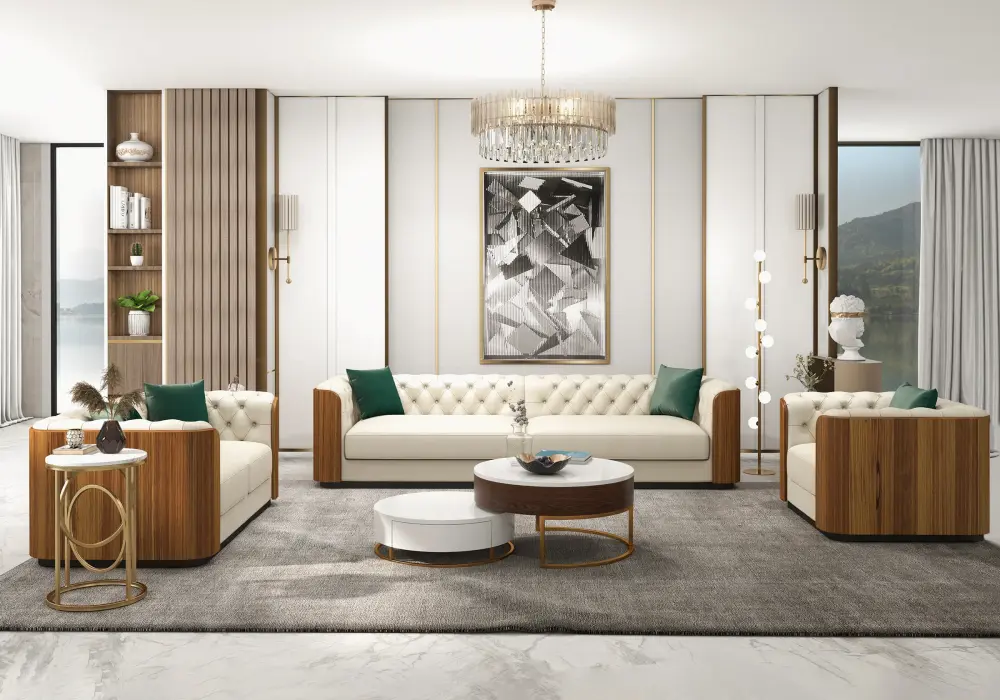
Source Homary
Table of Contents
Measure Clearances and Recline Paths First
Before moving a single piece of furniture, measure the room and determine how much space your reclining sofa and loveseat need to operate. The most attractive layout is not useful if a footrest hits the coffee table or the backrest pushes into a wall.
How Much Clearance Does a Reclining Sofa Need Behind Each Seat?
The required rear clearance depends on the reclining mechanism.
A wall-hugger reclining sofa generally needs only about 76–127 mm of space behind it. This makes wall-hugger designs particularly useful for apartments, compact living rooms, and furniture arrangements where every inch matters.
A standard reclining sofa or loveseat that reclines backward typically needs approximately 381–610 mm of clearance behind the backrest. Always check the manufacturer's specifications because the actual travel distance varies by model.
Do not measure only the furniture's closed dimensions. Measure the fully reclined footprint as well. Think of each reclining seat as having an invisible movement zone extending behind and in front of it.
Traffic space matters too. Keep your main walking paths at least 762–914 mm wide, while secondary pathways can generally be around 610 mm. If the sofa sits near a doorway, make sure the door can open without colliding with the furniture.
Also inspect the walls before positioning anything. Windows, radiators, heating vents, floor registers, outlets, and curtains can all affect where a reclining sofa can safely go.
Mark Recline Paths with Painter's Tape Before You Move Anything
One of the easiest planning tricks is to use painter's tape on the floor.
Mark the outline of the sofa and loveseat in their closed positions, then extend the tape to show where each footrest and backrest will travel. Sit in the approximate position and imagine the furniture fully reclined.
This simple step can reveal problems before you have to move a heavy sofa several times. It also helps you determine whether a coffee table, rug, ottoman, plant stand, or side table will interfere with the reclining mechanism.
Choose Your Small-Room Layout: L-Shape, U-Shape, or Parallel
Once you know your clearance requirements, choose a layout based on the shape of your room and how you use it.
Rather than placing both pieces wherever there is empty floor space, assign each sofa a specific role. The reclining sofa usually works best as the visual anchor, while the loveseat helps define the conversation area.
Layout Type | Best For | Sofa Position | Loveseat Position | Traffic Space | Conversation Experience |
L-shape | Square rooms, corner spaces | Along the long wall | Along the short wall or near a window | Keep 762+ mm in the central path | Angled enclosure, ideal for family movie nights |
U-shape | Spacious rooms, open-plan areas | Centered on the main wall | On the two sides | Keep 914+ mm in central paths | Face-to-face, excellent for entertaining |
Parallel | Narrow, long rooms | Against one side | Opposite it | Keep 914–1067 mm between pieces | Direct eye contact, good for small-space conversation |
L-Shape Layout – Best for Corner Placement
An L-shaped arrangement is often the most practical choice for a small living room. Place the reclining sofa along the longer wall and position the loveseat perpendicular to it along a shorter wall or near a window.
This creates a partially enclosed seating zone without putting every piece directly in front of the TV.
Leave enough space at the corner for people to walk through and confirm that both reclining mechanisms can operate independently.
U-Shape Layout – Best for Conversation-Focused Rooms
If your living room is wider, a U-shaped arrangement can create a strong social zone. Position the reclining sofa on the main wall and place the loveseat or additional seating on the adjacent sides.
The center should remain open enough for comfortable movement. Aim for at least 914 mm in the main circulation area.
This layout works especially well when the TV is not the only focal point. A fireplace, coffee table, artwork, or conversation area can become part of the visual center.
Parallel Layout – Best for Narrow Spaces
In a long, narrow living room, place the reclining sofa against one wall and the loveseat opposite it. Maintain roughly 914–1067 mm between the two pieces when the room allows.
A parallel arrangement naturally encourages conversation, but you must carefully check recline paths. The gap should be measured based on the furniture's fully extended position—not just its closed dimensions.
Set TV Height and Sightlines for Reclined Viewing
A reclining sofa changes the way you watch TV. Because your head and upper body move backward as you recline, a TV positioned for conventional upright seating may not provide the most comfortable sightline.
What's the Ideal TV Height for Reclined Seating?
For a reclining seating arrangement, consider placing the center of the screen approximately 1016–1270 mm from the floor. This is slightly higher than the typical center height used for standard seated viewing.
The goal is not simply to mount the TV higher. It is to create a comfortable viewing angle when your head is supported by the recliner.
Your viewing distance matters as well. A useful general guideline is to position the sofa approximately 1.5–2.5 times the TV's diagonal screen size away from the screen.
For example, a 65-inch TV would generally work with a viewing distance somewhere around 2.4–4.1 meters, depending on the room, screen resolution, and personal preference.
How to Balance Visual Weight When Both Pieces Face the Same Wall
If both the reclining sofa and loveseat point directly toward the TV, the room can feel visually heavy on one side.
An L-shaped arrangement can solve this by turning the loveseat slightly away from the TV. A U-shaped layout can also distribute the visual focus between the television and the people sitting in the room.
If you have a fireplace or large window opposite the TV, consider whether one should become the primary focal point. Avoid blocking architectural features simply to create a symmetrical furniture arrangement.
The best living room layout balances viewing comfort with circulation and visual proportion.
Place Rugs, Coffee Tables, and Power Access Without Blocking the Recline
Accessories can make a reclining arrangement look finished, but they can also interfere with the furniture's movement. Always plan them around the reclining mechanism rather than treating them as an afterthought.
Coffee Table Clearance – How Far Should It Be from the Sofa?
Keep the coffee table approximately 457–610 mm from the front edge of the seating.
This provides enough room for normal movement while reducing the chance that an extended footrest will hit the table. If your sofa has an unusually long footrest, use the manufacturer's fully reclined dimensions instead of relying solely on the general guideline.
For particularly compact rooms, a small round or oval table can provide easier circulation than a large rectangular design.
Rug Placement – Keep It Out of the Footrest Path
A rug should visually connect the seating area without becoming an obstacle.
Keep the rug edge approximately 152–305 mm away from the footrest's travel path. Avoid placing a thick rug directly underneath a mechanism that needs to move freely.
If you want the rug to sit beneath the sofa, verify that it does not catch against the footrest when the seat is fully extended. A low-pile design is often easier to manage around moving furniture.
Power Access – Where to Put Outlets for Power Recliners
Power reclining furniture needs thoughtful electrical planning. Ideally, place outlets near the seats, approximately 305–457 mm above the floor, while leaving enough space for the plug and cable.
Do not route cords directly through a walking path. Instead, guide them toward the nearest wall and use appropriate cable-management solutions.
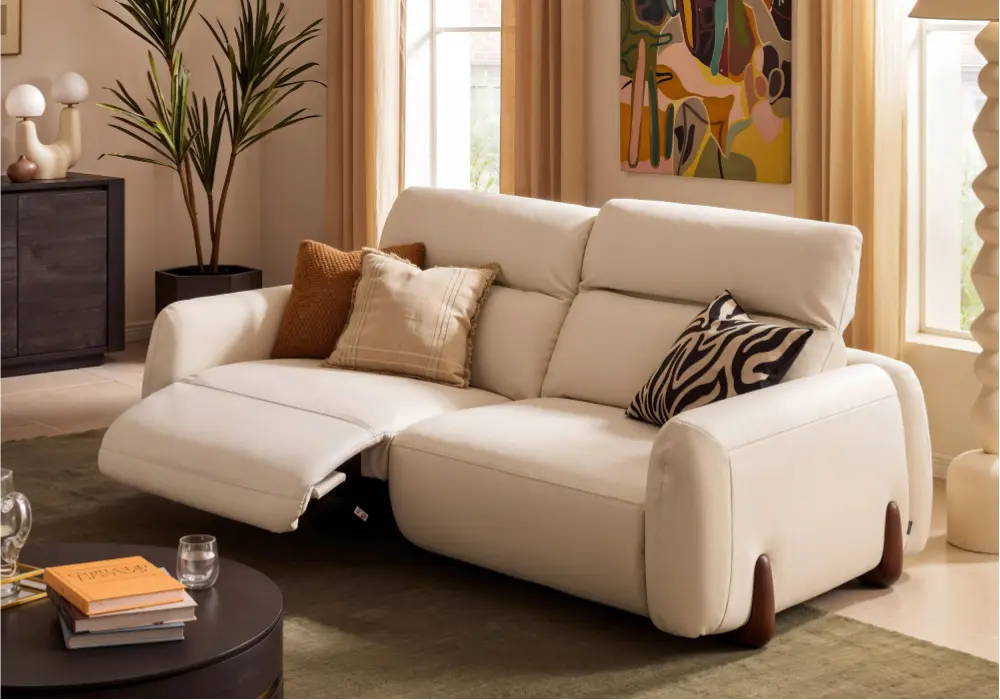
For a power reclining sofa with integrated charging, features such as USB-A and Type-C ports can make everyday cable management simpler. For example, the Homary 2159 mm Genuine Leather Power Reclining Sofa incorporates charging ports into its control system, which can reduce the need for additional charging cables around the seating area.
 Source Homary
Finish with End Tables, Floor Lamps, and Floor-Friendly Styling
After the major furniture pieces are positioned, use accessories to make the room functional without interfering with the reclining zones.
End Table Placement – Between or Beside the Seats
An end table can go between the sofa and loveseat or beside the outside arm of either piece.
Leave at least 152 mm of space between the table and the seating so the furniture does not feel crowded and the arms or reclining controls remain accessible.
For a narrow room, a slim C-table can be more practical than a conventional side table because it takes up less floor area.
A console behind a loveseat can also provide storage, but keep it lower than the seat's backrest whenever possible. This helps maintain an unobstructed visual line and reduces the risk of interfering with the reclining movement.
Floor Lamp Positioning – Out of the Recline Zone
Floor lamps work best beside the outside edge of the seating arrangement or in an unused corner.
Avoid putting a lamp directly beside a footrest or in an area where someone must step around the reclining mechanism. If the sofa is against a wall, a wall-mounted reading light can be an even more space-efficient solution.
Sofa Legs and Floor Protection – Don't Forget the Furniture Pads
Furniture pads are particularly useful on hardwood and other easily scratched floors. Place appropriate protective pads under the sofa legs and inspect them periodically for wear.
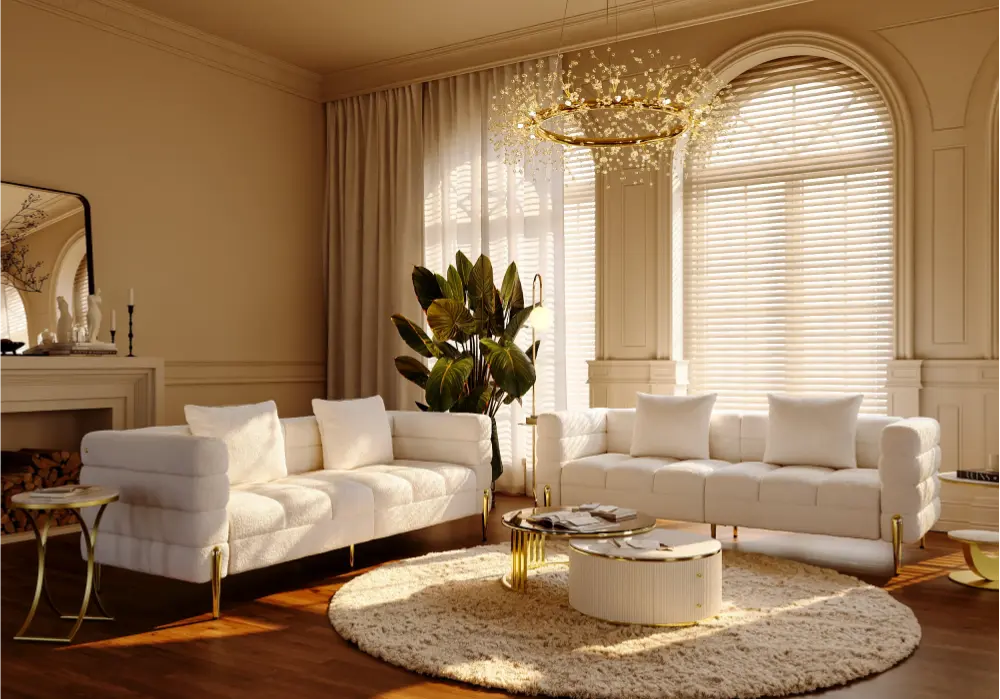
This is especially relevant for furniture with raised metal legs. A 152 mm elevated metal-leg design can give a sofa a lighter visual profile, but the legs still need proper floor protection.
For a contemporary, less bulky appearance, consider a sofa with a raised base such as the Homary Axial 2007 mm Boucle Fluted Sofa Set of 2. Its metal-leg construction and boucle upholstery can visually lighten a large seating arrangement.
Source Homary
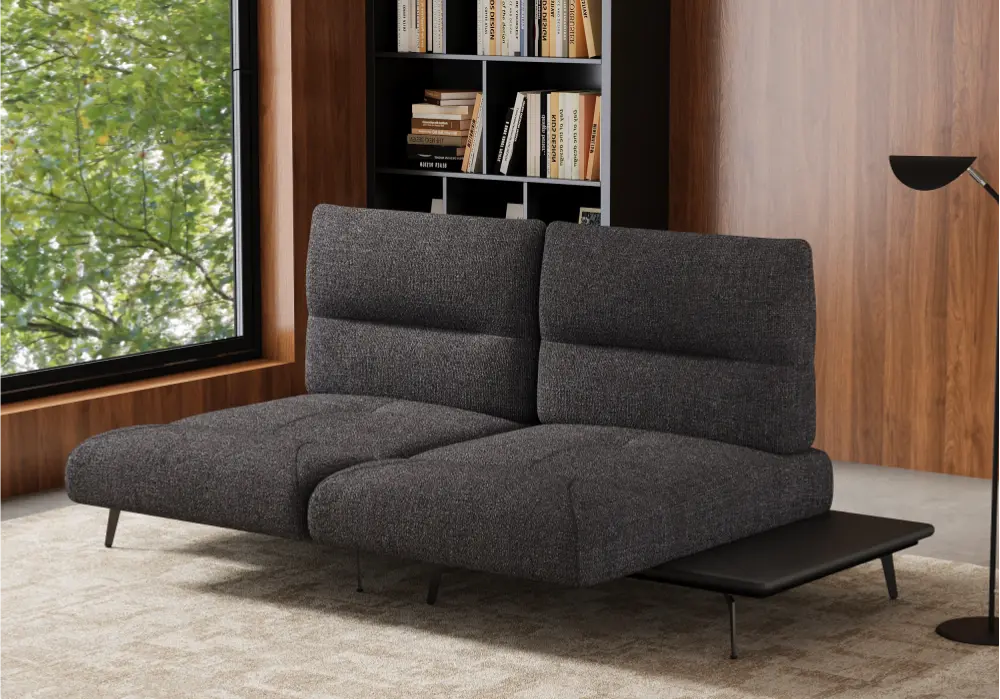
If flexibility is a priority, a reclining sectional can provide another configuration option. The Homary 2-Piece Yarn-Dyed Fabric and Faux Leather Reclining Sectional Sofa features a 90-degree rotating backrest and three-position adjustable armrests, making it adaptable to different seating preferences.
Source Homary
Do not overlook small comfort details, either. If your reclining furniture develops mechanical noise, follow the manufacturer's maintenance recommendations and keep moving joints properly maintained. For homes with pets, durable upholstery such as tightly woven, yarn-dyed fabric can also be a practical choice.
Finally, soften the visual weight of large reclining furniture with a few pillows and a throw blanket. These accessories can make the room feel warmer without compromising the functionality of the reclining seats.
Your Next Step – Measure, Choose, and Arrange with Confidence
The most important rule for arranging a reclining sofa and loveseat is simple: measure first, shop second.
Before ordering furniture, record the room's length and width, door openings, window locations, outlet positions, ceiling-height limitations, and the full reclined dimensions of the furniture you are considering.
Then mark the proposed arrangement on the floor with painter's tape. Check the walking paths, footrest extension, TV sightline, coffee table clearance, and power access before committing to the final position.
If you are unsure which configuration will work, sketch the room to scale and test an L-shape, U-shape, and parallel layout. A few minutes of planning can prevent hours of rearranging later.
Frequently Asked Questions
How much clearance does a reclining sofa and loveseat need behind each seat?
A wall-hugger recliner generally needs about 76–127 mm behind the seat. A standard reclining mechanism may require approximately 381–610 mm. Always confirm the exact clearance in the furniture specifications.
What is the best layout for a reclining sofa and loveseat in a small living room?
An L-shape is usually the most versatile option for a small room. Place the reclining sofa against the long wall and the loveseat along the shorter side, while keeping the main circulation path open.
Should a reclining sofa and loveseat face the TV or each other?
For a movie-focused room, facing the TV makes the most sense. For a social space, arrange the pieces toward each other using a U-shaped or parallel configuration. If you use the room for both purposes, an L-shape can provide a good compromise.
How high should I mount a TV when watching from reclined seating?
Consider placing the screen center approximately 1016–1270 mm above the floor. The exact height should also account for the TV size, wall position, and how far back your head moves when reclining.
Where should a rug and coffee table go with reclining furniture?
Keep the rug edge approximately 152–305 mm outside the footrest travel path and place the coffee table about 457–610 mm from the front of the seating. Always test the furniture in its fully reclined position.
How do I manage power cords for a power reclining sofa and loveseat?
Place outlets approximately 305–457 mm above the floor near the seating whenever possible. Route cables away from walking paths, and consider furniture with built-in USB-A or Type-C charging ports to reduce cable clutter.
Can I add a sectional or ottoman to a reclining sofa and loveseat arrangement?
Yes, but you must preserve the full movement zone of every reclining seat. Keep at least 610 mm of unobstructed space in front of each recliner for footrest extension, and use the furniture manufacturer's dimensions when determining the final layout.