

Source: Pexel
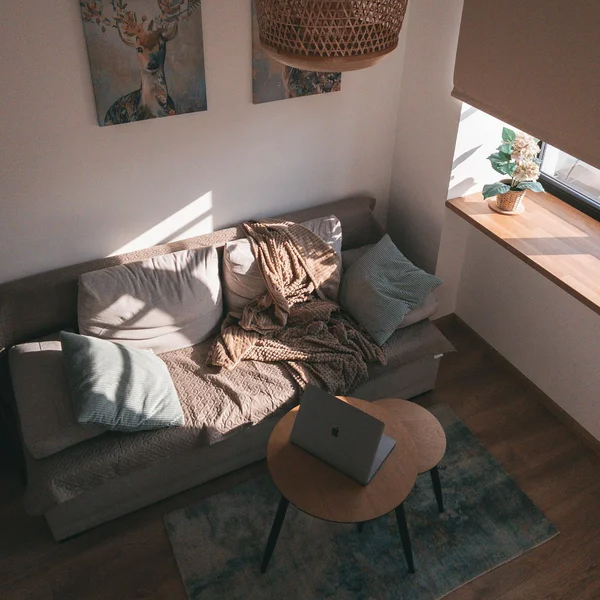
To answer the question - Yes, a sectional can work in a small room. More than that, it can actually make the room feel more settled, if you choose it well. I think the main thing people worry about is bulk — that a sectional will somehow take over the whole room and make everything feel heavy. But that is not really the sofa’s fault. It is usually a placement issue, or a scale issue, or both.
I have seen small rooms where a sectional looks perfect. And I have seen larger rooms where one feels weirdly too big. So it really is not just about room size. It is about the relationship between the sofa and the space around it.
Start with the room
This is probably the part people skip first, because it is less exciting than picking out a sofa. But honestly, it is the part that saves you from regret later.
Look at the walls first. Then the doors. Then the walkways. If there is a door that swings into the room, or a path you use all the time to get to the next space, that matters more than whether the sectional looks great in a product photo. I always think a quick sketch helps here. Nothing fancy. Just a rough drawing of the room with the fixed stuff marked in. Once you see it on paper, you can usually tell pretty fast whether a sectional makes sense or whether it is going to be one of those “technically fits, but doesn’t really fit” situations.
If you are still in the browsing phase, compact modern collections can be useful just because they give you a better sense of what actually works in a smaller room. Something like Homary’s living room furniture range can be a good reference point for that.
Choose the shape with the room in mind
Not every sectional behaves the same way, which sounds obvious, but a lot of people only realize it after the sofa is already in the house.
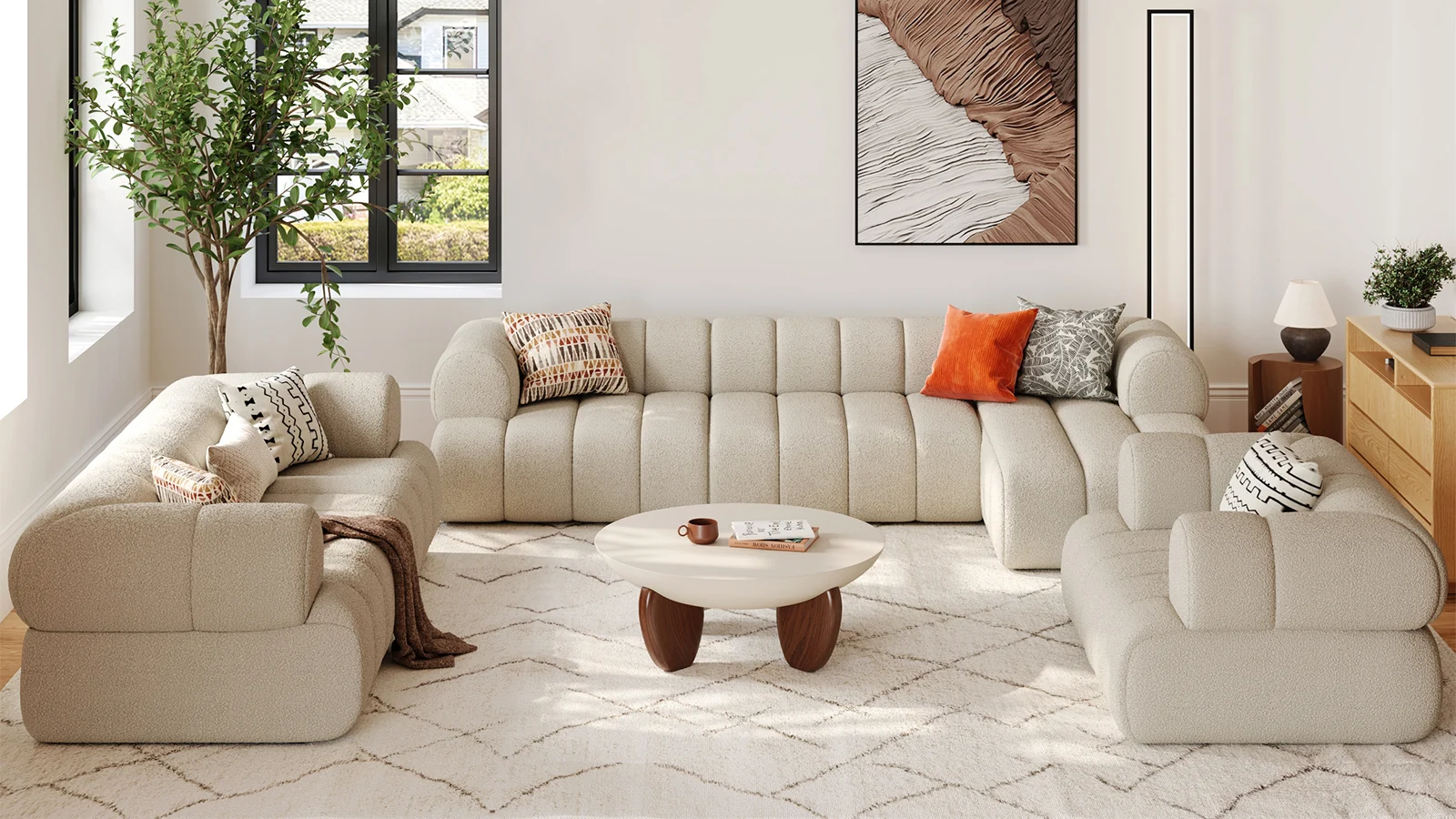
An L-shaped sectional is usually the easiest starting point. It can tuck into a corner and leave the middle of the room open enough that the space still feels usable. In a small room, that matters a lot.
A chaise sectional can work well too, especially if the room is mainly for lounging or TV time. The chaise direction is the part you really want to pay attention to. Left-facing or right-facing seems like a small decision, but it can change the whole feel of the room. It can either make the space flow nicely or make it feel like one side has been shut off.
A Modular sectional is another good option if you know you might want to move things around later. They are a little more forgiving. If you are the kind of person who rearranges furniture every few months, this is probably the safer bet.
A compact two-piece sectional is also worth looking at if you want the sectional look without the visual heaviness of a bigger setup. These tend to feel lighter somehow, which is nice in a small room.
Sectional types at a glance
Sectional Type | Best For | What It Does Well | What to Watch Out For |
L-shaped | Corner layouts | Uses space efficiently | Can feel bulky if oversized |
Chaise sectional | Relaxing and TV use | Comfortable and lounge-friendly | Chaise direction matters a lot |
Modular sectional | Flexible layouts | Easy to adjust later | Can cost more |
Compact two-piece | Very small rooms | Lighter visual feel | Fewer seating options |
Practical tips to follow when considering how to arrange sectional in a small space
Place the sectional where the room can handle it
Once you know the shape, the next question is where it should actually go. And this is where the room usually tells you more than the sofa does.
Most of the time, a corner is the easiest place to start. It keeps the layout efficient and leaves the center of the room open. If one wall is clearly longer than the others, that usually becomes the natural home for the sectional. That said, floating it a little off the wall can work too. People sometimes worry this will waste space, but in some rooms, it actually helps the layout breathe. Even a small gap behind the sofa can make the whole thing feel more intentional and less cramped.
If the room is open concept, the sectional can do a really nice job of dividing the space without adding an actual divider. It can quietly separate the living area from the dining space or entry zone. I think that is one of the reasons sectionals are so useful. They can define a room without making it feel busier.
Give the room some breathing room
This is the part I always come back to: small rooms do not need to be filled edge to edge.
It is tempting to think, if there is room, we should use it. But in practice, a little empty space is often what makes the room feel easier to live in. If the sectional sits too close to everything, the room starts to feel boxed in pretty quickly.
As a rough guide, try to leave about 610 to 914 mm behind the sectional if people need to pass through that area. Around the main walkway, more space is usually better. You want to be able to move through the room without doing that awkward sideways shuffle.
The front of the sectional matters too, especially if you are adding a coffee table or ottoman. If everything is too close together, even a pretty room starts to feel slightly stressful. A small room really tends to do better when the seating area is supported by just a few good pieces instead of a lot of little ones.
Let the other furniture do some work
A sectional usually looks best when the rest of the room quietly supports it.
A rug is a big one. It helps the sectional feel like it belongs there instead of just sitting in the room. But the size has to be right. If the rug is too small, the whole setup can feel chopped up. If it is right, the room suddenly feels much more put together.
Coffee tables matter too, but I would keep them simple. In a small room, round or oval tables usually feel easier to live with than oversized square ones. They are easier to move around, and they do not visually fight with the sectional.
Side tables are useful, but only where you actually need them. I would not add them just because the room feels “unfinished.” That is usually how small rooms get overloaded. One good table and one lamp often do more than three extra decorative pieces.
Lighting matters more than people expect. A floor lamp or wall lamp can make a sectional feel lighter, especially if the sofa itself is fairly large. Anything that lifts the eye a little usually helps.
A few mistakes show up a lot
Most of the time, the sectional is not the real problem. The surrounding choices are.
A deep sectional is one of the most common mistakes. It may look wonderful in a showroom, but in a small room it can swallow space very quickly. What feels generous in a big store can feel oversized at home.
Blocking light is another one. If the sectional sits right in front of a window and starts cutting off brightness, the room can feel heavier almost immediately. That effect is stronger than people expect.
Chaise direction is another detail that gets rushed. It seems tiny at first, but once the sofa is in place, it can become very obvious if the chaise blocks a walkway or awkwardly turns the room in the wrong direction.
And then there is the urge to keep adding things around it. I get why people do this. The room feels empty, so they want to “finish” it. But in a small room, more stuff is not always better. A sectional already carries a lot of visual weight, so restraint usually works better.
Make the room feel lighter
If the room is starting to feel too dense, there are a few easy ways to soften it.
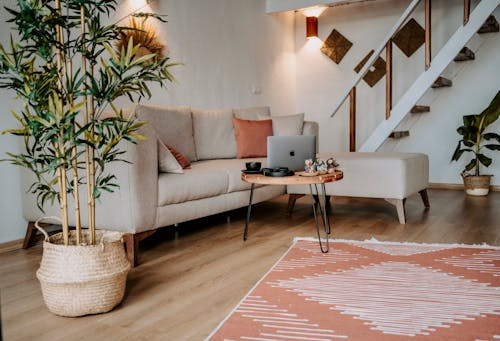
Light colors usually help. A pale neutral sectional tends to sit more quietly in the room than a dark, heavy-looking one. Low-profile arms and slimmer legs help too. They make the sofa feel less like a block.
It also helps to keep one clear focal point. If the sectional is facing the TV, let the TV stay the main feature. If the room is more about conversation, build around that instead and keep the rest of the room calm.
This is where modular or compact sectionals can be really nice. They give you more room to adjust later, which is useful when you are not totally sure what the room wants yet.
And if you want the room to feel more finished without making it feel overworked, try keeping the furniture in the same style family. A coordinated collection like Homary’s living room furniture can be useful for that, because it makes the room feel like it belongs together instead of being assembled piece by piece.
A simple way to plan it
If you are still staring at the room and not quite sure where to begin, this is the simplest way I know to do it:
- Measure the room.
- Mark the doors, windows, and anything fixed.
- Find the strongest wall or corner.
- Choose the sectional shape that fits the room instead of forcing the room to fit the sofa.
- Leave clear walking space.
- Add only the pieces the room actually needs.
That sounds basic, but basic is often what works. Most layout problems happen when the sofa is chosen first and the room is dealt with afterward.
Source: Pexel
FAQ
What sectional shape works best in a small room?
Usually an L-shape or a compact modular sectional. They fit more naturally and leave the room feeling less crowded.
Should a sectional go in the corner?
Usually yes, especially if the room is small. Corner placement is often the easiest way to keep the center open.
Can a sectional float in a small room?
It can. If there is enough room behind it, floating the sectional can actually make the room feel more intentional.
How much space should I leave around it?
If people need to walk behind or beside it, try to keep about 610 to 914 mm of clearance where possible.
How do I keep the room from feeling too heavy?
Use a lighter color palette, keep the path open, and do not overdecorate around the sectional.
A sectional can be a really smart choice in a small room. It is not about squeezing in the biggest sofa you can find. It is about choosing a shape that makes the room feel easier to use.
If you start with the room, leave a little breathing room, and keep the layout simple, a sectional can make a compact living room feel more intentional rather than more crowded. And that is usually the difference between a room that just holds furniture and a room that actually works.