

If you ever know that designing a small bedroom isn’t challenging because of the lack of space but because of the urge to fill it with ordinary furniture, transforming your own sanctuary into an obstacle course, then you will know if your floor plan is measured in feet; every piece of furniture has to earn its keep.
What I can tell you is that you don't have to settle for a sterile, empty space or being out of boxes simply because your square footage is tight. Small bedroom design is an exercise in purposeful downsizing, multitasking, and visual lightness. This is the ultimate.
Here is the authoritative blueprint to choosing and arranging the perfect bedroom furniture for a cozy, clutter-free, and highly functional bedroom.
Table of Content
Smart Truth About Small Space: Function Without Compromise
The small-space design golden rule is straightforward: scale dictates success. A large double dresser or a massive, thickly padded king-size bed will instantly make your room appear more like a storage closet than a boutique hotel.
You must change your perspective away from large, multipurpose furniture if you want to make the most of a tiny space. Rather than asking, "What pieces of furniture do I want in my bedroom?" ask, "What functions do I actually need this space to perform?" If the answer is sleeping, some light reading, and storing seasonal clothes, your furniture selection should reflect only those precise needs.
How to Select the Perfect Space-Saving Bed
Because the bed is unequivocally the largest volume hog in your bedroom, you should know that selecting the right frame is the most critical decision you will make. In a tiny room, an open, leggy metal frame or a massive platform bed with wide wooden edges eats up valuable perimeter space.
In another word, you should look for furniture that utilizes unused vertical and under-bed real estate.
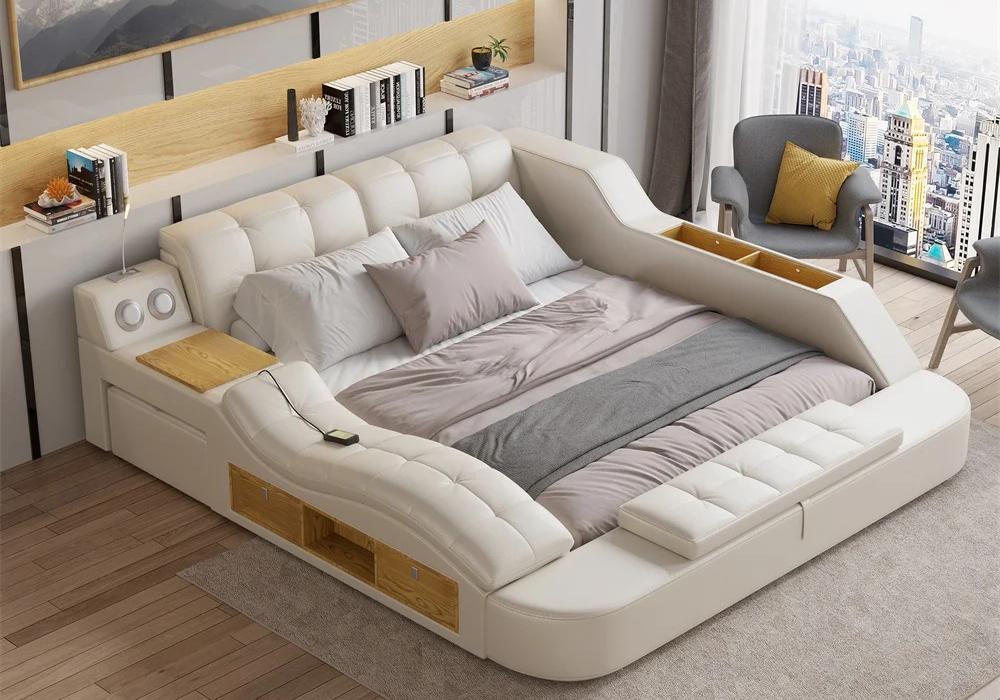
Let’s say, if you choose a smartly engineered storage bed from Homary, for example, you can opt for an upholstered storage bed featuring a smooth hydraulic lift mechanism or discreet built-in drawers. This instantly converts the dead, empty space beneath your mattress into an easily accessible, concealed dresser, freeing up precious floor space elsewhere in the room.
How to Allocate The Proportions of Compact Furniture
The smaller the room, the less margin for error you have with dimensions. Eyeballing it will result in drawers that can’t open or doors that bang into your nightstands.
As outlined in the space-saving bedroom layout guides by Apartment Therapy, scaling down your furniture selections is the key to maintaining flow and comfort in tighter quarters rather than squeezing in oversized pieces.
Compact Bedroom Furniture Limit & Dimension Guide
Use these strict measurements to ensure clearance and walking paths in tight layouts.
Furniture Type | Standard Size (Too Bulky) | Small-Space Recommended Size | Clearance / Spacing Rule |
Bed Frame | King / California King (1930mm-2032mm wide) | Queen or Full (1524mm-1372mm wide) | Minimum 610mm of clearance around the foot and sides. |
Nightstands | 610mm - 762mm wide, deep cabinets | 381mm - 457mm wide, slim floating or C-tables | Must align flush or slightly below the top of the mattress. |
Dresser | 1016mm+ tall, deep double-row drawers | 762mm - 914mm wide, vertical tallboy or shallow console | Allow at least 914-1219mm in front of it to open drawers fully. |
Wardrobe / Storage | 610mm deep, heavy enclosed armoire | 381mm - 457mm deep, open or sliding-door closet system | Keep it flush against a single wall to avoid disrupting walking paths. |
Multipurpose Items: When a Single Piece of Furniture Fulfills Two Purposes
Single-purpose things are an expensive luxury in a small bedroom. Every surface ought to be able to perform two tasks at once.
- The Desk/Vanity Hybrid: Install a thin, wall-mounted floating console under a classy mirror in place of a specialized makeup station and a separate work-from-home desk. It may be used as a stylish laptop workstation during the day and as a morning vanity at night by opening a colorful organizer tray.
- The Storage Bench at the Bed End: If correctly hinged, the hollow interior of a narrow bench at the foot of your bed can be used as a convenient location to sit and put on shoes. It can also be used as a drop zone for pillows, heavy winter duvets, or additional blankets.
Pro Tip: Give Up the Footboard
Steer clear of beds with large, high footboards. When you enter a room, they physically obstruct sightlines and prevent your eyes from moving naturally, giving the impression that the area is cramped and choppy. Stick to elegant platform beds or low-profile headboards.
How to Play A Visual Tricks to Expand a Small Bedroom
In addition to its size, furniture's ability to control light and shadow should be taken into account. You can physically expand a place by selecting items that are not visible to the human eye.
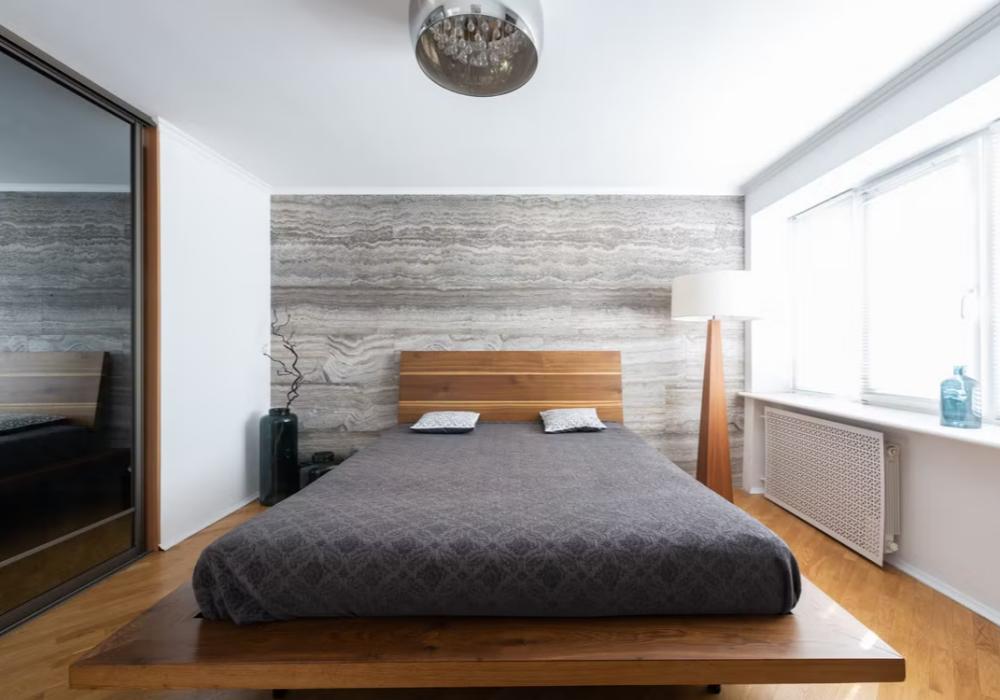
- Look for "Suspended" Furniture: Avoid bulky cabinets and dressers that rest flat on the ground. Instead, choose items that are supported by tall, thin, tapered legs. You can create an airy sense of wide negative space by allowing light to flow continually beneath the furniture by leaving a 152mm-203mm gap of open floor visible.
- Monochromatic and Reflective Surfaces: Use a limited color scheme. Your main furniture items, such as dressers and wardrobes, will appear to retreat if they are blended in with the wall color. Additionally, using mirrored wardrobe doors, glass tabletops, or modest metallic elements helps reflect morning light into shadowy areas.
Source: Pexel
Expert Tips: Getting Out of the "Crammed Room" Trap
When creating your tiny sanctuary, experience matters. Use these tried-and-true interior design strategies to transform your little room from a messy storage area into a peaceful retreat.
- Tip 1: Make your nightstands float. Bulky, freestanding nightstands take up floor space and collect dust. Choose floating shelves or drawers that are mounted on the wall and leave the floor unobstructed.
- Tip 2: Make vertical storage a priority. Look up if your floor area is constrained. To bring attention upward and make use of dead upper-wall space, use tall, open-backed bookcases or modular wall cabinets that extend closer to the ceiling.
- Tip 3: Use layouts that are off-center. It is not necessary to align your bed with the main wall. In addition to creating a comfortable, cocoon-like sleeping alcove, pushing the bed into a small corner or up against two intersecting walls frees up a sizable, functional area of open floor in the center of the space.
Pro Tip: The Painter’s Tape Tour
Before you hit "add to cart" on any major piece of bedroom furniture, take a roll of painter's tape and physically trace the exact footprint of any large bedroom furniture item on your bedroom floor. Make sure you can move about the taped border without feeling constrained by walking around it, opening the closet doors, and pulling out the desk chair.
How to Make a Small Room Glow: Lighting and Ambience Strategy
In a compact small bedroom, furniture does not exist in a vacuum. It is always interacting with the natural and artificial light in the space. A lovely, leggy dresser at a good scale will be destroyed visually if it is swathed in shadow or coupled with a huge, dominating bedside table lamp.
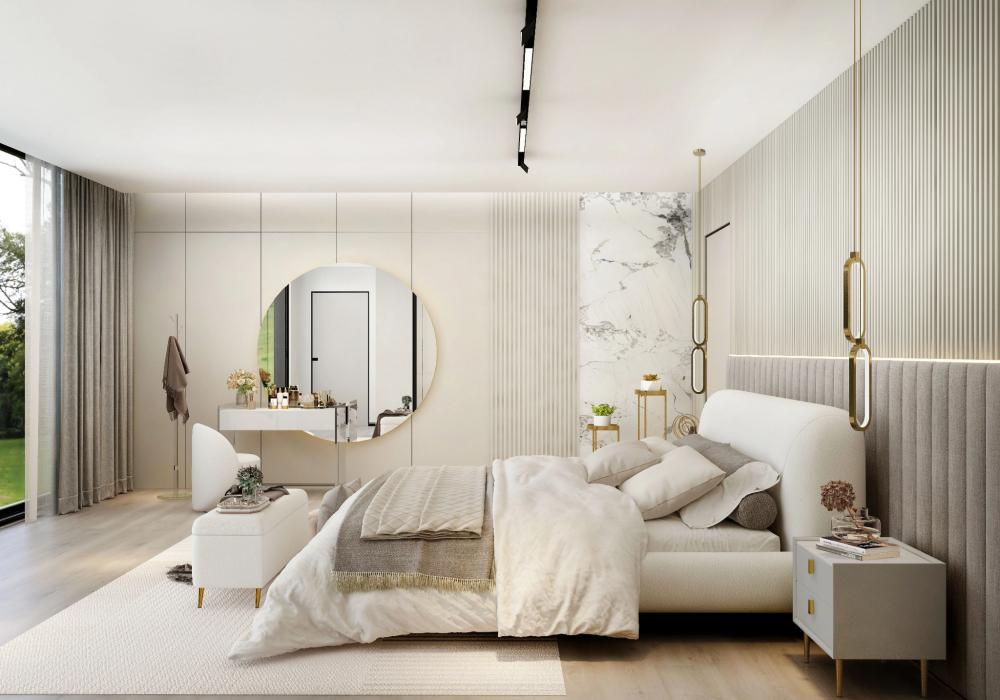
Conventional table lamps are too bulky to use in cramped spaces where floor space is too valuable. Instead, leverage vertical and architectural real estate to upgrade your lighting strategy. Mount sleek swing-arm wall sconces into the wall studs on both sides of your bed. That frees up the whole floating nightstand surface for a book or a drink of water, not to mention creates a layered, sophisticated hotel-like ambience.
Also, be very smart about where you position reflective surfaces. Placing a tall, leaning floor mirror opposite or beside your main window will instantly reflect natural daylight into the darker parts of a small room. When natural light pours freely beneath suspended furniture and bounces off sharp, clean surfaces, the room’s physical boundaries visibly blur, fooling the brain into experiencing a much bigger, airier sanctuary.
Source: Compact Modern Bedroom Design
The Ultimate Design Choice for Compact Spaces: Is It Decluttering?
You might have picked the proper space-saving furniture but to keep the illusion of room, you need to have a rigid minimalist mindset. Buy the most ingeniously designed leggy suspended furniture you like, but fill it high with stuff and the room will shrink right back down.
Small space living requires a mindset shift when it comes to decluttering, from a weekend project to an ongoing design choice. If you have limited square footage, anything that enters the area ought to have a crucial physical function or make you feel deep, irrefutable joy. Apply a “one in, one out” approach to decorative accessories, and brutally check your clothing and nightstand drawers seasonally.
Choose clean surfaces. There are three things you should have on your nightstand: a lamp for reading, a tiny dish for all the junk you have, and one book. Allow plenty of empty, negative space around your dressers and consoles and it will help the room breathe. And remember, the greatest pleasure of a small bedroom isn’t how much things you can squeeze into it but how quiet, unburdened and relaxed you feel when you finally lock the door behind you at the end of a hard day.
Furniture Sourcing: How to Ensure It Fits Before It Ships
Buying furniture online is incredibly convenient, but it requires diligent verification of dimensions and logistics. Always check the fine print for shipping details. Make sure the retailer provides clear, high-resolution schematics showing drawer depths, leg heights, and exact clearances.
Look for white-glove delivery options if you are purchasing heavy hardwood items or complex storage beds, so you don't risk damaging your tight hallways or narrow stairwells during self-assembly.
Quick FAQs About Bedroom Styling
Q: Should I match my bedroom furniture set perfectly in a small room?
Matching everything perfectly from a pre-packaged bedroom set can look dated and draw attention to the cramped, boxy proportions of a small room. Instead, curate an intentional mix by matching materials (e.g., matte walnut or brushed brass) across independent pieces for a more bespoke, collected, and breathable aesthetic.
Q: Can I put a large dresser in a small bedroom?
Yes, but you must alter its orientation. Avoid wide, low-profile dressers. Instead, choose a "tallboy" dresser—one that is taller and narrower—to minimize the horizontal footprint while maintaining massive interior storage capacity.
Q: How do I arrange furniture in a long, narrow bedroom?
In a narrow space, place your bed along the shorter back wall or push it lengthwise as a daybed or day lounge. Keep heavy items like wardrobes flush against the long wall, and leave the center pathway clear to stretch the visual length of the room.
Q: What is the best color for furniture in a small space?
Light, neutral, and monochromatic tones are best. Soft woods like ash, light oak, or painted matte white/beige pieces reflect natural light and blend into the background, whereas dark, heavy mahogany or espresso finishes absorb light and create hard visual boundaries that make rooms feel smaller.
Q: How can I put a desk in a small bedroom without losing the relaxing vibe?
Consider a slender, floating desk or a leggy console table that complements your wall color. Position it out of immediate sight from the bed and add a chic accent chair that can function as a reading seat.
Q: How to place a wardrobe so it doesn't block the natural light?
Place tall wardrobes flush against the wall at the entrance or behind the door swing. Never put them by or opposite a window, since they will obstruct natural light and cast heavy shadows with their mass.