

If you live in an apartment with a small space in a crowded city, you’ve probably asked yourself: “Can I really have a comfortable home office in such a small space?” The good news is yes—you can, and you don’t need to spend a penny. With the right furniture layout and decor mindset, even a tiny corner can become a functional, comfortable workspace.
Here you’ll learn how to choose the right desk size and type to set up an ergonomic layout on a small surface, and keep everything tidy — all while staying within the constraints of a small home. Along the way, you’ll also see how compact and well‑designed pieces from Homary fit naturally into real‑world home office setups.
How To Define If Your Space Is Really Too Small for a Home Office?
Before you start shopping for home furniture, the first question you need to consider is: How small is “too small”? Most professionals agree that a functional workspace needs at least about 35 inches in width and 24 inches in depth for a basic laptop‑centric setup. This is enough space for a mouse, keyboard, and a small notebook, plus a bit of room for a water bottle or a notebook.
If your space is narrower than that (for example, a 24–28 inch corridor or a very tight bedroom corner), you can still work, but you’ll need to optimize more space and multi‑functional furniture instead of a full‑sized desk.
Below is a quick reference to help you judge whether your space is workable:
Space Type | Typical Width (inches) | Functional as Office? | Notes |
Living room corner | 39–55 | Yes | Ideal for standard small desks |
Narrow hallway/aisle | 24–35 | Yes (with compact/fold‑down) | Perfect for wall‑mounted or folding desks |
Bedroom side | 31–39 | Yes | Good for L‑shaped or wall‑corner desks |
Small balcony (enclosed) | 31–47 | Yes | Requires weather‑resistant or compact furniture |
If your space matches with the “Yes” category, you’re already halfway there. The main point is to match your actual dimensions to the right type of desk instead of without knowing the reason to copy “pretty” setups you see on the internet.
If you’re not sure about measurements, grab a tape measure and write down:
- Wall width (where you plan to place the desk)
- Depth, from the wall to any obstruction (sofa, door, bed)
- Height clearance (especially if you plan to add shelves or a monitor arm)
Once you know these data, you can be confident enough to choose home office furniture that fits — not ones you have to “squash in” embarrassingly. When you’re ready to browse, you can filter Homary’s office furniture section by size and style to match your exact space.
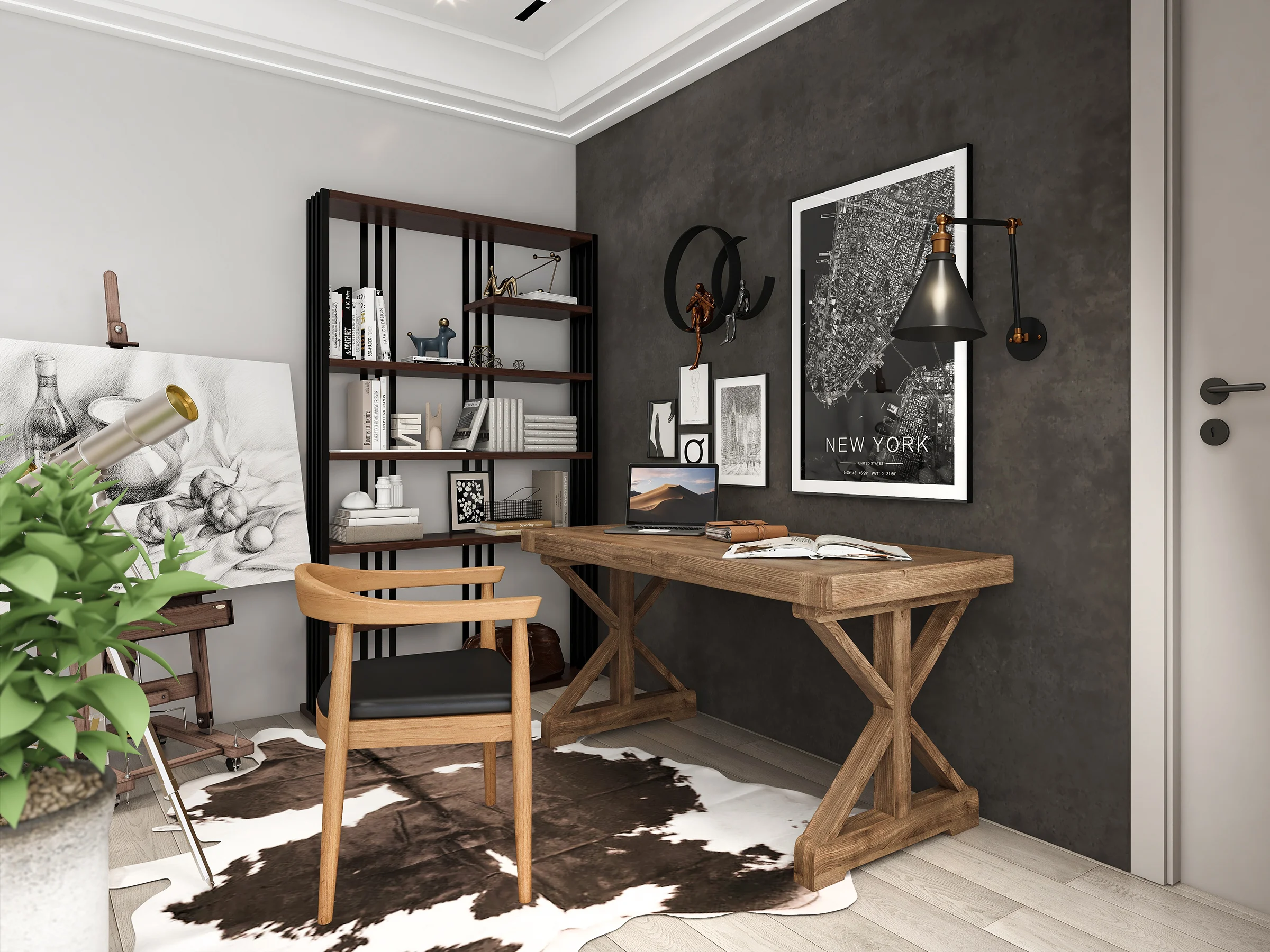
Source: Home Office Design in Wood Tones
Choosing the Right Desk Size and Type for a Small Space
When space is tiny, the desk type matters more than the fancy design. Here are the very common options for a small‑space office and where it works best.
1. Narrow‑Edge Desk (Slim Desk Type)
- Best for: Hallways, tight living‑room corners, or narrow bedroom walls
- Typical size: 31–39 inches wide × 16–20 inches deep
Pros | Takes up very little floor space; pairs well with wall shelves |
Cons | Limited surface for multiple monitors |
A narrow‑edge desk is an ideal option if you mainly work with a laptop or a single monitor and want to keep the room feeling open. These desks are easy to slide into existing layouts without blocking doors or entryways.
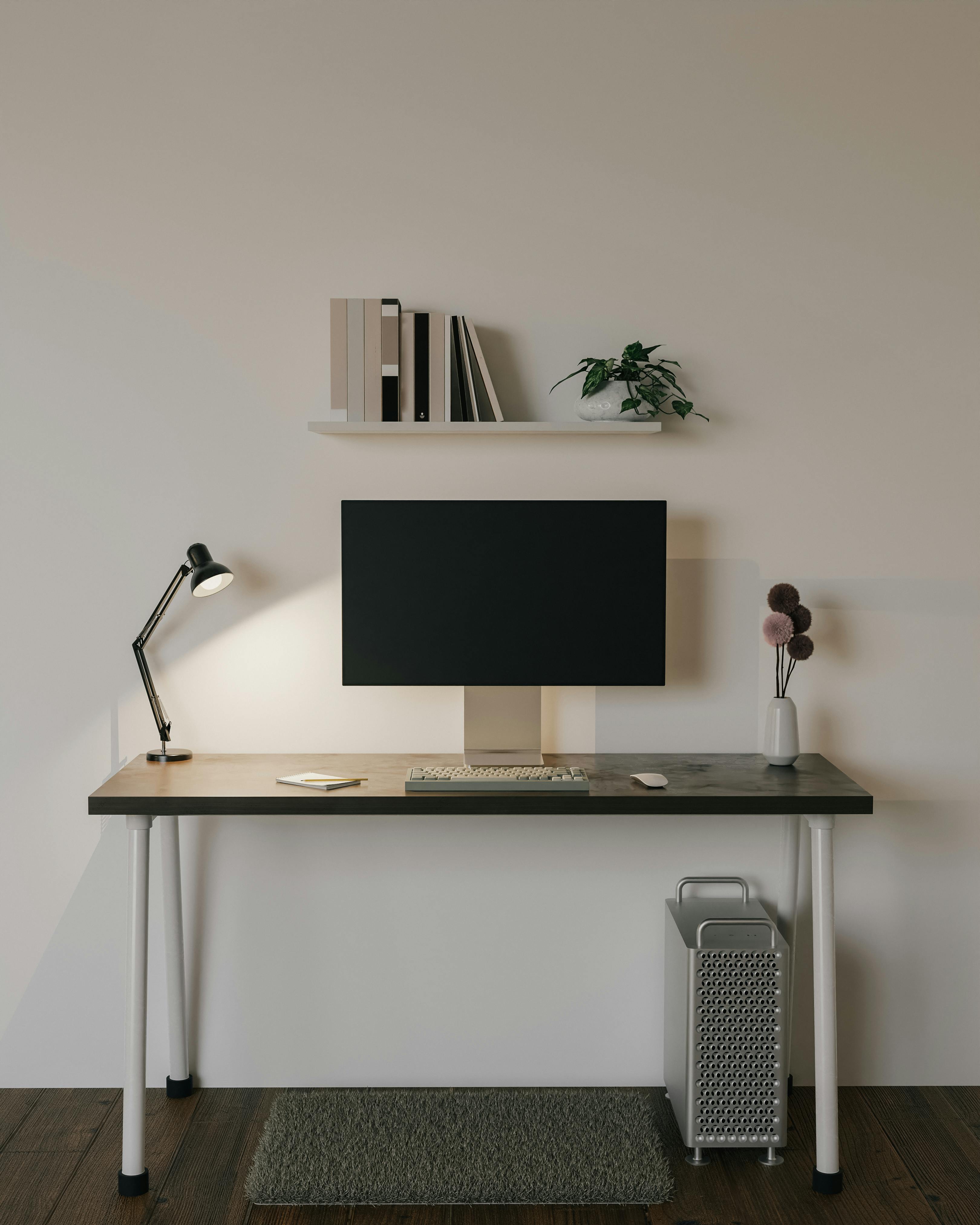
Source: Pexel
2. Corner Desk or L‑Shaped Desk
- Best for: Rooms with at least one right‑angle corner (bedroom, living room)
- Typical size: 39–55 inches total length (L‑shaped)
Pros | Maximizes corner space; can fit two monitors or a laptop + documents |
Cons | May feel bulky in very small rooms |
If your apartment has a corner you’re not using, an L‑shaped or corner desk can turn blind space into a surprisingly effective working space. Just be careful not to push it too far into the room — leave 28–31 inches of walking space in front at least.
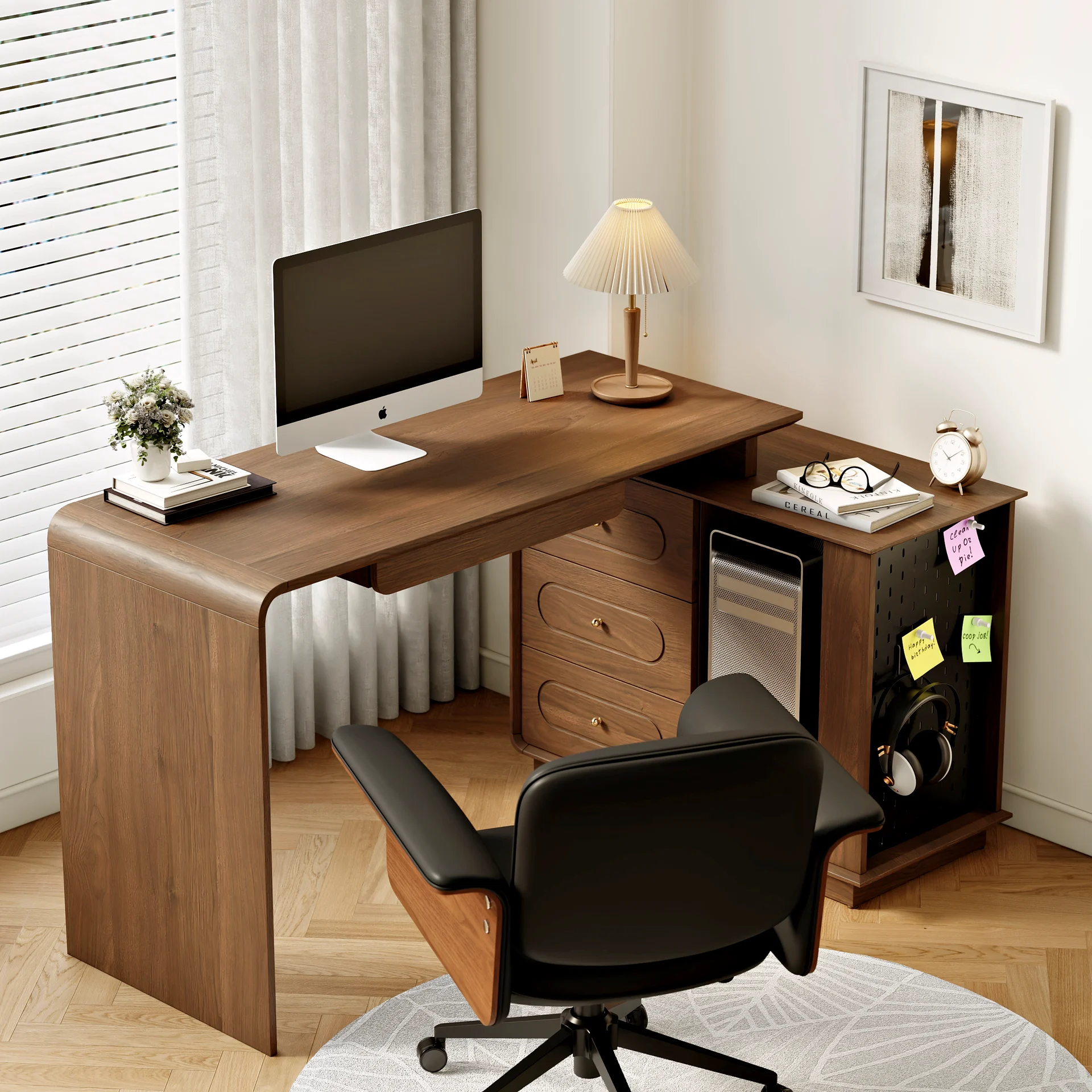
Source: Walnut L-Shaped Rotating Desk
3. Wall‑Mounted or Folding Desk
- Best for: Hallways, rooms or small bedrooms where you need the desk to “disappear”
- Typical size: 28–39 inches wide × 16–20 inches deep (folded)
Pros | Can be folded up when not in use; great for multi‑purpose rooms |
Cons | Usually not as sturdy as fixed desks; may require wall mounting |
Wall‑mounted and folding desks are ideal for people who need to switch between “office mode” and “living space mode” throughout the day. They also help keep the floor unoccupied, which visually makes the room feel larger.
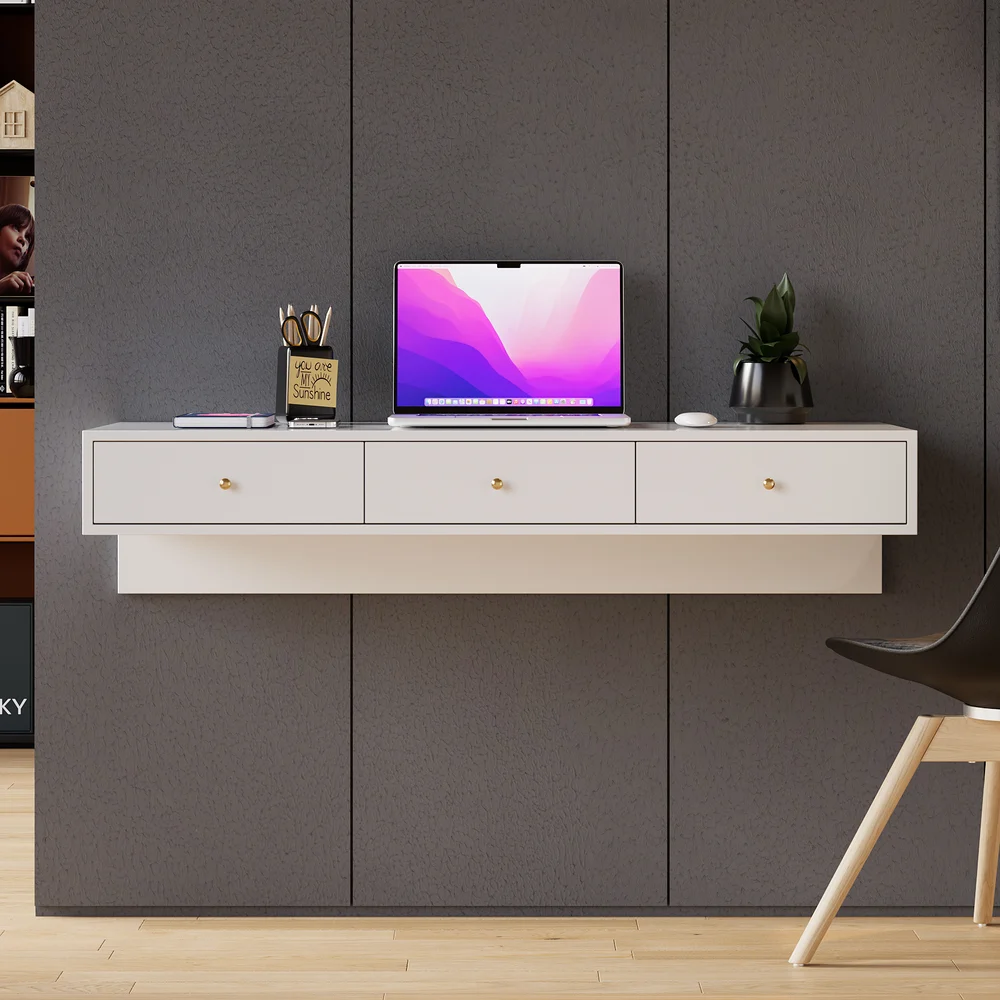
Source: Wall Mounted Floating Desk with Drawers
4. (Sit‑Stand) Desk
- Best for: Small apartments where you want flexibility and comfort
- Typical size: 31–47 inches wide × 24 inches deep
Pros | Lets you alternate between sitting and standing; good for posture |
Cons | Slightly more expensive; base may take up a bit more front space |
Even in a small office, a sit‑stand desk can be worth it if you spend long hours in front of the computer. Compact models are designed specifically for tiny spaces.
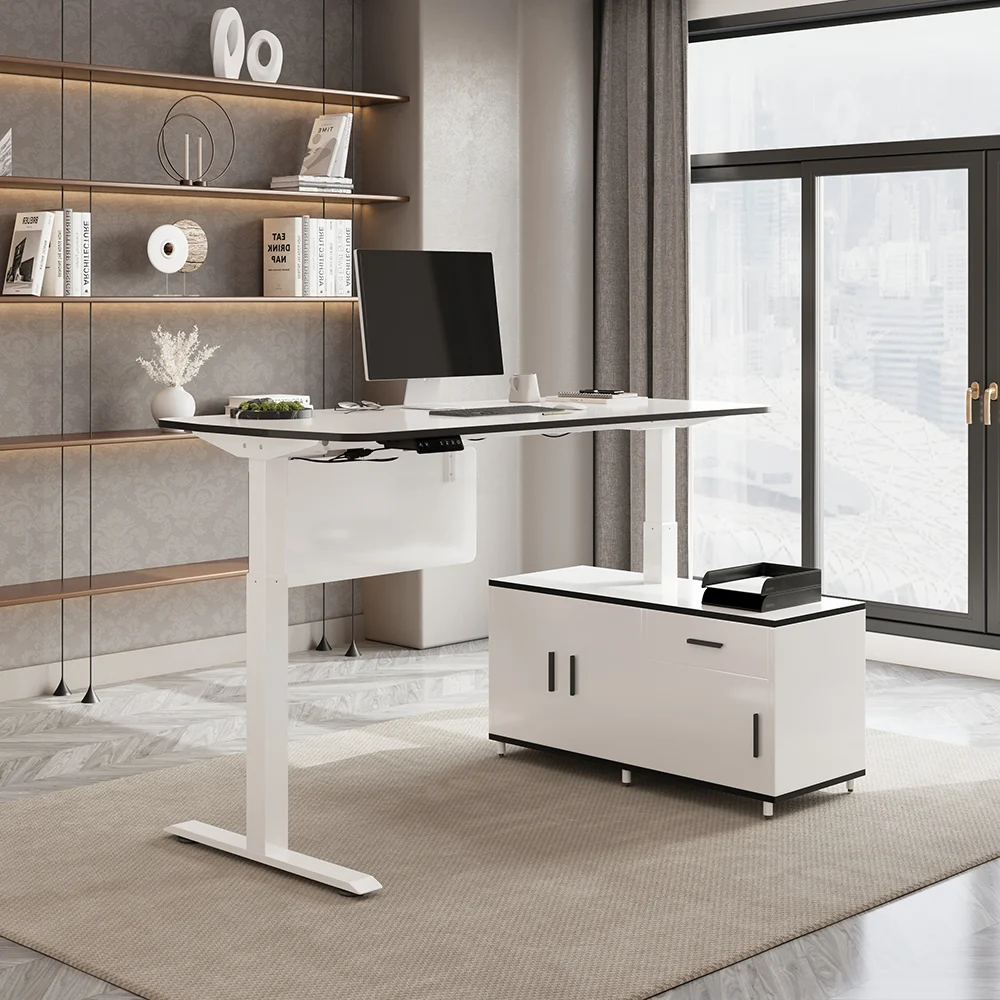
Source: L-Shaped Adjustable Standing Desk
To help you compare, here’s a simple table that matches desk types with space requirements:
If you want a space utilization solution that still feels solid and professional, many compact Homary desks fall into the L-shaped and wall‑mounted categories. You can browse these options under the office desk collection and filter by “adjustable height” or “wall‑mounted” to match your requirements.
Ergonomics on a Narrow Desk: How to Work Comfortably with Limited Space
One of the biggest misunderstandings is that ergonomics only matter when you have a big desk. The truth is, the smaller your space, the more important it is to get the basics right — otherwise, you’ll feel tired and cramped even faster.
Core Ergonomic Principles for Small Home Offices
- Your elbows should form likely 90 degrees when your hands are on the keyboard.
- Your screen top should be at or slightly below eye level when you’re sitting straight.
- Your feet should be flat on the floor or on a footrest, with your knees at about 90 degrees.
On a small desk, the challenge is that you often have to “squeeze in” your laptop, monitor, mouse, and keyboard. Here’s how to keep your body feeling comfortable:
- Use an external monitor
- If your desk is just large enough for a laptop plus a small monitor, prioritize an external screen. It allows you to keep the laptop off your main typing area and to give you a more stable viewing height.
- Use a keyboard tray or riser
- A small keyboard tray under the desk can give you extra depth without taking up more floor space. Alternatively, a simple riser can lift your laptop or monitor to a better height.
- Place the mouse close to your body
- In a narrow home office layout, it’s tempting to push the mouse to the far edge of the desk. This stretches your shoulder and can lead to neck strain. Keep the mouse within easy reach on your dominant side.
- Adjust your chair height first, then the desk
- Many people try to “fix” bad posture by moving the desk higher or lower. Start with the chair: adjust height so your elbows naturally rest at 90 degrees, then tweak the desk if needed.
If you’re considering a height‑adjustable desk, that’s where a compact Homary model can really help. By raising or lowering the surface, you can maintain a comfortable posture whether you’re sitting or standing—even in a narrow corner.
Why Smart Storage and Organization for a Tiny Home Office Helps
In a small space, storage is not an afterthought—it’s part of the design. The goal is to keep everything you need within reach, but out of the way visually, and this is the reason why storage and organization for tiny home offices helps.
Vertical Storage
- Use wall shelves or bookcases beside or above the desk.
- Install floating shelves or grid panels for papers or notebooks.
- Mount a monitor arm to free up the desktop.
This is especially powerful in small apartments because it doesn’t take up floor space. A slim bookshelf above your desk can hold notebooks, manuals, and even a small printer.
Hidden and Under‑Desk Storage
- Use drawers under the desk for chargers, cables, and small tools.
- Place a mobile rolling cart under or beside the desk for files and supplies.
- Store power strips and router cables in a cable management box.
These solutions keep the surface tidy while still giving you quick access. If you’re using a narrow desk, a small rolling cart is often more practical than a bulky filing storage cabinet.
One‑Color, One‑Texture Rule
To avoid a “cluttered” look, try this simple but useful trick:
- Use one main color or material for your storage (for example, all black containers or all wooden‑tone shelves).
- Choose simple, identical boxes for small items like pens, cables, and USB drives.
This creates visual calm even when the room is small.
Creating Visual and Psychological Separation in a Small Home
In a studio apartment or a small single‑bedroom flat, your “living room” and “office” are often in the same room. That’s why visual separation is so vital. It calls attention to your brain: “This area is for work,” not for sitting on the sofa or eating food.
Visual Boundaries
- Define your work zone with a rug or desk mat.
- Use a folding screen, room divider, or curtain between the desk and the rest of the space.
- Choose a different wallpaper or wall color behind the desk to create a subtle backdrop.
Even a small rug under your chair can make the office space feel like a separate zone. But, if you don’t want a permanent divider, a lightweight folding screen works fine and can be moved when you need to host guests.
Lighting Cues
- Use a dimmable desk lamp for work and a softer lamp for the living space.
- Turn on the desk lamp only when you’re “working,” even if the rest of the room is dimmer.
Here’s the point, lighting is a powerful psychological cue. When the desk lamp is on, it signals “work mode.” When it’s off, the space feels more like a common but chill living space.
Behavioral Boundaries
- Keep work‑only items on the desk (not TV remotes or snacks).
- Use a work‑only chair and avoid working from the sofa or other areas if possible.
- Create a small “startup ritual” (e.g., turn on the light, put on headphones) to enter working mode.
These habits help you mentally separate work from home living, even in a tiny apartment. Homary’s compact office chairs and minimalist desk designs make it easier to keep the work area clean and professional.
From Inspiration to Purchase: Expert Tips for Buying Small‑Space Home Office Furniture
Now that you know how to plan your home office layout, here are five expert tips to guide your actual purchases:
1. Prioritize “Fold‑Down & Adjustable” Over “Big & Cheap”
- Choose furniture that can change with your needs (fold‑down tables, height‑adjustable desks, roll‑under shelves).
- Avoid fixed, oversized pieces that will block doors or make the room feel smaller.
2. Measure First, Shop Later
- Write down your exact wall width, depth, and height.
- Use this as a filter when browsing online: ignore anything that doesn’t fit your dimensions.
3. Think in “Sets” Instead of Single Items
- Look for desk + chair + shelf bundles that are designed to work together.
- This reduces design mismatches and often saves money compared to buying everything separately.
4. Choose Neutral Colors and Simple Shapes
- Light wood tones, soft grays, and white are easier to match with existing décor.
- Avoid overly decorative furniture that can make a small room feel busier.
5. Leave Space for People, Not Just Furniture
- Reserve at least 28–31 inches of walking space in front of the desk.
- Make sure doors can open fully without hitting the desk or chair.
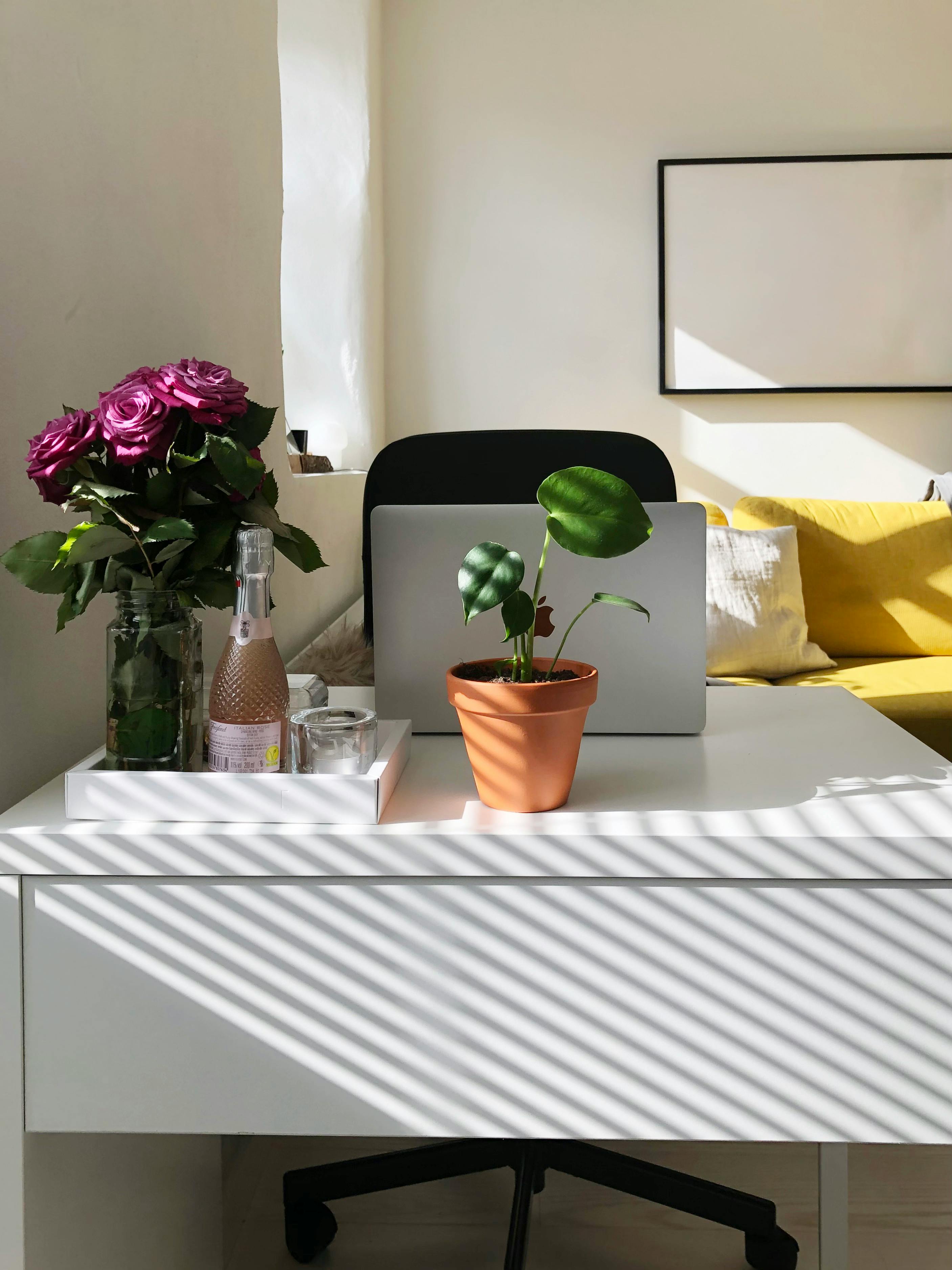
Source: Pexel
Frequently Asked Questions:
1. Should I choose a fixed small office or a folding office?
Choose a fixed small office desk if you’re working all day long and want maximum comfort and stability.
Choose a folding office desk if you need the space for other activities (like relaxing or eating).
2. How small can a home office be and still be functional?
A workspace about 35 inches wide and 24 inches deep can comfortably fit a laptop and introductory peripherals. However, you can still work by using a folding or wall‑mounted office desk and storage container to compensate if your space is smaller.
3. Are standing office desks worth it in a very narrow space?
Yes, if your office desk is at least 31 inches wide and 20 inches deep. A compact height‑adjustable desk lets you alternate between sitting and standing, which is great for energy and posture. Just make sure there’s enough clearance for the base and your chair.
4. How can I keep my home office tidy when the space is limited?
You can use cable organizers, hidden drawers, or vertical shelves to keep only essential working items on the desk, and store the others in labeled containers.
5. Can I buy everything as a set from one single brand for a small home office?
Yes, many brands, including Homary, offer small‑space office sets that include a desk, chair, and sometimes shelves. These are designed to work together and fit compact home office layouts.
By following this guide, you can turn even the tiniest corner of your home into an ergonomic, functional, and visually tidy home office. With thoughtful planning and the right home office furniture, a small space doesn’t mean compromising on comfort or productivity.