

When designing a living space built for genuine relaxation, nothing quite rivals the plush, kick-back comfort of a recliner sofa. Yet, for many homeowners and design enthusiasts, incorporating one into a chic, modern space poses a distinct layout challenge: how to accommodate the dynamic movement of a reclining footrest without making the room feel heavy, cluttered, or awkward.
Finding the right balance between luxury comfort and high-end aesthetics always comes down to balancing motion with proper scale, specifically ensuring around a 14 to 18-inch (356 to 457 mm) clearance zone for the footrest while pairing the seating with flexible, low-profile anchor pieces that maintain crisp room sightlines.
If you’re thinking of updating or renovating a living room layout, you might run headfirst into this exact dilemma. A sleek power recliner might look incredible in a showroom, but once placed in a residential space, it can easily overwhelm static coffee tables and block primary walkways whenever someone kicks their feet up. But solving this design puzzle doesn’t mean you have to give up comfort. The key is to think about choosing smart, adaptable companion pieces that work with the furniture's dynamic footprint rather than against it.
In this guide, we’ll break down practical layout strategies, crucial clearance measurements, rug rules, and styling ideas to help create a living room that feels beautifully open, functional, and inviting.
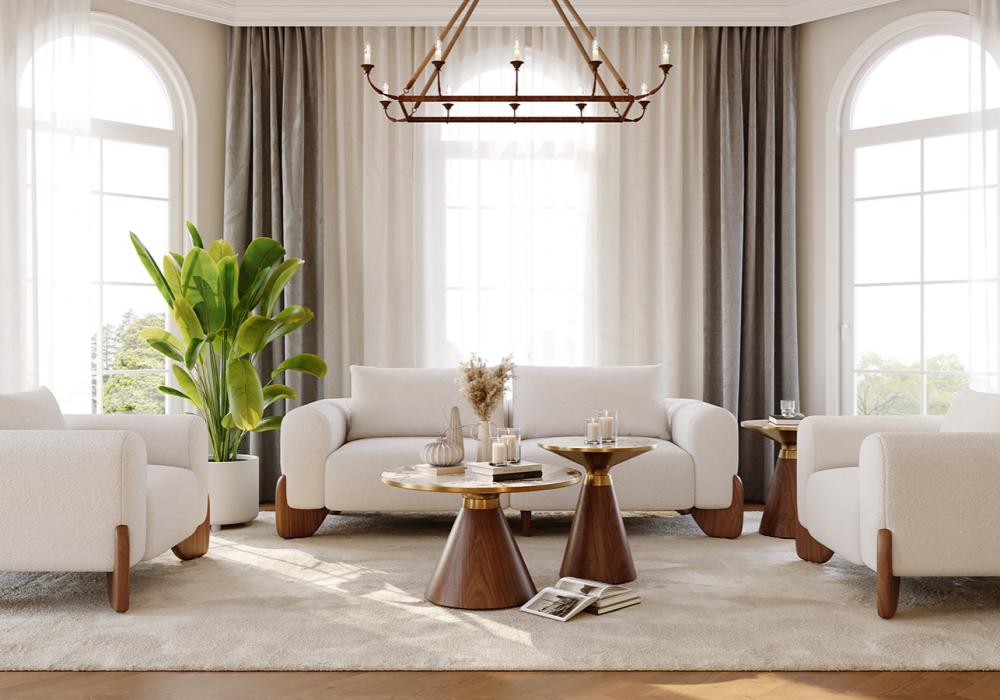
Source Homary
Key Clearance and Dimension Rules for Recliners
Nailing down the proper layout for a living room with a recliner sofa requires a bit of balancing. You need to think about ergonomics and negative space.
Unlike standard stationary sofas, reclining seating demands a dynamic layout. It has to account for both upright relaxation and full physical extension. Paying attention to three fundamental measurement zones prevents the space from feeling cramped or dysfunctional.
Wall clearance (rear distance)
The space needed behind a recliner sofa depends mostly on its internal mechanics:
- Traditional rocker/glide recliners: These require 12 to 18 inches (305 to 457 mm) of space from the backrest to the wall to fully recline without hitting the drywall.
- Wall-hugger (zero-wall) recliners: Modern engineering allows these pieces to track forward as they recline, requiring just 4 to 6 inches (102 to 152 mm) of rear clearance.
Footrest extension zone
The most important footprint measurement is the front footrest clearance. Always allocate 14 to 18 inches (356 to 457 mm) of open floor space between the fully extended footrest and any central fixture, such as a coffee table or media console. This allows family members to walk past comfortably while someone is reclining, eliminating awkward hurdles.
Sightlines and armrest elevations
To keep the living room looking open and tailored, keep surrounding secondary furniture, like side tables and lamp stands, proportional to the sofa's armrest height (typically 24 to 26 inches (610 to 660 mm)). Selecting companion pieces that are level with or slightly lower than the armrests maintains clean visual sightlines across the room.
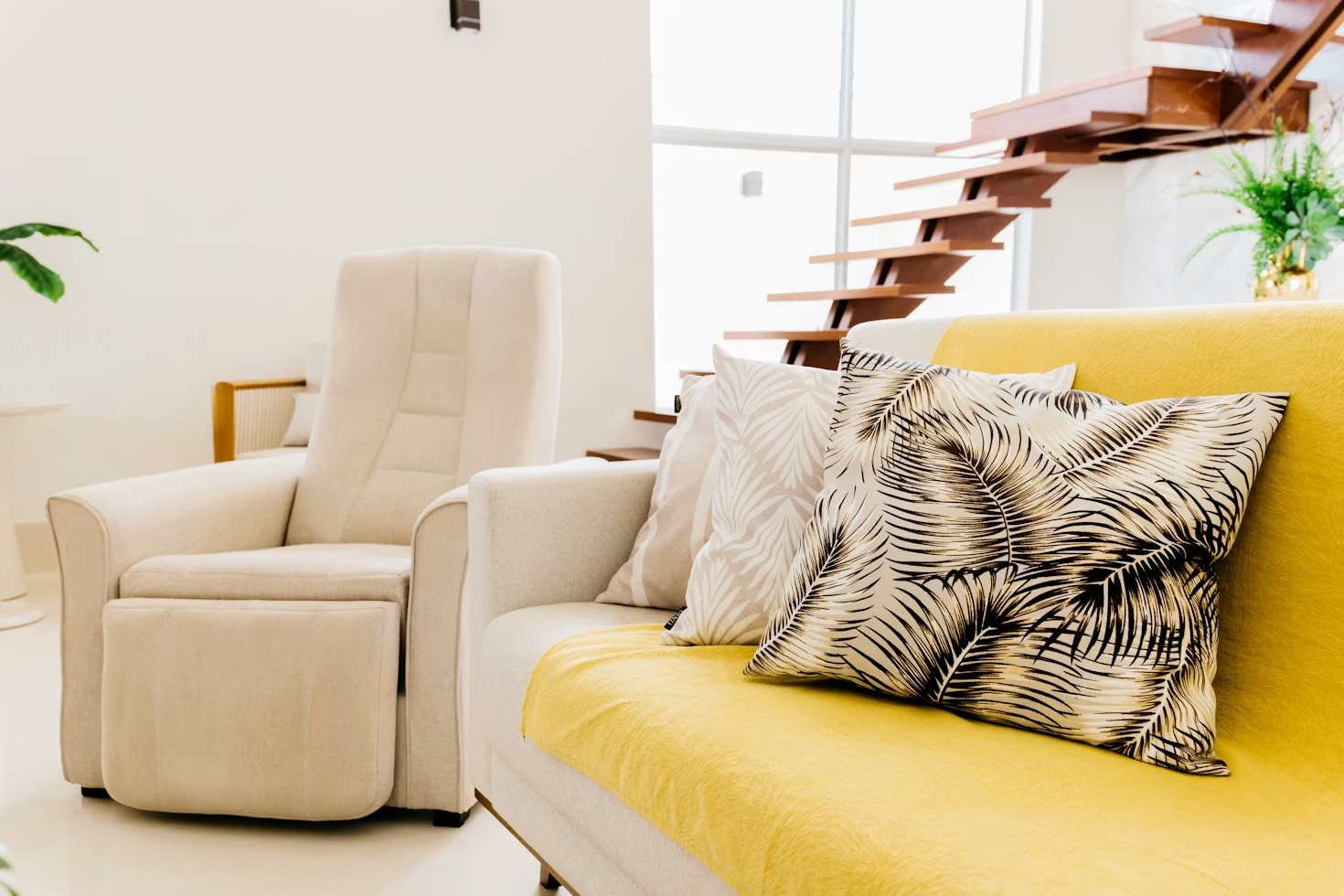
Source Unsplash (CC0)
Recliner Sofa Layout Ideas by Room Size
Finding the right configuration depends on the total square footage of the room. Using smart companion furniture helps maximize both comfort and floor space.
Room Size / Type | Recommended Layout | Ideal Rug Size | Best Table and Media Setup |
Small Apartments (Under 150 sq ft) | Position a wall-hugger recliner sofa 4 inches (102 mm) from the main wall. Pair it with lightweight, nesting accent tables that can easily be tucked away when the footrest extends. | 5' × 8' (1524 × 2438 mm) or 6' × 9' (1829 × 2743 mm) (Front legs anchored) | Mobile nesting coffee tables Compact TV consoles |
Medium Open Concept (150 to 300 sq ft) | Use an L-shaped sectional with integrated recliner footrests to partition the living zone from the dining area. Ensure primary walkways stay 48 inches (1219 mm) wide. | 8' × 10' (2438 × 3048 mm) (All front legs anchored) | Extendable TV consoles Multi-functional lift-top sets |
Large/Formal Living (300+ sq ft) | Float a dual-recliner sofa in the center of the room, anchored by twin accent armchairs across a central conversational zone. | 9' × 12' (2743 × 3658 mm) or 10' × 14' (3048 × 4267 mm) (All furniture legs fully on rug) | Architectural walnut block coffee tables Matching TV sets |
Source Homary
Pairing Coffee Tables and TV Stands for Seamless Scale
Because reclining seating moves continuously, pairing it with static companion furniture requires a little extra thought. The goal is to choose pieces that adjust flexibly to shifting legroom while maintaining visual balance.
Nesting and glass-top sets for visual airiness
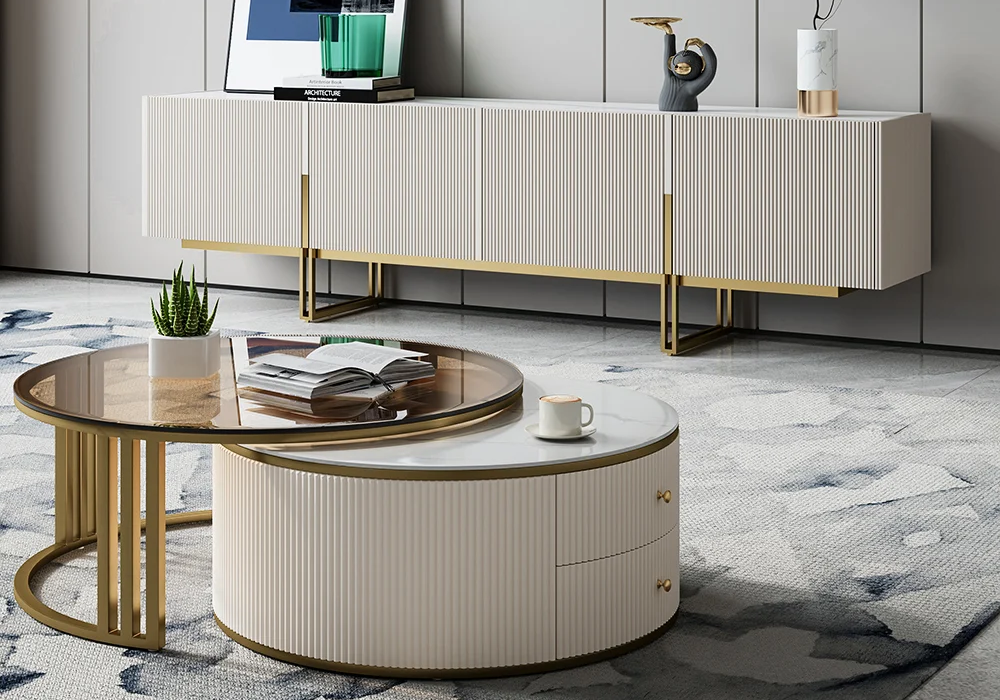
In compact spaces or rooms where light needs to flow freely, round and nesting coffee tables are ideal for recliner sofas. Curved edges remove sharp corners near extending footrests. And glass tops keep sightlines open to stop a room from feeling cramped.
- Style inspiration: The Grovyn 78.7" (1999 mm) TV Stand & Nesting Coffee Table Set combines an off-white media unit with a transparent glass coffee table. The smaller nesting table can be moved aside whenever someone wants to recline fully.
- Streamlined function: For a clean, contemporary aesthetic, the Fero Extendable TV Stand & Nesting Coffee Table Set offers an adjustable-length TV unit with nesting tables. This makes it easy to tailor storage to changing room dimensions.
Extendable media consoles and multi-tasking storage
When opting for a larger power-reclining sectional, media furniture should feel anchored without overwhelming the space. Extendable designs allow you to shift the room's visual weight and storage footprint effortlessly.
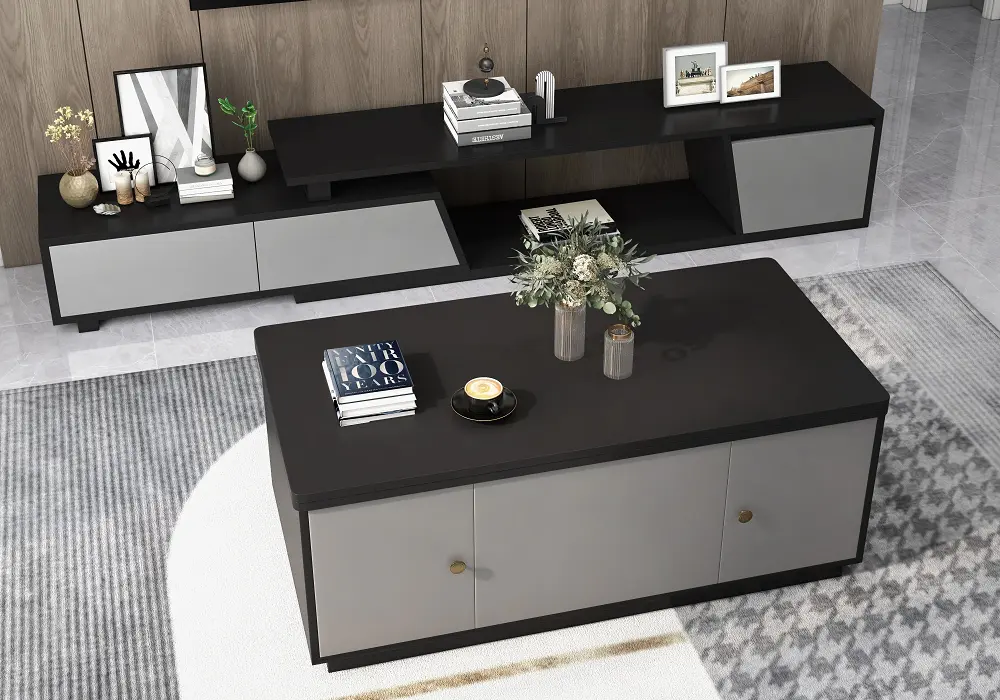
- Ergonomic functionality: Our Set of 2 Gray Extendable 3 Drawers TV Stand & Lift-Top Coffee Table Set Up to 120" (3048 mm) offers a lift-top coffee table that raises your laptop or drinks to a comfortable height, aligning naturally with a relaxed, reclined posture.
Warm mid-century finishes for anchoring bulk
Plush leather or upholstered recliner sofas carry significant visual weight. Balancing that presence requires companion furniture with warm, organic textures and strong structural silhouettes.
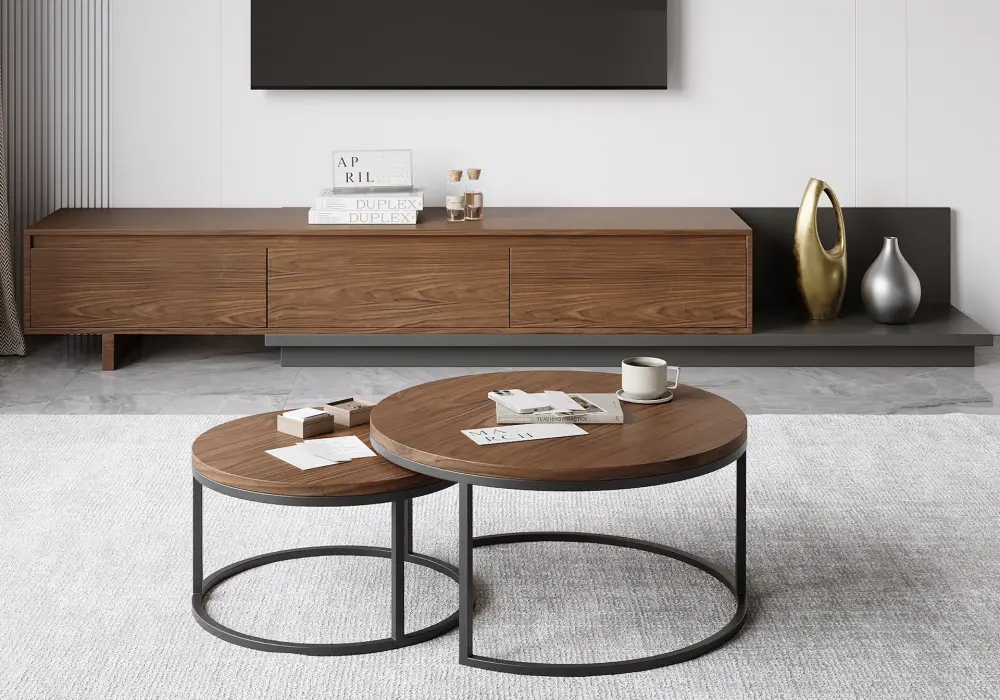
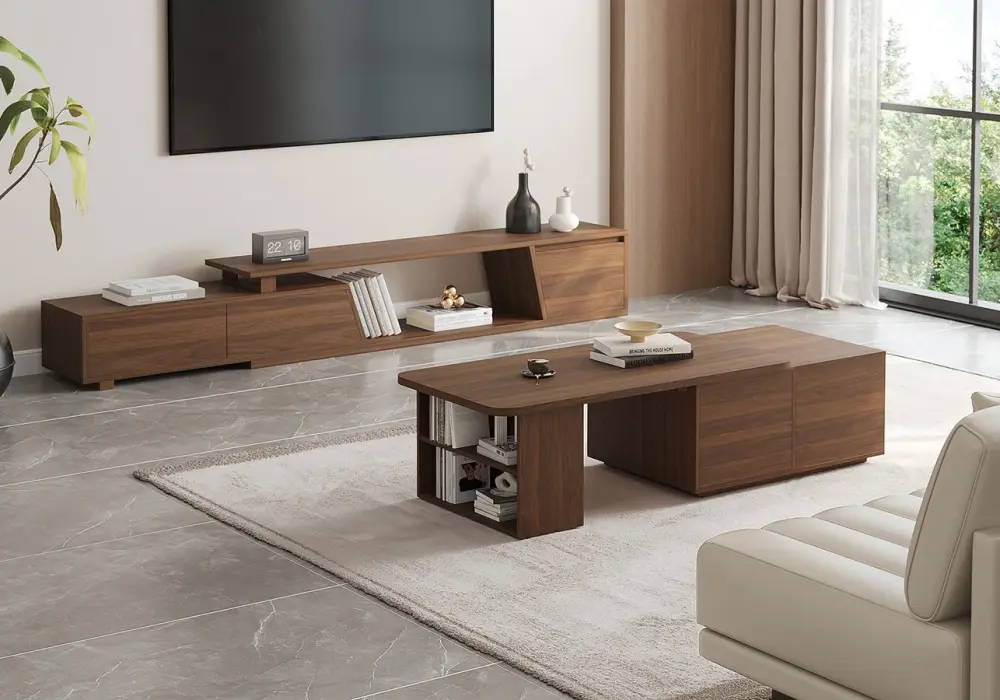
- Warmth and stability: The Fero Mid Century Extendable Walnut TV Stand & Block Coffee Table Set uses rich walnut tones and clean geometric lines to anchor heavy seating arrangements beautifully.
- Balanced proportions: The Quoint Extendable TV Stand & Coffee Table Set brings timeless architectural balance to modern living rooms, combining flexible storage with classic wood textures.
Source Homary
How to Anchor Your Space: Rug and Lighting Rules
Once you’ve established some physical clearance rules, the next design consideration is on creating a sense of visual cohesion. Recliner sofas carry considerable physical weight. So to keep things balanced, it’s important to make use of soft furnishings and architectural lighting.
The right area rug grounds the footprint of a recliner. This is paired with strategic lighting to remove any potential glare and accommodate line-of-sight angles when the recliner is kicked back. By coordinating textiles and lighting around reclining furniture, the seating zone feels deliberately styled rather than randomly placed in your living room.
Area rug placement
A common mistake with recliner sofas is choosing a rug that gets caught in the mechanical footrest.
- Size for motion: Ensure the rug extends at least 12 to 18 inches (305 to 457 mm) past the fully extended footrest. This prevents the mechanical base from catching the rug edge during operation.
- Pile height: Choose low-pile woven or flat-weave wool rugs. High-pile shags can jam under lower reclining mechanisms over time.
- Anchoring rule: Either place all four sofa legs on the rug or secure the front legs firmly over the edge, using a high-quality non-slip rubber rug pad underneath.
Lighting rules
Reclining changes your body's viewing angle. It tilts your gaze upward toward the ceiling and high walls. Here are some tips to help you adjust your lighting layout accordingly:
- Task and ambient balance: Avoid overhead recessed lights directly above the recliner's headrest/ This can create direct glare when lying back. Instead, place adjustable arc floor lamps or swing-arm wall sconces slightly behind or to the side of the sofa.
- Ergonomic TV angles: Design guidelines from display specialists suggest that the ideal TV viewing field spans approximately 30 to 40 degrees. When reclining, your natural line of sight shifts 10 to 15 degrees upward. Mounting the TV on a subtle tilt bracket ensures a comfortable view without neck strain.
Styling Modern vs. Traditional Recliner Living Rooms
Recliner sofas are no longer restricted to bulky, oversized silhouettes of the past. Today’s recliner designs range from ultra-sleek, power-reclining leather profiles to plush, tufted fabric models that fit effortlessly into classical interiors.
Choosing the surrounding decor comes down to room design. Do you want crisp contemporary minimalism? Or perhaps a warmer and more traditional character.
Tailoring companion materials, such as pairing steel and glass against modern leather or organic walnut block tables alongside classic fabric, allows the recliner to enhance the home’s overall design narrative.
Modern minimalist approach
- Seating profile: Choose power recliners with hidden controls, slim armrests, and high-clearance metal legs.
- Companion pieces: Pair low-slung, neutral seating with sleek stone or glass nesting coffee tables to maintain an open, uncluttered feel.
- Color palette: Stick to monochromatic palettes like whites, cool grays, and charcoal, accented by subtle metallic touches.
Warm traditional and mid-century approach
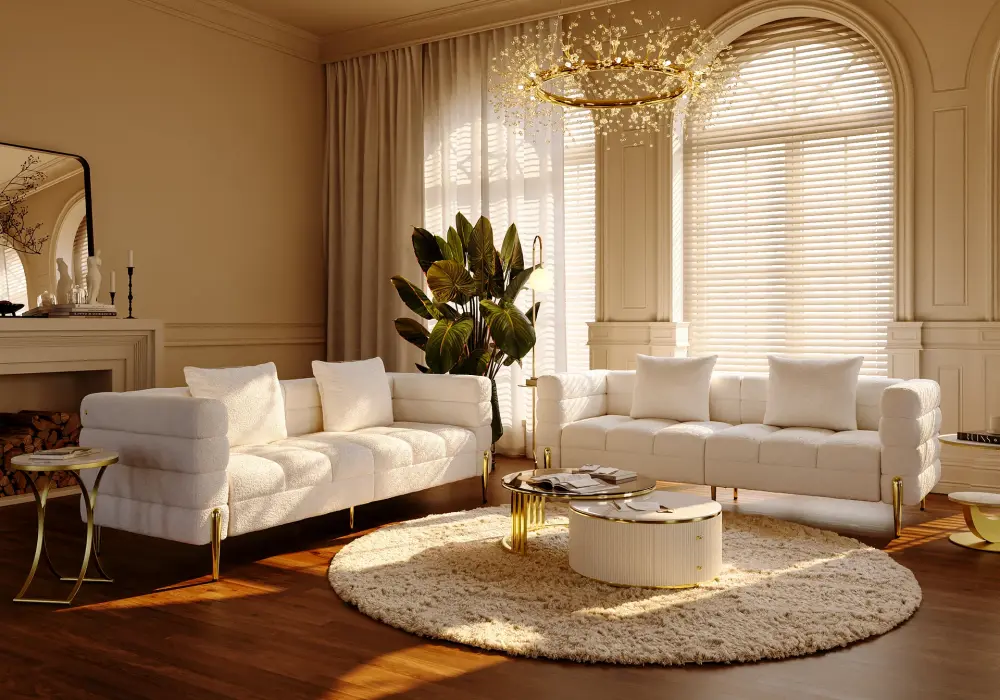
- Seating profile: Opt for plush, tufted upholstery or deep-brown leather recliners with classic rolled arms.
- Companion pieces: Balance substantial seating with rich walnut wood tables, structured accent pillows, and warm brass floor lamps.
- Color palette: Ground the room in earthy neutrals, warm creams, and deep forest greens or terracotta hues.
Source Homary
FAQs About Recliner Sofa Living Room Ideas
How far away should a coffee table be from a recliner sofa?
Maintain a distance of 14 to 18 inches (356 to 457 mm) from the front of the sofa when the footrest is fully extended. If floor space is tight, lightweight nesting or C-shaped end tables offer a practical alternative, allowing you to move surfaces closer or further away as needed.
Can you put a recliner sofa in a small living room without it looking crowded?
Yes. Choose a “wall-hugger” model that requires only 4 to 6 inches (102 to 152 mm) of rear wall clearance. Pair it with low-profile, floating TV consoles and glass or nesting coffee tables to keep floor space open and uncluttered.
What is the optimal TV viewing distance when sitting in a reclined position?
Because reclining tilts your head back slightly, aim for a viewing distance roughly 1.5 to 2 times the screen's diagonal size. Mounting the television on a downward-tilting wall bracket helps align the display with your natural line of sight.
Should all legs of a recliner sofa sit on the area rug?
Ideally, either all four legs or at least the front two legs should sit securely on the rug. Make sure to use a non-slip rug pad underneath so the mechanical motion of the recliner doesn't shift or bunch up the rug fabric over time.
How can you conceal electrical cords and power packs for a power recliner sofa?
To keep an open-concept living room looking sleek and hazard-free, hide power cords by running them beneath your area rug using flat rubber cable protectors. If the sofa sits in the center of the room far from a wall outlet, invest in a rechargeable wireless lithium-ion battery pack designed for power furniture. This removes any visible trailing wires altogether, allowing power recliners to float seamlessly in the middle of the layout without relying on nearby wall plugs.
Craft Your Dream Living Space
Adding a recliner sofa into your living room doesn't mean sacrificing sleek, sophisticated style. Comfort and elegance can coexist. But you need to keep clearance rules in mind. You have to opt for versatile companion furniture. And you also need to anchor the layout with strategic lighting and textiles.
With these considerations in mind, you can easily build a room that balances fluid motion with high-end architectural aesthetics. Making these small adjustments can give you massive results.
Designing a functional home should feel inspiring, not restrictive. When every piece works in harmony, your living space becomes a true sanctuary for everyday relaxation and seamless hosting. The right proportions make all the difference.
Ready to transform your home layout? Explore Homary’s luxury selection of extendable media consoles, flexible nesting coffee tables, and curated matching living room sets to find the perfect heirloom-quality anchor pieces for your home today.