

Quick Answer: The Most Weather-Resistant Patio Furniture Materials
The most weather-resistant patio furniture materials are powder-coated aluminum, HDPE lumber, and high-quality teak. These three materials outperform all others when it comes to withstanding sun, rain, snow, salt air, and temperature extremes.
For most homeowners seeking the best balance of durability, low maintenance, and value, powder-coated aluminum and HDPE lumber are the top recommendations.
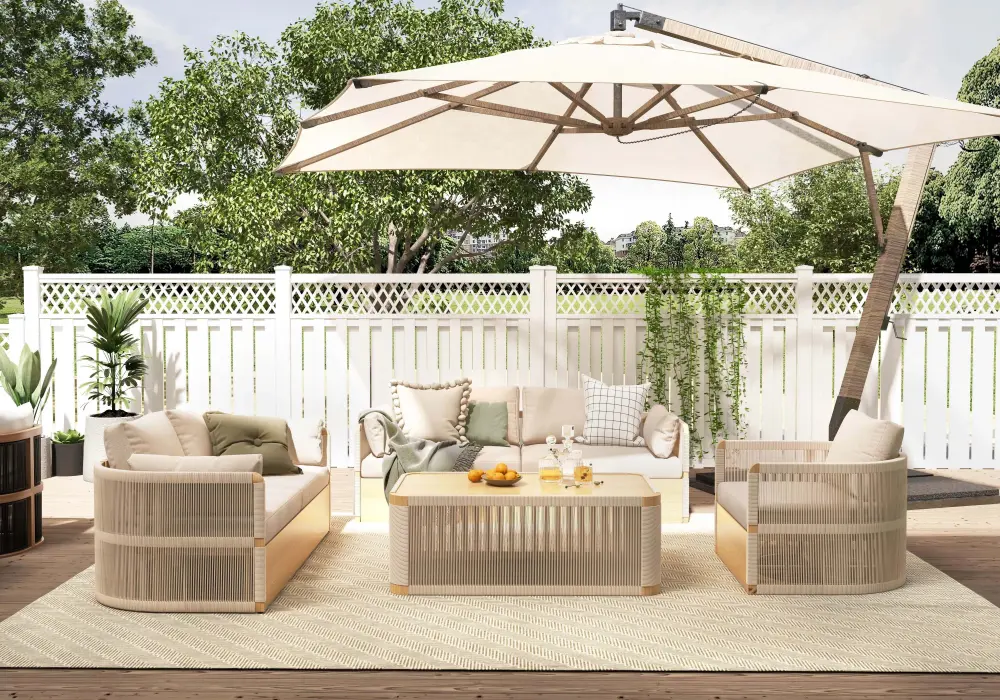
Outdoor Rope Weave Swivel Sofa Set Image courtesy of Homary
Table of Contents
The Challenge of Choosing Weatherproof Patio Furniture
Investing in patio furniture is a significant decision. You want pieces that look great, feel comfortable, and—most importantly—can withstand the relentless assault of sun, rain, wind, and even snow. The frustration of faded cushions, rusted frames, or cracked wood is all too common. The core problem isn't just the weather; it's matching the right material to your specific climate and lifestyle. Understanding the key decision factors—durability, weather resistance, and maintenance—is essential to making a smart, long-lasting purchase.
Why Material Choice Matters
The material is the single most critical factor determining your furniture's lifespan. It dictates how well it will resist fading from UV rays, warping from moisture, cracking from freeze-thaw cycles, and corrosion from salt air. Choosing the wrong material can lead to costly replacements every few years.
Climate Considerations
Your local weather should be your primary guide:
- Hot & Sunny: UV resistance and heat tolerance are paramount.
- Rainy & Humid: Rust-proof materials and moisture resistance are non-negotiable.
- Freezing Winters: Materials must withstand expansion and contraction without cracking.
- Coastal Areas: Salt air is highly corrosive; only truly rust-proof materials survive.
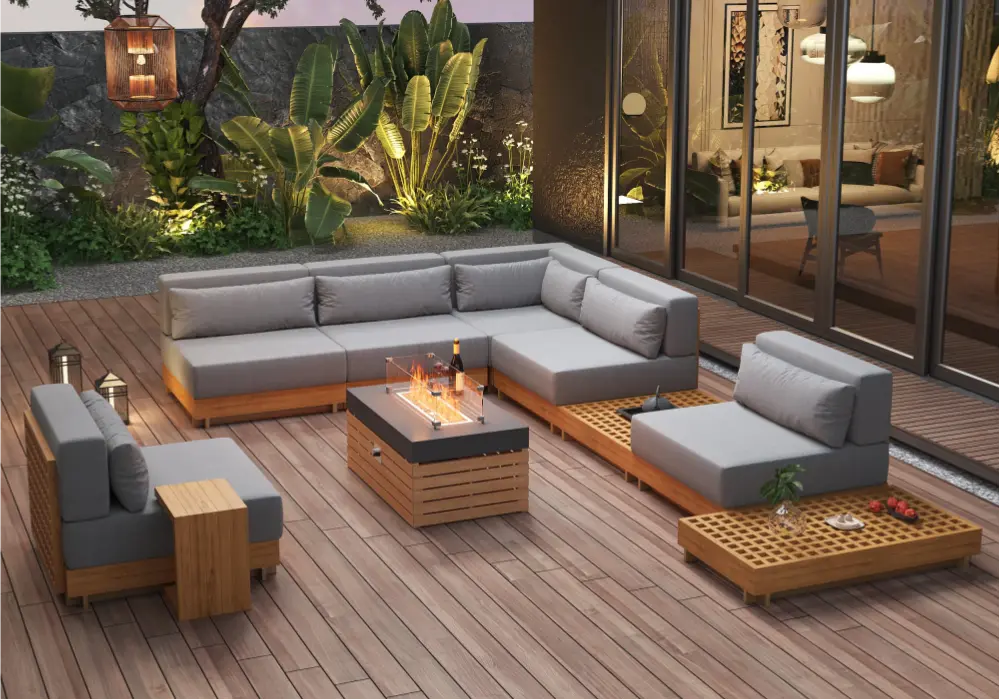
Premium Teak Modular L-Shaped Outdoor Sofa Set Image courtesy of Homary
Material-by-Material Guide: Weather Resistance Compared
Powder-Coated Aluminum
Direct Answer: Powder-coated aluminum is one of the most weather-resistant materials available. It never rusts, resists fading, and requires very little maintenance, making it a top choice for almost any climate.
Best for: Rainy, humid, and coastal climates where rust is a primary concern. Excellent for modern, low-maintenance patios.
Key Advantages:
- Rust-proof: Does not corrode, even in salty coastal air.
- Lightweight: Easy to rearrange, but can be a liability in high winds.
- Low Maintenance: A simple soap-and-water wash keeps it looking new.
- Versatile: Available in countless styles and colors; often used as frames for resin wicker.
Key Drawbacks:
- Heat Conductor: Can become uncomfortably hot in direct sunlight.
- Weight: Lighter pieces can be blown around in strong winds.
- Quality Variance: Look for marine-grade powder coating for the best protection; cheaper finishes can chip and allow corrosion.
Maintenance:
- Routine: Clean with mild soap, warm water, and a soft cloth.
- Preventive: Touch up any scratches in the powder coating to prevent corrosion.
- Covers: Not strictly necessary but recommended for winter or extreme weather to extend finish life.
Durability Considerations:
- UV: Powder coating resists fading, but color can fade over a decade.
- Rain/Humidity/Salt Air: Performs exceptionally well; won't rust or degrade.
- Snow/Freezing: Unaffected by freeze-thaw cycles.
- Wind: Lightweight frames may require anchoring in high winds.
Best Alternative: HDPE lumber for a heavier, wood-like look that also resists moisture and doesn't get as hot in the sun.
HDPE Lumber (Poly Lumber)
Direct Answer: HDPE lumber is arguably the most weather-resistant material available. Made from high-density polyethylene, it is non-porous, won't absorb moisture, resists fading, and never needs painting or sealing.
Best for: Year-round, leave-it-outside durability in any climate, especially where wood-like aesthetics and zero maintenance are desired.
Key Advantages:
- Extreme Durability: Resists cracking, peeling, fading, and warping.
- Weather-Proof: Non-porous, so it won't absorb moisture, preventing mold and mildew.
- Fade-Resistant: Color is infused throughout the material (ColorStay™ technology), so scratches are less visible.
- Low Maintenance: No painting, staining, or sealing required. Cleans with soap and water.
Key Drawbacks:
- Heavy: Difficult to move, but this makes it stable in wind.
- Higher Initial Cost: More expensive than some resin options, but the longevity justifies the price.
- Aesthetic: Looks like painted wood; lacks the natural grain and warmth of real wood.
Maintenance:
- Routine: Clean with mild soap, water, and a soft-bristle brush as needed.
- Seasonal: No seasonal care required; can be left outside year-round.
Durability Considerations:
- UV: Excellent fade resistance, even in intense sun.
- Rain/Humidity/Salt Air: Completely impervious; does not absorb water or corrode.
- Snow/Freezing: Withstands freeze-thaw cycles without cracking.
- Wind: Heavy and stable, making it a good choice for windy locations.
Best Alternative: Powder-coated aluminum for a lighter, more modern look and easier movement.
Teak
Direct Answer: Teak is a premium natural hardwood that is exceptionally weather-resistant. Its high oil content and dense grain make it naturally resistant to rot, insects, and moisture, allowing it to last for decades outdoors.
Best for: A premium, natural look with heirloom-quality longevity. Ideal for those who appreciate warmth, character, and are willing to invest upfront.
Key Advantages:
- Naturally Durable: High oil content and dense grain make it resistant to rot, insects, and moisture.
- Timeless Aesthetic: Warms up any space and ages beautifully to a silver-gray patina.
- Longevity: High-quality teak furniture can last for decades.
- Wind Resistance: Heavy and substantial, doesn't blow away easily.
Key Drawbacks:
- High Cost: One of the most expensive outdoor furniture materials.
- Maintenance: Optional but required if you want to preserve its original golden color (oiling required).
- Weight: Very heavy, making it difficult to rearrange.
Maintenance:
- Routine: Wash with mild soap and water.
- Seasonal: No protective sealant is needed for structural integrity. To maintain the golden color, apply teak sealer. To let it patina naturally, do nothing.
Durability Considerations:
- UV: Withstands UV exposure; may fade to a uniform silver-gray.
- Rain/Humidity: Naturally resistant; oil content repels water.
- Snow/Freezing: Performs well; dense hardwood resists cracking.
- Salt Air: Good, but salt can cause a rougher texture over time; washing helps.
Best Alternative: Powder-coated aluminum for a more modern, maintenance-free look.
Resin Wicker (PE Wicker)
Direct Answer: Resin wicker made from polyethylene (PE) is a weather-resistant option for classic styling. However, its durability depends entirely on the quality of the frame underneath—always choose powder-coated aluminum.
Best for: A classic, textured look with better weather resistance than natural wicker. Well-suited for casual, traditional, and transitional patios.
Key Advantages:
- Weather-Resistant: Unlike natural rattan, PE wicker is designed for outdoor use, resisting moisture, UV, and fading.
- Lightweight: Easy to move and arrange.
- Comfortable: Naturally offers some flexibility and gives a cozy feel.
- Aesthetic: Provides the warmth and texture of natural wicker without the maintenance.
Key Drawbacks:
- Frame Matters: The frame underneath is a critical failure point; often made of steel that can rust. Always opt for a powder-coated aluminum frame.
- Durability: Over a long period (10+ years), it can become brittle.
- Cleaning: The woven surface can trap dirt and debris, making it slightly harder to clean than solid surfaces.
Maintenance:
- Routine: Rinse with water and wipe with a soft cloth; use a brush for crevices.
- Seasonal: Store indoors or use protective covers during harsh winter months to extend its life.
Durability Considerations:
- UV: Good UV resistance if made from high-quality PE wicker.
- Rain/Humidity: Does not absorb moisture, but the frame must be rust-proof.
- Snow/Freezing: Can withstand cold, but some types may become more brittle.
- Salt Air: Good, as long as the frame is aluminum.
Best Alternative: Powder-coated aluminum frames for a cleaner, more modern look.
Stainless Steel
Direct Answer: Marine-grade stainless steel (such as 304 or 316) is highly weather-resistant and extremely strong. It is one of the most durable options but comes with a premium price tag.
Best for: Premium, contemporary outdoor spaces in coastal or high-wind areas where strength and corrosion resistance are top priorities.
Key Advantages:
- Extremely Strong: Can support heavy weight and withstand high winds.
- Corrosion-Resistant: Marine-grade stainless steel resists rust and salt corrosion.
- Modern Aesthetic: Offers a sleek, contemporary look.
- Long-Lasting: Can last for decades with minimal maintenance.
Key Drawbacks:
- High Cost: One of the most expensive metal options.
- Heat Conductor: Can get hot in direct sunlight.
- Fingerprints: Shows smudges and fingerprints more easily than other materials.
Maintenance:
- Routine: Wipe down with a soft cloth and mild detergent.
- Seasonal: Use a stainless steel cleaner to maintain the finish and prevent pitting.
Wrought Iron & Steel
Direct Answer: Wrought iron and standard steel are not recommended for wet or coastal climates due to their tendency to rust. They are best suited for dry, arid climates where moisture is not a concern.
Best for: Traditional, formal outdoor spaces in dry climates where durability and intricate designs are valued.
Key Advantages:
- Very Heavy: Extremely stable in high winds.
- Strong: Can support heavy weight.
- Ornate Designs: Allows for intricate, decorative patterns.
Key Drawbacks:
- Rusts Easily: Requires regular repainting and rust prevention.
- High Maintenance: Needs annual or bi-annual painting or powder coating.
- Heat Conductor: Gets very hot in direct sunlight.
Maintenance:
- Routine: Wash with soap and water to remove dirt.
- Seasonal: Inspect for rust and sand down any affected areas. Repaint or apply rust-resistant primer annually.
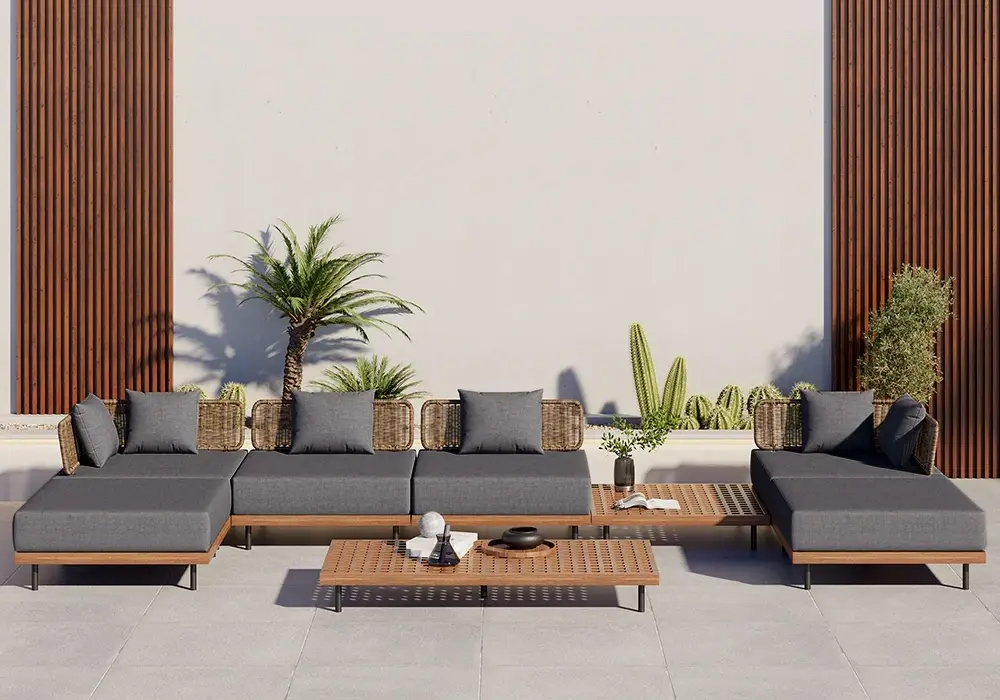
Teak & Aluminum & Rattan Outdoor Sectional Sofa Set Image courtesy of Homary
Weather Resistance at a Glance
Material | UV Resistance | Moisture | Freeze-Thaw | Wind | Maintenance Level | Typical Lifespan |
Powder-Coated Aluminum | Good (Fade resistant) | Excellent (Rust-proof) | Excellent | Fair (Lightweight) | Very Low | 15-20+ years |
HDPE Lumber | Excellent (Fade-proof) | Excellent (Non-porous) | Excellent | Excellent (Heavy) | Very Low | 20-30+ years |
Teak | Excellent (Patina) | Excellent (Natural oils) | Excellent | Excellent (Heavy) | Low-Medium (Optional) | 25-50+ years |
Resin Wicker | Good (Quality dependent) | Good (If Aluminum frame) | Good | Fair (Lightweight) | Low-Medium | 10-15 years |
Stainless Steel (Marine-Grade) | Excellent | Excellent | Excellent | Excellent (Heavy) | Low | 25+ years |
Wrought Iron / Steel | Good (If coated) | Poor (Rusts) | Good | Excellent (Heavy) | High | 10-15 years (with maintenance) |
Best Patio Furniture by Climate
Best for Rainy or Humid Climates
Recommendation: Powder-coated aluminum or HDPE lumber are the clear winners. Both are non-porous and won't rust, rot, or absorb moisture, effectively preventing mold and mildew growth. Resin wicker with an aluminum frame is also a good option.
Avoid: Steel and wrought iron, which will rust and corrode quickly.
Best for Hot and Sunny Weather
Recommendation: HDPE lumber and teak are excellent choices for intense sun. HDPE won't fade or absorb heat like metal, making it comfortable to touch. Teak's natural oils prevent cracking and drying from UV exposure.
Avoid: Steel and dark-colored aluminum, which absorb heat and become uncomfortably hot. Opt for lighter powder-coat colors to reflect heat.
Best for Freezing Temperatures & Snow
Recommendation: HDPE lumber, powder-coated aluminum, and resin wicker with aluminum frames are the top picks. These materials do not absorb moisture, so they won't crack due to the freeze-thaw cycle. Teak also performs exceptionally well, as its dense grain resists splitting. Store cushions indoors to prevent cracking.
Best for Coastal Areas (Salt Air)
Recommendation: Powder-coated aluminum and HDPE lumber are the undisputed champions for coastal environments. Aluminum is naturally corrosion-resistant and doesn't react with salt. HDPE is completely inert and unaffected by salt spray. Marine-grade stainless steel is a premium alternative.
Avoid: Standard steel and wrought iron.
Best for Windy Locations
Recommendation: Heavy materials like teak, HDPE lumber, and wrought iron (though it rusts) are the most stable. For lighter aluminum and resin wicker pieces, use sandbags, furniture anchors, or place them in sheltered areas. Consider designs with wider bases for added stability.
Best for Low Maintenance
Recommendation: HDPE lumber and powder-coated aluminum are the leaders. Both require only occasional soap-and-water cleaning. No painting, staining, or sealing is ever needed. Resin wicker with an aluminum frame is also low-maintenance but may require more detailed cleaning to remove debris from the weave.
Best for Families with Kids or Pets
Recommendation: Powder-coated aluminum and HDPE lumber are the safest bets. They are durable, easy to clean (spills wipe right off), and won't splinter or rust. Avoid materials that get very hot in the sun, as they can burn little hands and paws. Rounded edges are also a plus for safety.
Best for Small Patios or Balconies
Recommendation: Lightweight materials like powder-coated aluminum and resin wicker are ideal for small spaces because they are easy to move and rearrange. Folding or stackable aluminum furniture is particularly space-efficient. Consider bistro sets or compact seating that won't overwhelm a small area.
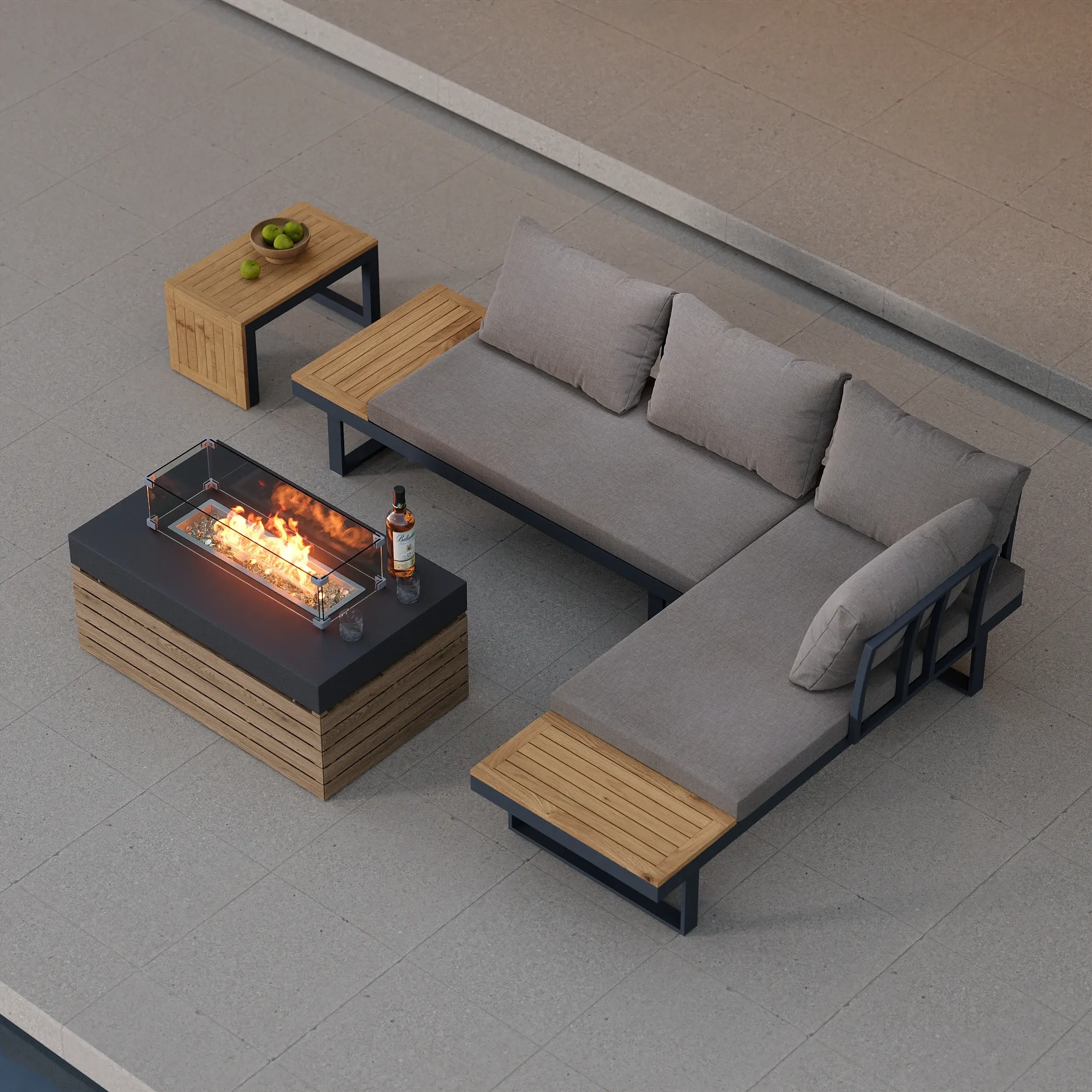
Modular L-Shaped Teak Sectional Outdoor Sofa Set Image courtesy of Homary
FAQ
What is the best outdoor furniture material for rain?
Powder-coated aluminum and HDPE lumber are the most rain-resistant. They don't absorb moisture, preventing rust, rot, mold, and warping. Resin wicker with an aluminum frame is also a good choice.
What is the most durable material for outdoor furniture?
Powder-coated aluminum and HDPE lumber are extremely durable. For natural materials, teak is the most durable wood. They resist warping, cracking, rusting, and fading over decades.
What is HDPE outdoor furniture?
HDPE stands for High-Density Polyethylene. It's a durable, recyclable plastic lumber used to make weatherproof patio furniture that resists moisture, UV rays, and insects. It's one of the most low-maintenance materials available.
Can patio furniture be left outside in winter?
Yes, but it depends on the material. Powder-coated aluminum, HDPE lumber, teak, and high-quality resin wicker (with an aluminum frame) can typically be left outside. However, storing or covering furniture during extreme weather will extend its life.
What is the most weather-resistant material for outdoor furniture?
HDPE lumber and powder-coated aluminum are considered the most weather-resistant materials for outdoor furniture. They resist UV, moisture, salt, and temperature extremes without degrading.
The Bottom Line
The most weather-resistant patio furniture uses powder-coated aluminum, HDPE lumber, or teak. Aluminum and HDPE are your best bets for zero-maintenance, all-weather durability that can handle rain, snow, salt, and sun without complaint. If you prefer a natural aesthetic with unmatched longevity, teak is a premium investment that can last a lifetime. Match your local climate to the material's strengths, consider the maintenance you're willing to commit to, and you'll enjoy your outdoor space for decades. Now that you understand the materials, you're equipped to make a confident decision for your home.