

Why Your TV Stand Choice Matters More Than Ever in 2026
Choosing the right TV stand has evolved from a simple furniture decision into a critical component of home safety, viewing comfort, and interior design. In 2026, with televisions growing larger and thinner, the margin for error in selecting the proper support has never been smaller.
The consequences of getting it wrong extend beyond aesthetics. According to data from the U.S. Consumer Product Safety Commission, an estimated 17,800 people annually are injured in furniture and TV tip-over incidents, with children under 18 accounting for 44% of these injuries. A properly sized stand isn't just about creating a beautiful living space—it's about protecting your family and your investment.
This comprehensive guide will walk you through everything you need to know: from the exact formula for determining the perfect width and height, to understanding material durability, storage configurations, and the often-overlooked safety features that should influence your decision.
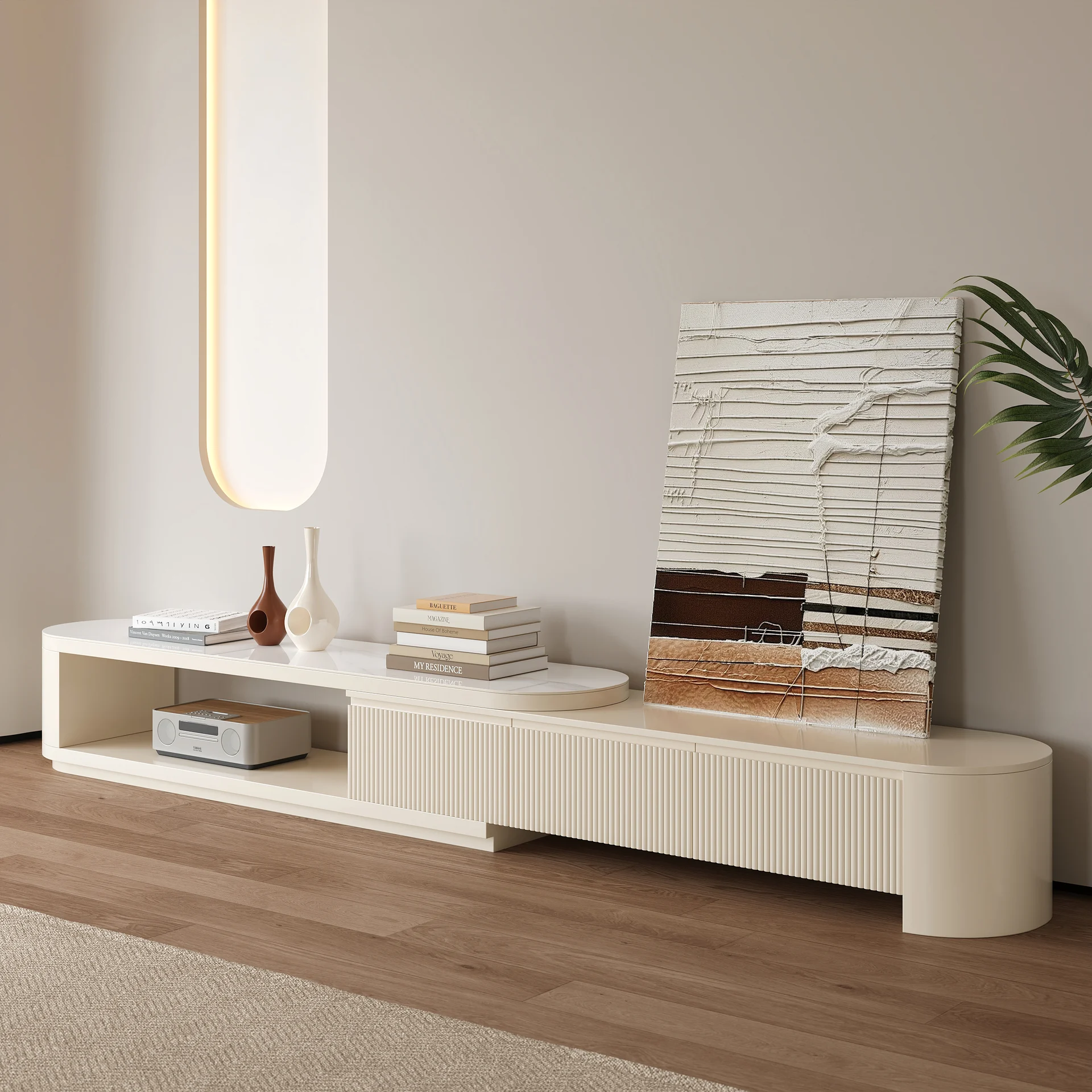
Source Homary
Finding the Perfect TV Stand Width
The most common mistake in TV stand selection is choosing one that's too narrow. A stand that's barely wider than your television creates a visual imbalance and, more importantly, a stability hazard.
The 2-6 Inch Golden Rule
The industry-standard recommendation is to choose a TV stand that is 2 to 6 inches (51 to 152 mm) wider than your television on each side. This means your stand should be 4 to 12 inches (102 to 305 mm) wider than your TV's total width.
Here's why this rule works:
- Stability: A wider base distributes weight more effectively, reducing tip-over risk from accidental bumps or earthquakes
- Visual Proportion: The stand should anchor the TV, not look like it's struggling to support it
- Component Space: Extra width provides essential surface area for soundbars, gaming consoles, and decorative items
TV Stand Width Reference Chart
Use this quick-reference chart to narrow down your options:
TV Size (Diagonal) | Approximate TV Width | Recommended Stand Width | Best For |
43 inches (1092 mm) | ~38 inches (965 mm) | 44 - 55 inches (1118 - 1397 mm) | Bedrooms, small apartments |
50 inches (1270 mm) | ~44 inches (1118 mm) | 50 - 60 inches (1270 - 1524 mm) | Medium living rooms |
55 inches (1397 mm) | ~48 inches (1219 mm) | 54 - 66 inches (1372 - 1676 mm) | Most standard living rooms |
65 inches (1651 mm) | ~57 inches (1448 mm) | 63 - 72 inches (1600 - 1829 mm) | Spacious family rooms |
75 inches (1905 mm) | ~66 inches (1676 mm) | 72 - 84 inches (1829 - 2134 mm) | Large home theaters |
85 inches (2159 mm) | ~74 inches (1880 mm) | 80 - 96 inches (2032 - 2438 mm) | Premium home theater setups |
???? Pro Tip: When between sizes, always size up. The extra surface space is invaluable for future-proofing your setup—whether that means adding a larger soundbar, placing decorative plants, or simply having room for remotes and coasters.
Measuring Your TV Correctly
Many people mistakenly use the diagonal screen size (like "65-inch TV") when determining stand dimensions. The actual width of a 65-inch (1651 mm) TV is approximately 57 inches (1448 mm), depending on the bezel design. Always check your TV's technical specifications for the exact width measurement before shopping for a stand.
Optimal TV Stand Height for Comfortable Viewing
Height is where many setups fail, leading to neck strain, poor viewing angles, and an overall unsatisfying experience. The principle is simple: your eyes should naturally meet the middle of the screen when you're seated.
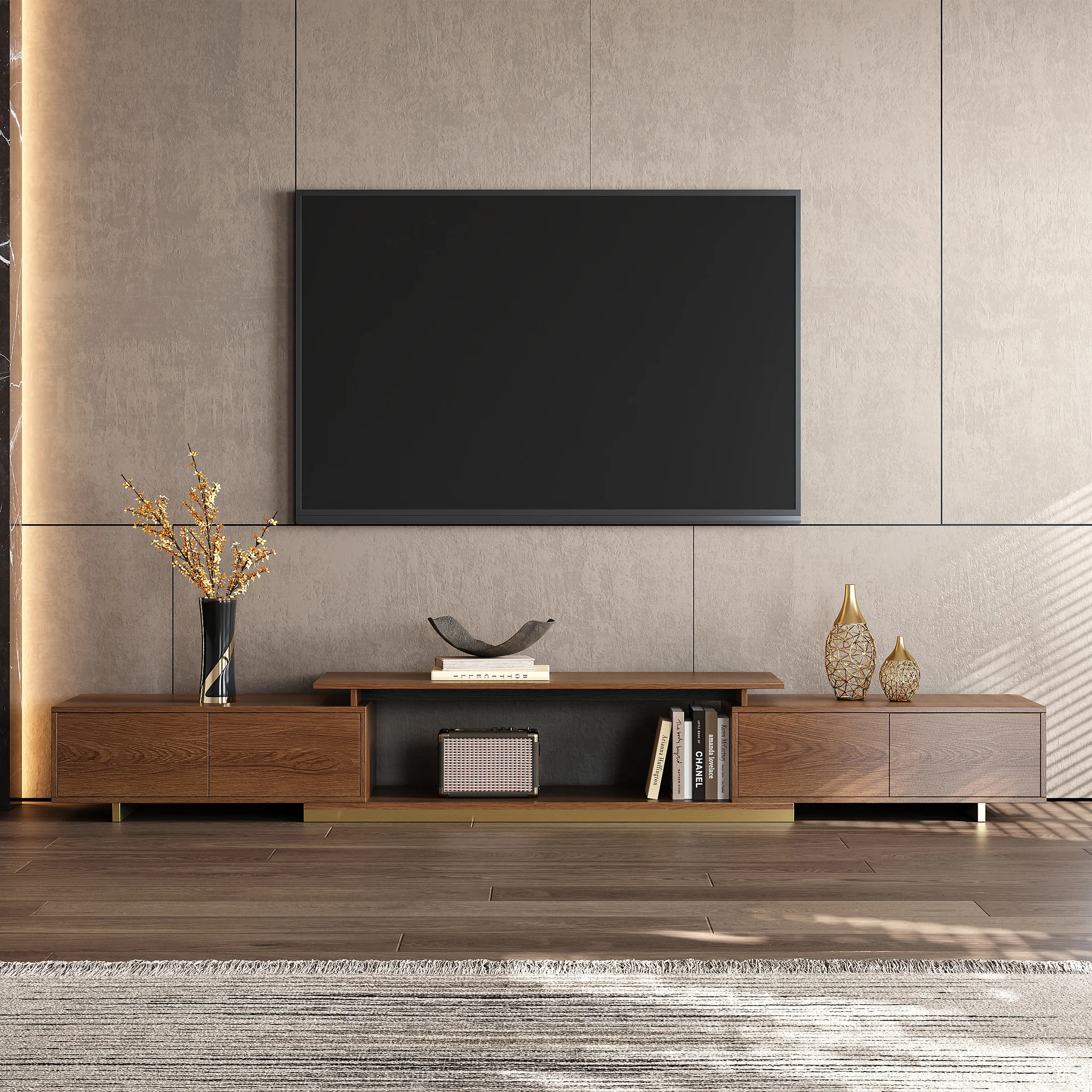
Source Homary
The Seated Eye-Level Formula
For most sofas with a seat height of 18-20 inches (457-508 mm), the ideal TV center height from the floor is 40-43 inches (1016-1092 mm). Here's the quick calculation to find your perfect stand height:
- Measure your seated eye level (from the floor to your eyes while sitting comfortably)
- Find your TV's half-height (divide the TV's total height by 2)
- Calculate: Seated Eye Level - TV Half-Height = Ideal Stand Height
Example with a 65-inch (1651 mm) TV:
- Seated eye level: 40 inches (1016 mm)
- TV height (65-inch (1651 mm) model): ~32.5 inches (826 mm), half = 16.25 inches (413 mm)
- Calculation: 40 - 16.25 = 23.75 inches (603 mm)
- Result: A 24-inch (610 mm) tall TV stand is ideal
Height Adjustments for Different Seating
Your stand height might need to vary depending on your furniture:
Seating Type | Typical Seat Height | Recommended Stand Height (For 65" (1651 mm) TV) |
Standard Sofa | 18-20 inches (457-508 mm) | 22-24 inches (559-610 mm) |
Recliner | 18-22 inches (457-559 mm) | 20-22 inches (508-559 mm) (slightly lower) |
Floor Cushions | 8-12 inches (203-305 mm) | 14-18 inches (356-457 mm) (significantly lower) |
Bar Stools | 28-30 inches (711-762 mm) | 28-30 inches (711-762 mm) (much taller) |
Sectional Sofa | 18-22 inches (457-559 mm) | 22-24 inches (559-610 mm) (adjust for higher back) |
The Two-Episode Test
If you're unsure about your height selection, use the "two-episode test." Watch two episodes of your favorite show. If you find yourself tilting your head up or down, or if your neck feels strained, the height needs adjustment. This simple real-world test is more reliable than any formula.
TV Stand Types and Storage Configurations
The right TV stand format depends on your room layout, storage needs, and lifestyle. Here are the primary categories available in 2026:
Console Stands
The most popular and versatile option, console stands are streamlined rectangles with a mix of cabinets, shelves, and drawers.
Best For: Most living rooms, especially those seeking a clean, modern look without dominating the wall
Typical Dimensions: 60-80 inches (1524-2032 mm) wide, 20-24 inches (508-610 mm) high, 15-18 inches (381-457 mm) deep
Pros:
- Versatile placement options
- Works with soundbars
- Wide range of styles available
Cons:
- Limited storage compared to larger entertainment centers
- May not accommodate large component collections
Entertainment Centers
Larger units that often include hutches, side towers, or extensive shelving beyond the main console base.
Best For: Larger walls, collectors with multiple components, media room enthusiasts
Typical Dimensions: 90-120+ inches (2286-3048+ mm) wide with integrated shelving
Pros:
- Massive storage capacity
- Built-in organization for media collections
- Can anchor an entire room design
Cons:
- Visually heavy, can overwhelm smaller spaces
- Difficult to move and requires careful doorway measurement
- Higher cost
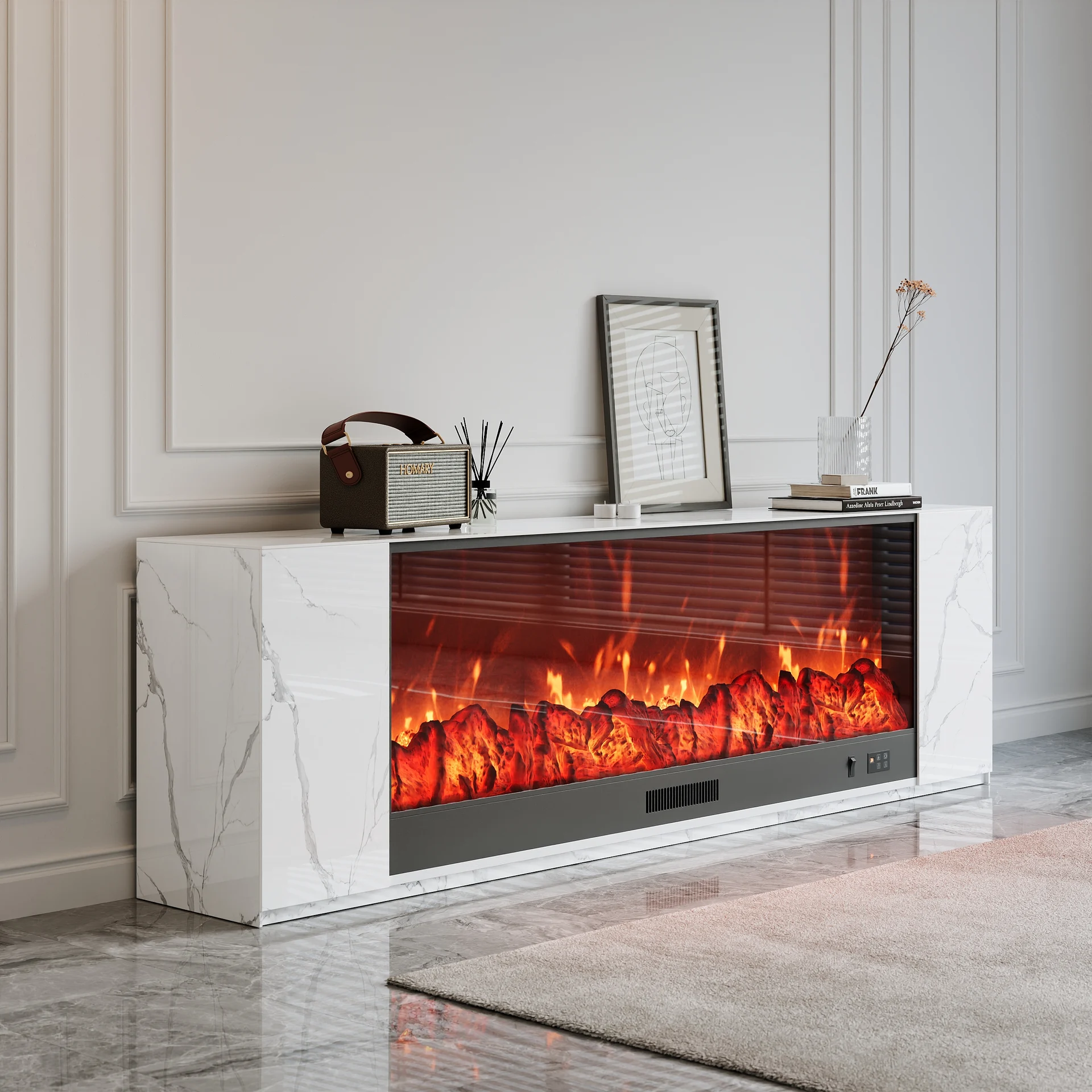
Source Homary
Corner TV Stands
Triangular or angled-back units designed specifically for corners, maximizing floor space.
Best For: Small rooms, apartments, multi-use spaces, and difficult room layouts
Typical Dimensions: 42-60 inches (1067-1524 mm) front width with an angled back
Pros:
- Excellent space efficiency
- Works well with odd room configurations
- Often more affordable
Cons:
- Limited surface width for very large TVs
- Check weight capacity carefully
- Can make cable management more challenging
Wall-Mounted Floating Shelves
A minimalist approach where the stand is mounted directly to the wall, creating a clean, floating appearance.
Best For: Modern aesthetics, small spaces, homes with radiant floor heating
Typical Dimensions: Varies by installation
Pros:
- Unobstructed floor space
- Contemporary, streamlined look
- Easy to clean underneath
Cons:
- Professional installation often required
- Limited storage capacity
- Must be anchored to wall studs
Storage vs. Minimalist—Which is Right for You?
One of the most significant decisions in selecting a TV stand is finding the balance between storage and a minimalist aesthetic.
When Storage-Forward Consoles Win
Choose a storage-focused design if you relate to any of these scenarios:
- You have multiple gaming consoles (PlayStation, Xbox, Nintendo Switch)
- You own a collection of physical media (4K Blu-rays, DVDs, video games)
- You have children or pets and need to hide clutter
- You want to conceal cables and power strips
- You have a soundbar, subwoofer, and other audio components
- You appreciate having designated spaces for remotes, controllers, and chargers
Key Storage Features to Look For:
- Adjustable Shelves: Minimum 18 inches (457 mm) wide × 12-14 inches (305-356 mm) deep for gaming consoles and receivers
- Drawer Interiors: At least 14-16 inches (356-406 mm) wide for organizing smaller items
- Cable Management: Multiple cutouts (2-3 inches (51-76 mm) diameter) for routing power and HDMI separately
- Ventilation: Open back or ventilation slots to prevent overheating of electronics
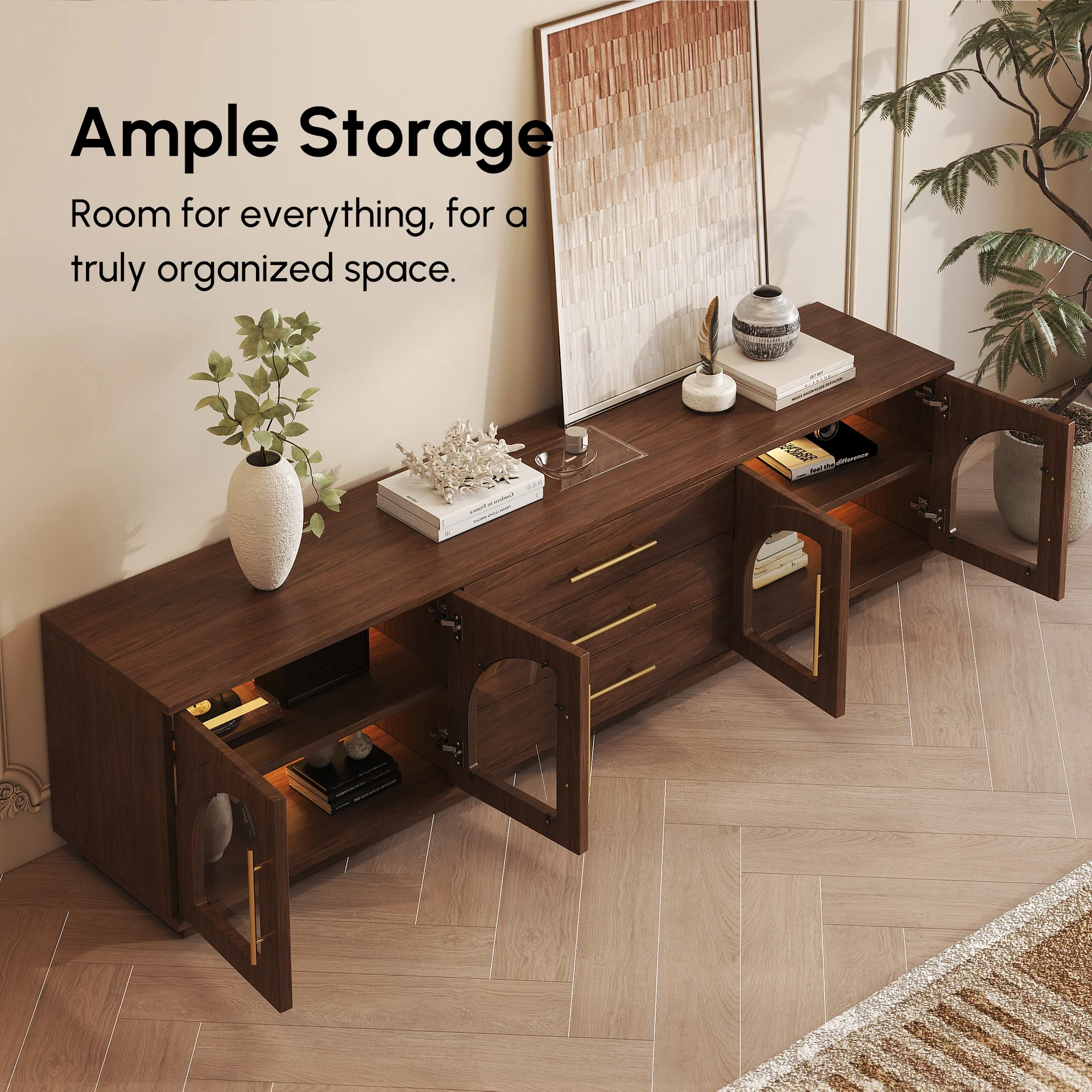
Source Homary
When Minimalist Stands Shine
A minimalist design works best when:
- You've wall-mounted your TV and use a soundbar
- You stream all content and have few physical components
- You want your room to feel open and airy
- You have a dedicated media closet or hidden component area
- Your room is small and every inch of floor space matters
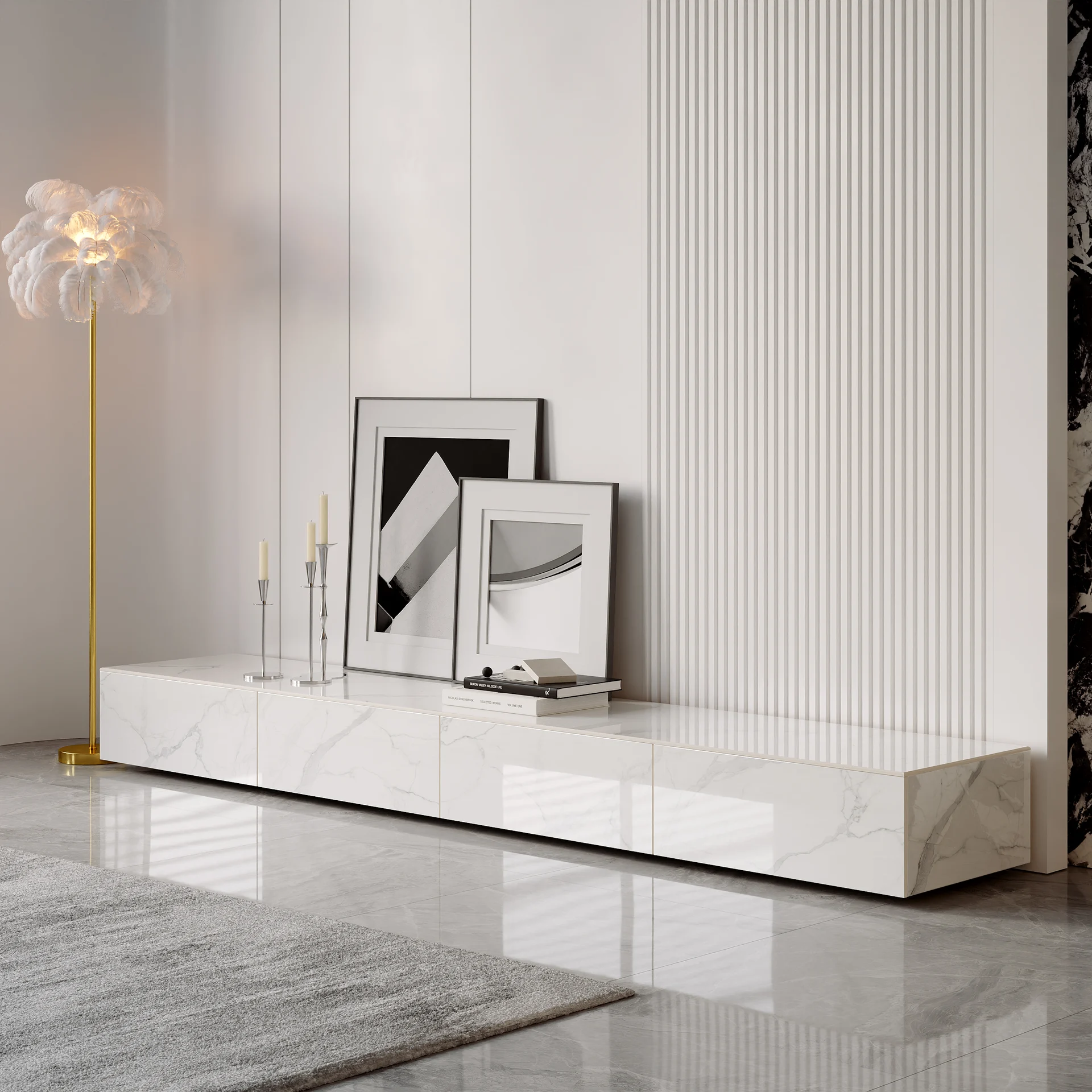
Minimalist Must-Haves:
- A plan for cable hiding (wall raceway or single grommet)
- Sufficient weight capacity for your TV (even without storage)
- A design that complements your room without drawing attention
Source Homary
The Hybrid Solution
For most households, a hybrid approach works best. Select a console with some closed storage (to hide clutter) and some open shelving (for display and easy access to frequently used items). This provides flexibility as your needs change over time.
Materials Guide—Durability and Maintenance
The material of your TV stand determines its longevity, resistance to daily wear, and how well it handles the inevitable bumps from kids and pets. Here's a detailed comparison:
Material | Durability | Weight | Best For | Maintenance |
Solid Wood (Oak, Walnut, Maple) | Excellent; can be refinished | Heavy (great stability) | Families, long-term investments | Wipe clean; occasional oil/wax |
Wood Veneer over Plywood | Very good if quality veneer | Moderate | Most budgets, durable core | Gentle cleaners; avoid excess moisture |
MDF/Particle Board with Laminate | Good for light loads | Light to moderate | Budget-conscious, short-term | Careful with liquids; use coasters |
Metal and Glass | Metal strong; glass needs care | Moderate to heavy | Modern aesthetics, adults | Frequent glass cleaning; no abrasive cleaners |
Top Recommendations for Families
If you have children or pets, prioritize these features:
- Sealed Wood Top: Oil or water-based polyurethane finishes resist water rings and wipe clean easily
- Rounded Corners: Reduces injury risk from bumps
- Solid Wood Construction: Withstands more abuse than particle board
- Minimum 0.75-1 inch (19-25 mm) Top Thickness: Provides structural integrity
- Anti-Tip Design: Wider stance with a heavy base
Safety—Protecting Your Family and Equipment
TV tip-overs are one of the most preventable home accidents. Beyond the width rule (wider = more stable), here are the essential safety measures:
Anti-Tip Straps
Always secure your TV to the wall or the stand itself using anti-tip straps. The CPSC's Anchor It! campaign provides free guides and video tutorials showing proper installation techniques. This is not optional—it's a necessity, especially in homes with young children.
Weight Capacity Guidelines
When evaluating a TV stand, consider these weight factors:
- Top Surface Capacity: Should exceed your TV's weight by at least 20-50% (a 1.2-1.5x safety margin)
- Per-Shelf Limits: MDF/particle board shelves have lower weight tolerances than solid wood
- Glass Shelves: Avoid overloading with heavy receivers or center channel speakers
- TV Footprint: Ensure the TV's feet or base fully sit on the top surface without overhang
Additional Safety Tips
- Route cables through separate cutouts to reduce tripping hazards
- Keep controllers and small items off the surface edge
- Avoid placing climbable items (step stools, toy boxes) near the TV stand
- Secure the stand to the wall using provided hardware if you're in an earthquake-prone area
Frequently Asked Questions (FAQ)
What size TV stand do I need for a 65-inch TV?
Use the 2-6 inch (51-152 mm) rule: choose a stand that's 2-6 inches (51-152 mm) wider on each side than your TV. For a 65-inch (1651 mm) TV (approximately 57 inches (1448 mm) wide), select a stand between 63 and 72 inches (1600 and 1829 mm) wide. This provides visual balance, stability, and room for a soundbar.
How tall should my TV stand be?
For comfortable viewing, the center of your TV screen should be at your seated eye level (typically 40-43 inches (1016-1092 mm) from the floor). With a 55-65 inch (1397-1651 mm) TV, this usually means a stand height of 20-24 inches (508-610 mm). Measure your specific eye height and subtract half your TV's height for precise adjustment.
What's the best TV stand for a small room?
A corner TV stand is the most space-efficient option. Look for a model with a front width of 42-60 inches (1067-1524 mm) and an angled back that fits neatly into corners. If storage is a priority, choose one with adjustable shelves and dual cord ports for clean cable management.
Source Homary
What type of TV stand is most durable?
Solid hardwood (oak, walnut, maple) offers the best durability and can be refinished if damaged. Look for a top thickness of at least 0.75-1 inch (19-25 mm) for structural strength. For a balance of quality and price, high-quality wood veneer over plywood is an excellent alternative.
How much weight should a TV stand support?
Choose a stand rated for at least 20-50% more than your combined TV and component weight (a 1.2-1.5x safety margin). Check both the top surface limit and individual shelf limits, especially with MDF/particle board units. Avoid overloading glass shelves with heavy audio equipment.
How can I make my TV stand safer around kids and pets?
Select a wider, heavier stand for stability. Always use anti-tip straps to secure the TV to the wall or stand. Prioritize rounded corners and sealed wood tops that wipe clean easily. Route cables through separate cutouts to prevent tugging, and keep controllers off the surface edge to reduce accidents.
Should I choose a TV stand with more storage or a minimalist design?
This depends on your components and lifestyle. Choose storage-forward if you have multiple gaming consoles, physical media, or need to hide clutter. Choose minimalist if you stream everything and have few devices. For most households, a hybrid design with both closed storage and open shelving provides the best flexibility.
What's the ideal TV stand depth?
Most TV stands are 15-18 inches (381-457 mm) deep. This accommodates most televisions while leaving room for cables at the back. If you have a very deep TV or components like a large A/V receiver, look for 20+ inch (508+ mm) depth. Measure your TV's depth plus 2-3 inches (51-76 mm) for cable clearance.
Conclusion: Making Your Final Decision
Selecting the right TV stand in 2026 requires balancing multiple factors: size, height, storage, materials, safety, and style. By following the guidelines in this guide—starting with the 2-6 inch (51-152 mm) width rule, calculating your ideal height, and honestly assessing your storage needs—you'll make a choice that serves you for years to come.
The best TV stand is one that you forget is there because everything works perfectly: the TV is at the right height, components are organized, cables are hidden, and your family is safe. Take your time, measure carefully, and invest in quality that matches your lifestyle.
Have questions about selecting the perfect TV stand for your home? Leave a comment below and we'll help you find the ideal solution for your space!