

Have you just bought a queen-size mattress or are you shopping for one? The next question is always the same: what size bed frame do you actually need for a queen mattress? It sounds straightforward, doesn't it? But it's not. You need to think about more than just matching the label to the size of the mattress.
The frame you choose, how it fits in your room, how much clearance you have to move around it, and how the whole bedroom feels to live in day to day are important considerations to make. And if you get it wrong, you can upset the balance of your entire bedroom.
This guide is going to delve into everything you need to know about queen bed size frames, from the core dimensions to the style decision that follows.
Standard Queen Bed Frame Dimensions Explained
Before thinking about anything else let's lock down the numbers.
A standard queen mattress is 60 inches wide by 80 inches long. That is about 152 cm × 203 cm. This is the most popular mattress size in the US due to its ability to comfortably sleep two adults without dominating the bedroom.
The bed frame itself, however, will generally be slightly larger than the mattress it holds. A standard queen-sized bed frame typically measures around 62-65 inches wide and 82-85 inches long. This varies due to the bulk of the frame and any overhanging design elements.
Element | Dimensions (inches) | Dimensions (cm) |
Queen Mattress | 60” × 80” | 152 × 203 cm |
Standard Queen Frame | 62-65” × 82-85” | 157-165 × 208-218 cm |
Frame with Headboard/Footboard | Add 3-5” in length | Add 8-13 cm |
Clearance Recommended Per Side | 24” minimum | 60 cm minimum |
One thing worth noting here is that bed frames with a headboard and footboard will add further to the overall footprint of the bed. Depending on the style, a substantial headboard can add anywhere from 76 mm to 127 mm additional length to the bed. If you're working with a smaller room, this is worth factoring in early rather than getting caught out later.
What Size Bed Frame Do You Need for a Queen Mattress?
The answer to this is actually simpler than most people realize. You need a frame that is labeled as queen size.
Queen bed frames are designed around the standard 60” × 80” mattress dimensions; if the frame says it's queen size, then it fits a queen mattress.
That said, not all queen bed frames are identical. The overall footprint will vary depending on the style:
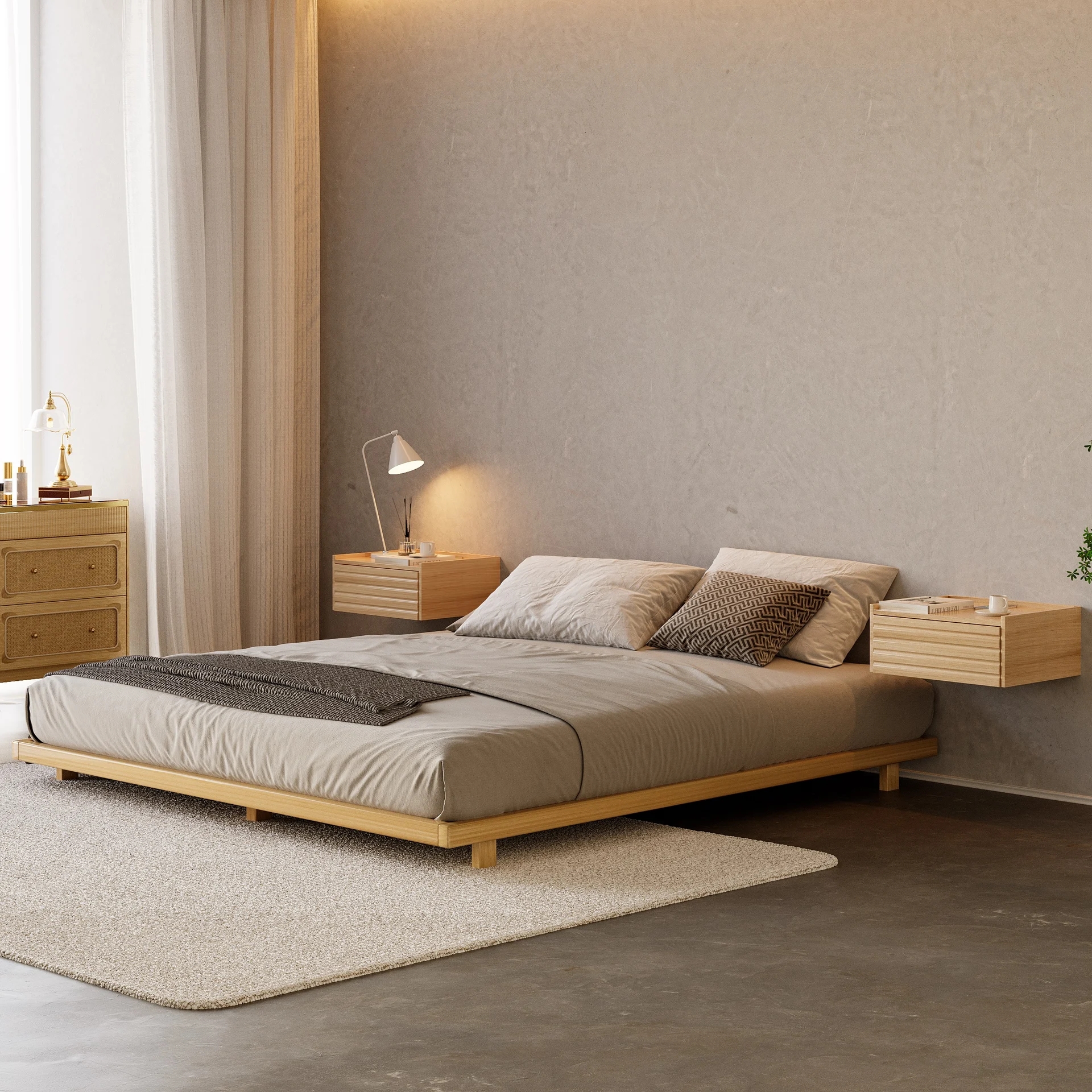
Slim metal or platform frames, such as the Japanese-style frames, add very little to the size of the mattress, really. Generally, this is an additional 25-51 mm on each side and at the foot of the bed. These are the most space-efficient queen-sized bed frames you can buy.
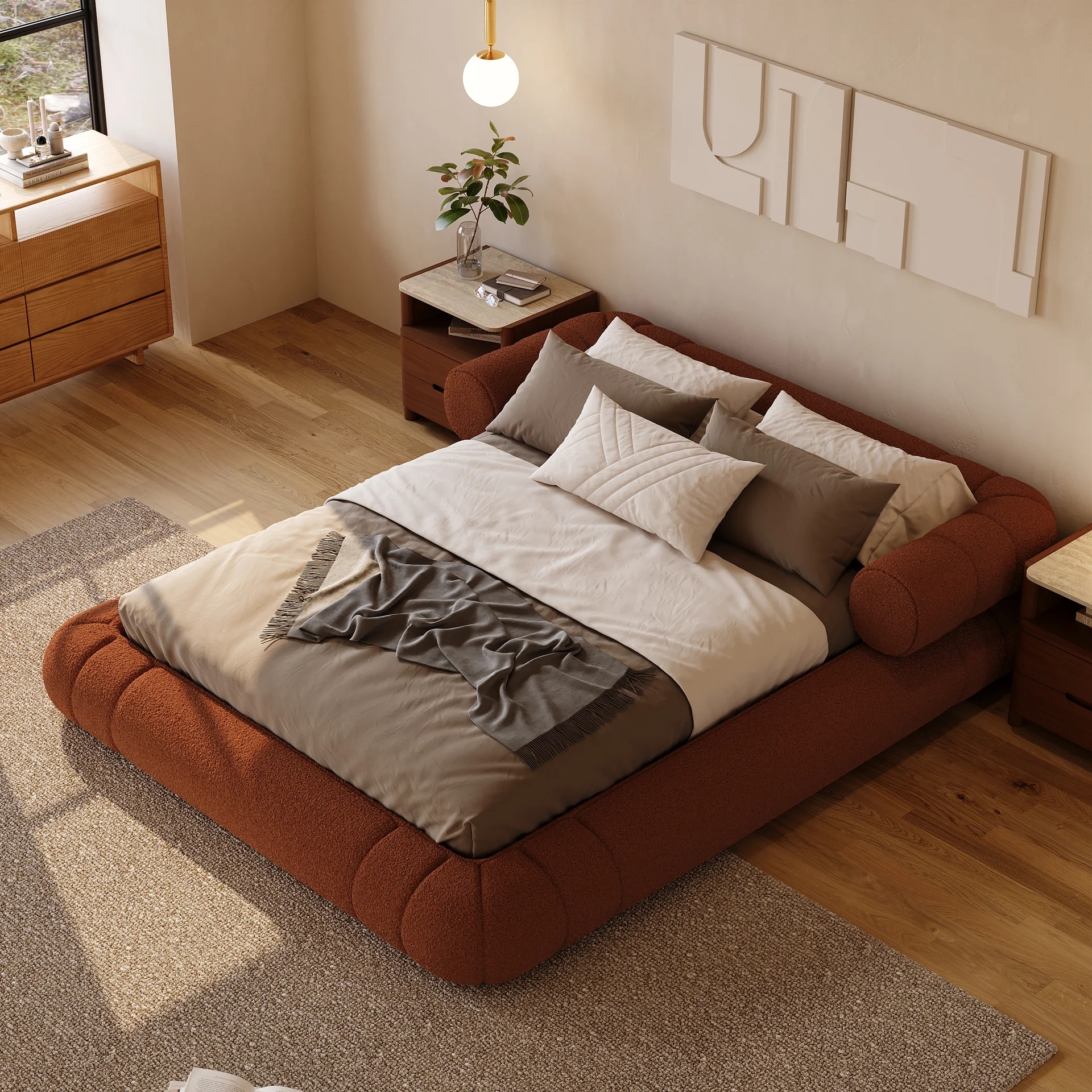
Upholstered frames tend to be border and more substantial; they come with padded sides and a thicker overall profile. The visual weight of these bed frames is greater, meaning so too is the physical footprint. You need to measure carefully before investing in this type of frame.
Frames with storage drawers built into the base add further depth. In some cases, they add width to accommodate the drawer mechanisms. It's a good idea to check the full dimensions in the product listing, not just the mattress size compatibility.
Canopy and four-poster frames add height rather than floor space. But their visual presence can make a room feel smaller, even if the actual overall footprint is similar to a standard frame. If you opt for this type of frame, you need to check the ceiling height first.
The practical takeaway here: always check the full dimensions. Width, length, and height prior to purchasing. This avoids any major faux pas, and you end up with a bed frame that makes life difficult.
Queen vs Other Bed Sizes: How Does It Compare
The queen's main advantage here over a full is the extra 152 mm of width, which marks a meaningful difference for two people sharing. The extra 127 mm in length over a full also matters for taller sleepers. Anyone over 6 feet (183 cm) will notice the difference quickly.
Compared to a king, the queen gives up 406 mm in width but requires significantly less floor space in the bedroom. It's the sweet spot for the average-sized bedroom. It's comfortable for two people, and it’s also more manageable in the room and far easier to maneuver when bringing in and out of a room or when you need to reconfigure the layout.
Mattress Size | Dimensions (inches) | Dimensions (cm) | Best for |
Twin | 38” × 75” | 97 × 190 cm | One adult or child |
Full | 54” × 75” | 137 × 191 cm | One adult, tight for two |
Queen | 60” × 80” | 152 × 203 cm | Couples/spacious single |
King | 76” × 80” | 193 × 203 cm | Couples wanting maximum width |
California King | 72” × 84” | 183 × 213 cm | For couples wanting maximum length over width |
Choosing the Right Bed Frame Style for Your Bedroom

Once you have the size confirmed, style becomes the most enjoyable and sometimes most overwhelming part of the decision. Queen bed frames come in a wide range of designs, and the right choice depends on both the aesthetic you're going for and the practical needs of the bedroom.
Upholstered frames are among the most popular choices right now and for good reason. A fabric or velvet headboard adds warmth and texture to the bedroom instantly. This works particularly well in rooms that lean towards a soft, layered aesthetic.
The right upholstered bed frame can anchor the entire bedroom, especially when the color scheme is matched to the frame color. One practical thought here is that lighter colors will wear more quickly than darker materials.
Wooden frames offer that timeless versatility many people love. Oak, walnut, and pine all bring their own character to a bedroom. The warm grain and natural variations in the wood tend to improve with age, meaning the frame will be good now and for many years in the future with the right care. Plus, a solid wood bed frame is one of the most durable options you can buy, often outlasting mattresses that sit inside them. Perfect for both contemporary and traditional settings, depending on the finish and silhouette.
Metal framework works well with more modern or industrial-influenced bedrooms. They're also typically lighter and easier to assemble than wooden or upholstered versions. They are a practical choice for those who move frequently or need a simpler setup. Choose a powder-coated finish for added durability over bare metal, as it'll be less prone to scratching over time.
Slatted frames, i.e., those with a visible or metal slat structure, have a clean Scandinavian-influenced look that works well in minimalist bedrooms.

How Much Space Do You Need Around a Queen Bed?
Getting the right frame is one thing. But making sure it's the right one for the room layout is something else entirely. A queen bed can feel perfectly positioned in a well-planned room or surprisingly cramped in a room put together with little thought for placement.
The general recommendation here is to allow around 30 inches (762 mm) of clearance on each side of the bed. For a more luxurious feel it is best to leave more, at least 36 inches (914 mm). This gives you enough room to walk around and to have space to use nightstands and closets without impacting functionality.
In practice, your bedroom needs to be at least 10 feet (3 m) by 10 feet (3 m) (roughly 3m × 3m) to easily accommodate a queen-size bed and frame with adequate clearance. The larger the room, the more comfortable it will feel, and it'll leave you with additional space for more furniture.
A few specifics planning around here include:
- Door swing: Check whether the bedroom door opens into the space where the bed will sit. It's an easy thing to overlook and a frustrating one to correct after the frame is assembled.
- Closet access: If you have sliding closet doors, then making sure the space in front of them isn't eaten up by the bed frame or footboard is essential.
- Nightstands: You need to allow enough space to place them and open any drawers or doors they have, as well as ensuring access to reach maps or charging points from a lying position.
- Windows: Placing a bed directly beneath a window or over an air duct is generally best avoided, as this is for the comfort and longevity of the bed.
A good trick to measure up your bed frame is to use masking tape where you're placing the bed to the exact dimensions of the frame itself. This will allow you to see exactly how much space it'll take up and how you will move around the bedroom once it's in place.
Storage Beds, Platforms, and Other Queen Frame Types
Moving beyond the style of the queen bed frame, you need to be mindful of the practical implications, too.
Storage beds are one of the most practical choices available and are the go-to for bedrooms that lack closet space or where under-bed storage is otherwise wasted. Ottoman-style storage beds lift the entire base to reveal a large compartment underneath. While drawer-style storage beds offer easier access but typically provide less total storage space and need more clearance to open the drawers fully.
Platform beds sit lower to the ground and typically don't require a box spring or base underneath the mattress. The slatted platform does the job here. They work well in contemporary and minimalist rooms and are ideal in spaces with lower ceilings.
Foundation beds offer the opposite of a platform. They have a higher profile, often with drawers built in for extra storage. They're a practical everyday option and work well in a range of bedrooms. Plus, they are frequently sold with a matching headboard, which removes that factor as a separate issue.
Four-poster and canopy frames are a strong design statement. And they add height and drama to any bedroom. However, for them to look their best, they need a room with high ceilings. Anything under 8 feet (2 m) can start to feel cramped and oppressive if you have a full canopy above the bed.
Top Tips for Buying a Queen Bed Frame
Now you've made the key decisions for your queen bed frame, use these steps to get the purchase right the first time.
- Measure twice and order once. Measure your room, mark out the bed footprint, measure for frame clearance, and confirm you can easily accommodate the size before you purchase it.
- Check out the full frame dimension, not just the mattress size. The mattress sits inside the frame, meaning if you don't look at the frame size, you'll eat into more space in the bedroom. The frame often adds more inches than most people realize.
- Consider assembly. Large frames, especially those with headboards or canopies, need to be brought into the room in pieces. Check whether the frame can navigate your staircase or doorways, etc., before ordering.
- Match the frame height. A higher frame is easier to get in and out of, while a lower platform bed suits a more contemporary room. But they aren't ideal for everyone.
- Don't forget the headboard. If the frame doesn't contain one and you'll be purchasing one to go on the bed, you need to accommodate the size and height of this photo into your measurements.
FAQs
What size is a queen bed frame exactly?
A queen bed frame is typically between 62-65 inches (1575-1651 mm) and 82-85 inches (2083-2159 mm) long, depending on style and construction.
Will a queen bed frame fit a full mattress?
No, this is a common mistake people make. You need to buy a full-sized bed frame for a full mattress, not a queen one. Doing so will leave a visible and uncomfortable gap.
How much floor space does a queen bed need?
A queen bed with its frame requires a minimum room size of 10 feet (3 m) by 10 feet (3 m) to feel comfortable. You need at least 30 inches (762 mm) of clearance on each side if you want the room to feel bigger and more spacious. A 12-foot (4 m) by 12-foot (4 m) room will leave you space for nightstands and other bedroom furniture.
Do I need a box spring with a queen mattress?
It depends on the frame type. Platform beds and slatted frames are designed to support mattresses directly and don't require a box spring. Traditional rail style frames do require a box spring or foundation for proper support.
If you are looking for a new bed frame for your queen mattress, check out our full range today.