

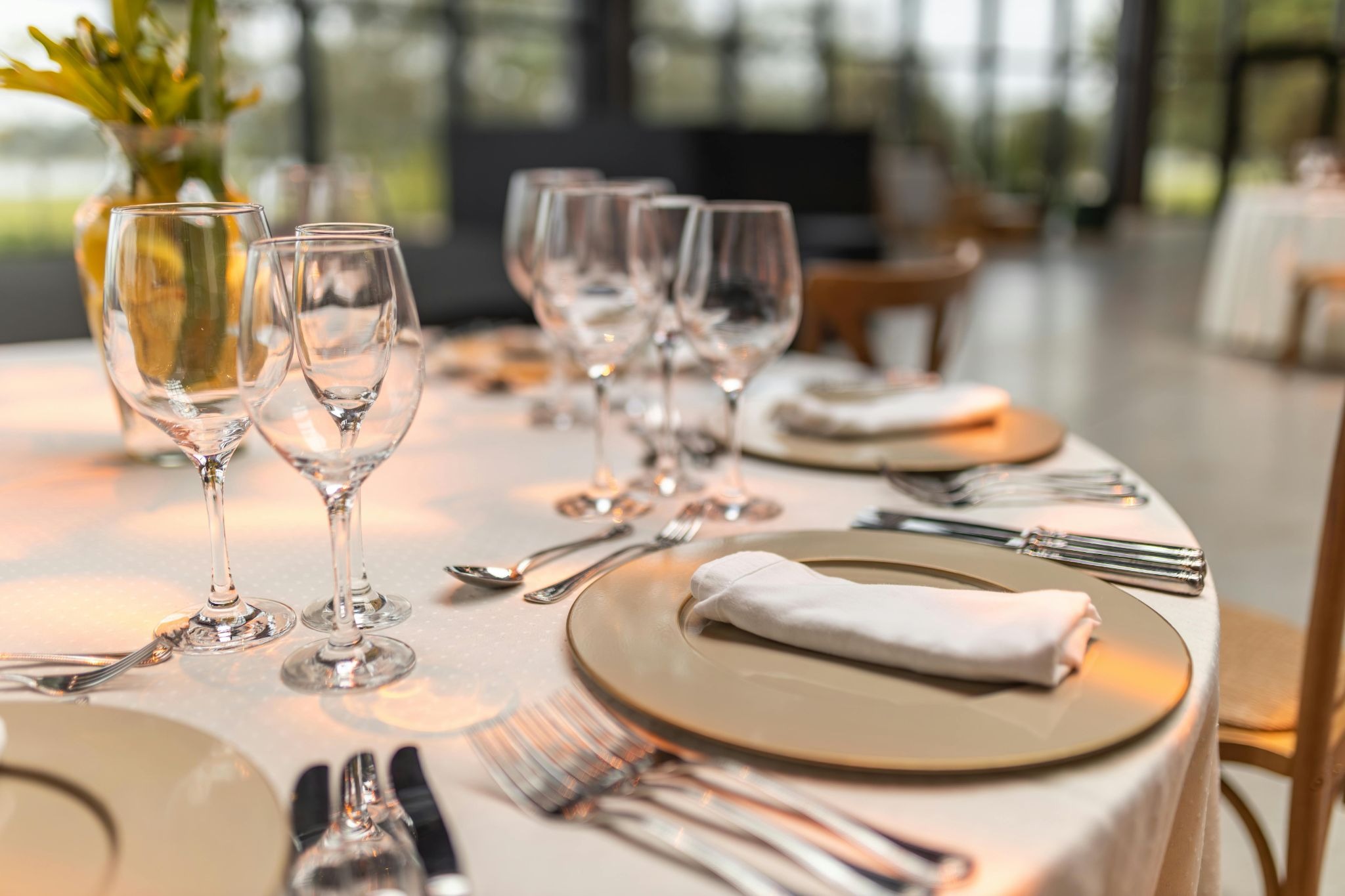
Finding the dining table for your home isn't as simple as picking one that looks good. Whether you're looking for a dining table that fits four people or you need something to fill out a bigger room, how you choose your dining table matters.
It's true.
When it comes to dining room tables to seat four people, there is an extraordinary number of choices for you to pick from, but getting the decision wrong can impact things in many ways. This leaves you with a dilemma. How do you pick the right size dining table for four people, and what should you be looking at?
Standard Dining Table Dimensions for 4 People
When it comes to seating four people at a dining table, there are some well-established size benchmarks you need to be aware of before you start browsing.
The golden rule here is to allow approximately 24 inches (610 mm) of table space per person. This will give each diner enough elbow room to eat comfortably, meaning they're not competing for space with others. Anyone who's ever sat around a cramped dining table will attest to how important elbow space is.
This is how that translates to the three most popular table shapes.
Shape | Recommended Size for 4 | Notes |
Rectangular | 48” L × 36-40” W (1220×914-1016mm) | Most Common choice, works in most rooms |
Round | 36-44” diameter (914-1118mm) | Great for conversation, suits compact spaces |
Square | Intimate feel: ideal for square rooms | Most standard sofas, modern or traditional |
When it comes to standard dining table heights, this sits between 28 inches (711 mm) and 30 inches (762 mm). Regardless of shape, this is something to remember, especially when choosing chairs. With standard height dining room tables for four people, you need a chair height of around 18-20 inches (457-508 mm). This leaves comfortable clearance for your legs underneath.
Before we move on, it's worth pointing out here that there's a big difference between fitting four people at a dining table and comfortably seating four people. A 42-inch (1067 mm) round table will technically seat four, but it won't leave much room for a centerpiece, serving dishes, or any sense of breathing room while you're eating. Sizing up, even slightly, will make a noticeable difference here.
What Size Dining Table Do You Need for 4 People
The dimensions are an excellent starting point. But the right size dining table depends on your home and a few other personal factors that need your attention prior to the buying process.
How do you actually use the table?
A family that sits down to a full-cooked dinner every evening has different needs from one who mostly eats breakfast at the table and hosts dinner parties occasionally. Every day use calls for something more practical and proportionate for the space it will be situated in.
Who is sitting at it?
Four adults need more space than two adults and two children. If your household includes young children, a slightly smaller table can actually work a bit better, especially if you're tight on space.
Is it a dedicated dining room or a multi-use space?
This is really important. In an open-plan kitchen-diner that doubles as a workspace, a table that's too large will become an issue fast. An appropriately sized table here will remove the problem of the table eating into the use of the room.
Do you entertain regularly?
If you frequently have guests beyond your four core, it's worth factoring that in prior to your purchase rather than having to buy a second table down the line. The Japandi 55"-87" (1397-2210 mm) Extendable Whitewash Dining Table, Seats 4-8 could be a genuine option, allowing you to seat four every day while also accommodating those you entertain regularly.
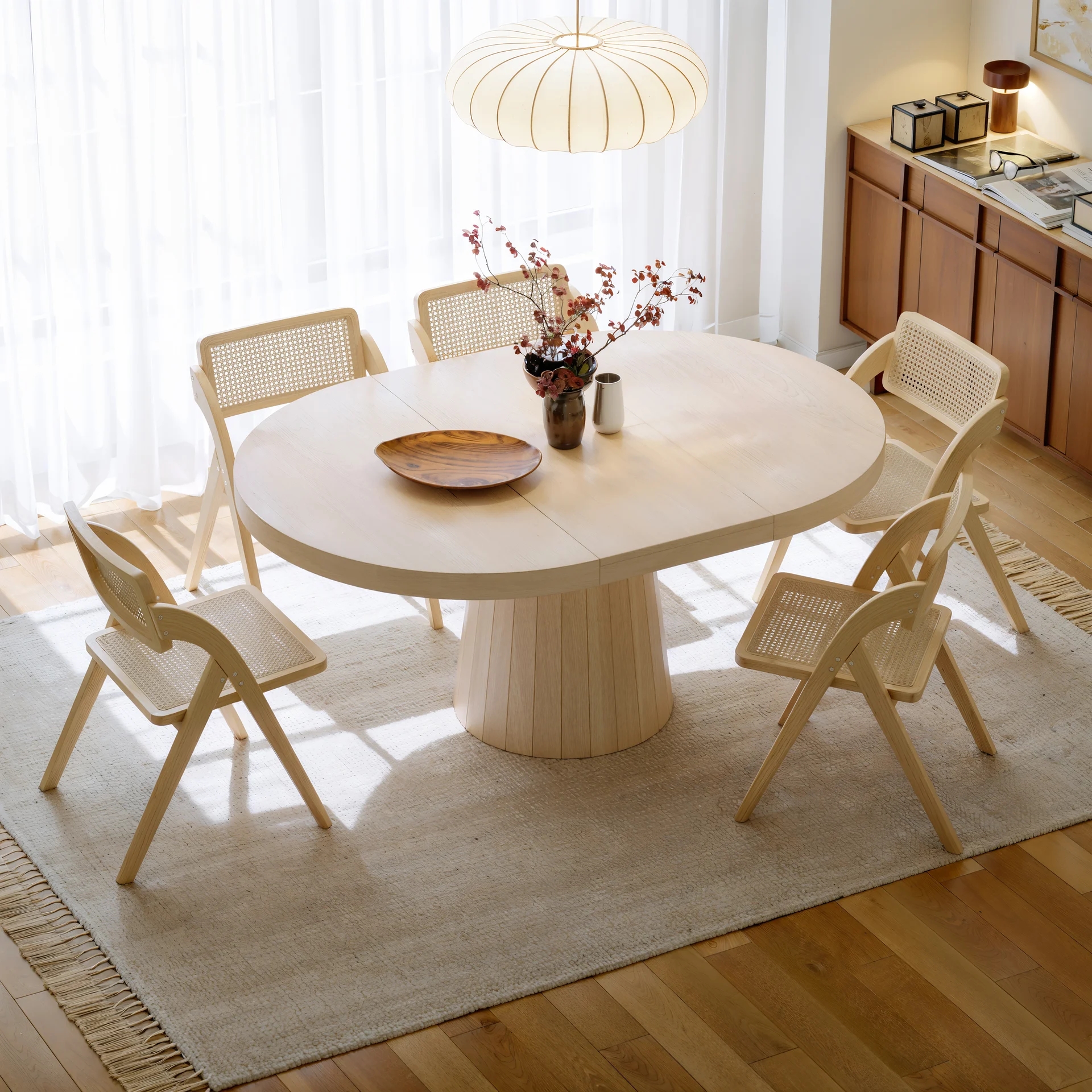
Asking again “what size dining table for four people” here reveals this: for most homes, the standard rectangular table at around 48 inches (1219 mm) long or a round table with a 42-inch (1067 mm) diameter is the sweet spot. You can seat four without dominating the room, leaving space in the middle without everyone feeling claustrophobic.
Round, Rectangular, or Square: Shape Matters
Shape and size are intrinsically linked choices, and the shape you choose will affect not just the number of people who can be seated with ease, but how the room around it feels and functions. Let's get into it.
Rectangular tables are the most popular choice for a reason. They fit naturally into many layouts, suit both small and large groups, and are easy to position both in the middle of a room and against a wall.
For a household of four people, a rectangular dining table gives you a bit of extra surface real estate. This is ideal for those who love having proper dining room table settings, space for serving dishes, candles, or a centerpiece, without dinner time becoming somewhat of a juggling act. This 63" (1600 mm) Modern Style Rectangular Faux Marble Dining Table Seats 4-6 People is a great choice for those with longer dining rooms that are narrow, where a round table might feel out of place.
Round tables are an excellent choice for people, particularly in smaller or square-shaped rooms. Without corners to navigate, that make better use of compact spaces and allows for more flexible hair placement.
There's also the social aspect to mention in regard to round tables. They naturally encourage conversation as everyone is sitting facing each other equally, and there's no being stuck at the far end of the conversation out of earshot. Interior designers at Ideal Home suggest that smaller rooms especially benefit from circular or oval tables for this exact reason.
Square tables, on the other hand, offer a similar intimacy to round tables, but they deliver a cleaner, more architectural feel. They work best for four people in a square room and often pair well with more contemporary interiors. The main limitation with square tables, however, is scalability. A square table rarely accommodates more than four comfortably, so if there is any chance your number will grow, you're stuck for additional seating options.
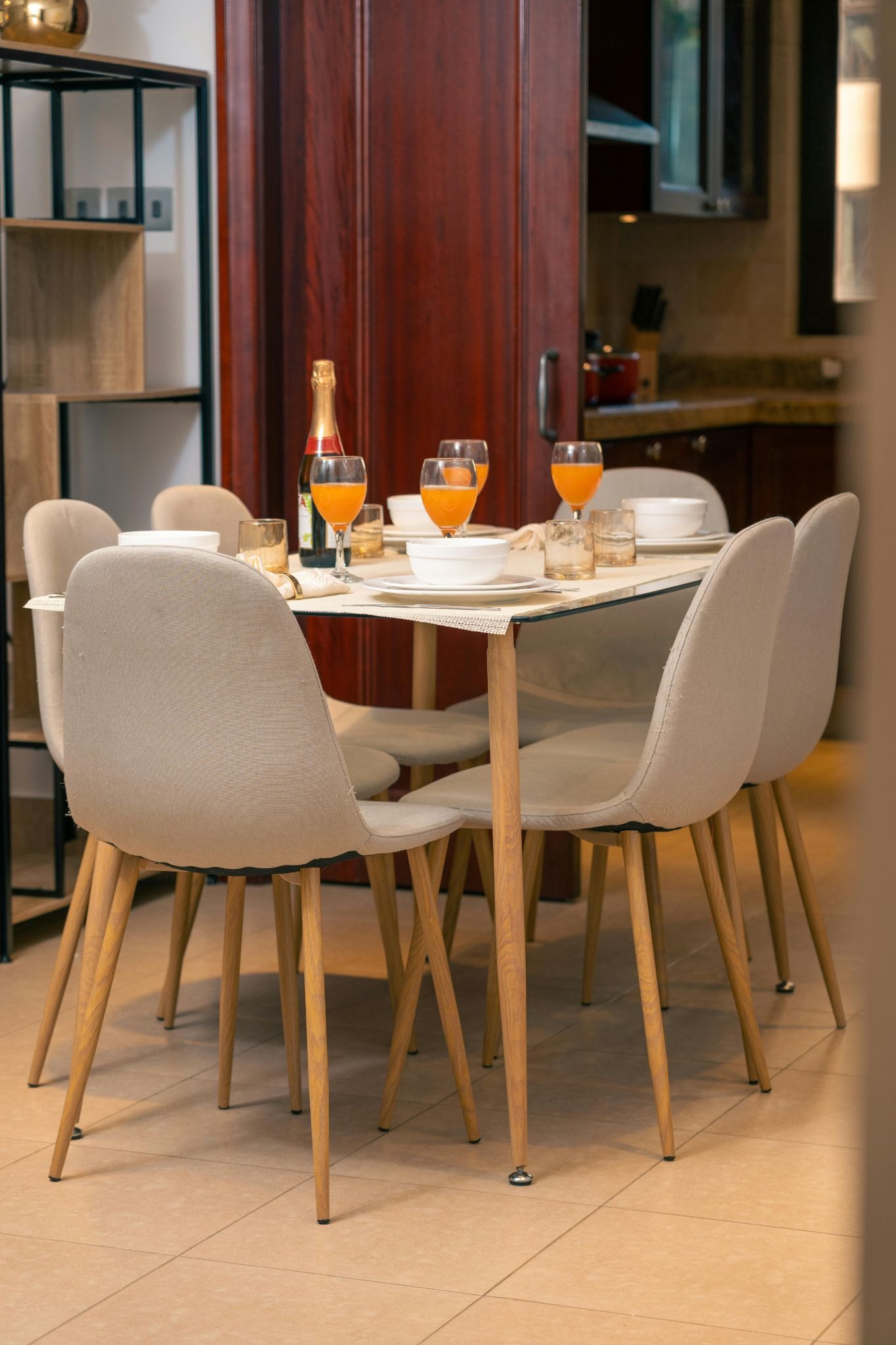
How Much Space Do You Need Around The Table?
Choosing the right size table is only half of the battle. The space around it matters just as much. A table that fits perfectly on paper can still make a room feel unworkable if it does not leave clearance for chairs, movement, or day-to-day life.
The general rule of thumb regarding this is to leave at least 36 inches (914 mm) between the edge of the table and the nearest wall or piece of furniture. This is the minimum, however, so leaving more where you can is better.
You need to think about:
- Chair clearance: chairs need around 18-24 inches (457-610 mm) of space to pull out from the table. If you're tight on room, slimmer chairs or a bench on one side can help.
- Traffic routes: you need to look at how people move through the space. If the table is in a high-traffic area, will you easily be able to maneuver around it?
- Door swings: it sounds obvious, but easy to overlook. If nearby doors swing open towards where the table will sit, you need enough clearance room for that to happen.
Choosing The Right Material for Your Dining Table
So you've locked in size and shape, now your next thought needs to be material. And it's for more than just aesthetic reasons. The material will impact durability, maintenance, how the table ages, and how it sits within the broader design of your home.
Solid wood remains the most popular choice for dining tables. It's durable, timeless, and improves with age in many cases. Oak and Walnut are particularly sought after for their warmth and grain character.
Marble and stone bring a luxury feel that's hard to replicate with other materials. The surface is heat-tolerant and genuinely impressive to look at. This 47” (1194 mm) sintered stone round dining table has the visual appeal and functionality you need for a table of this stature. However, these tables are heavier, so this needs to be considered when making your choice.
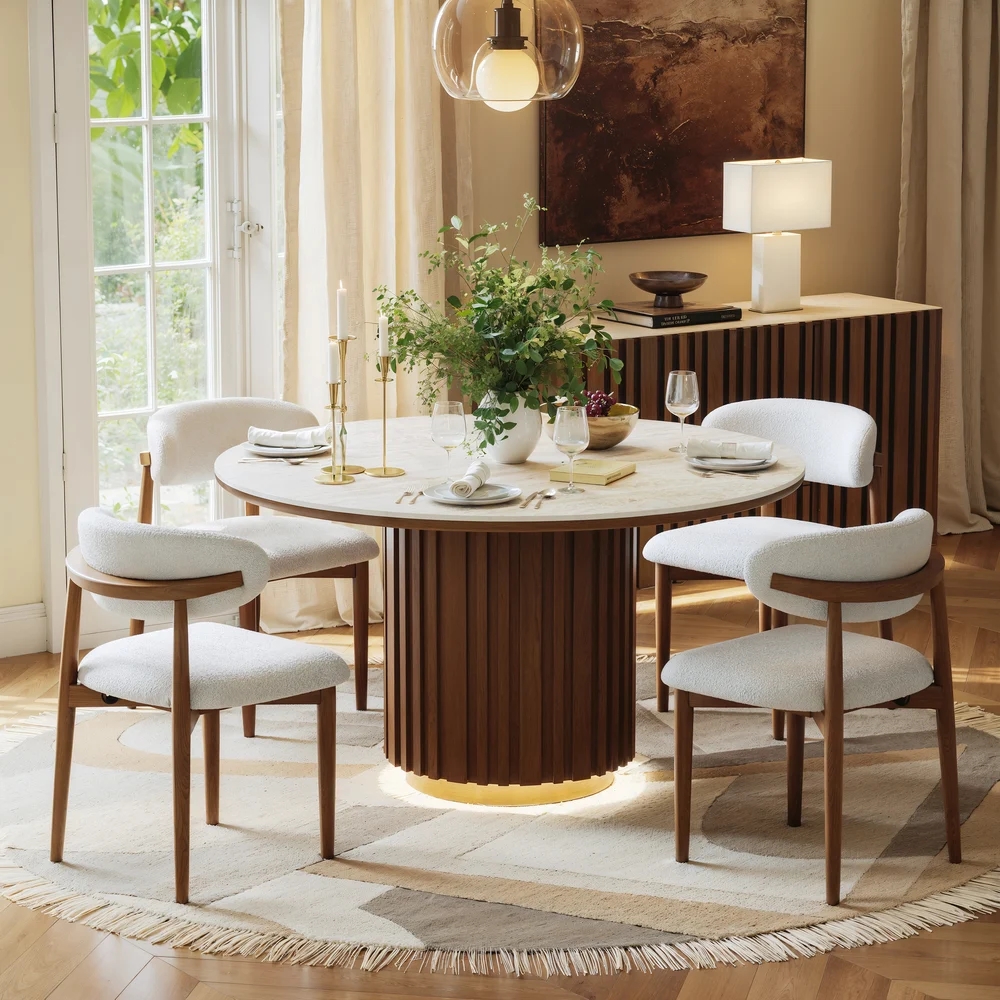
Glass is a popular choice for many people, especially those with smaller spaces, as it creates a sense of openness. The eye passes through rather than stopping at the surface, which makes the room feel larger.
MDF and engineered wood offer a more accessible price point without having to sacrifice style. Modern finishes mean those tables can closely mimic the look of solid wood, and they're often lighter and easier to move too.
For families with young children, it's worth prioritizing surfaces that can handle impact and are easy to clean. In this context, stone and marble make more practical sense while oil and lacquered wood can be wiped down easily without damage.
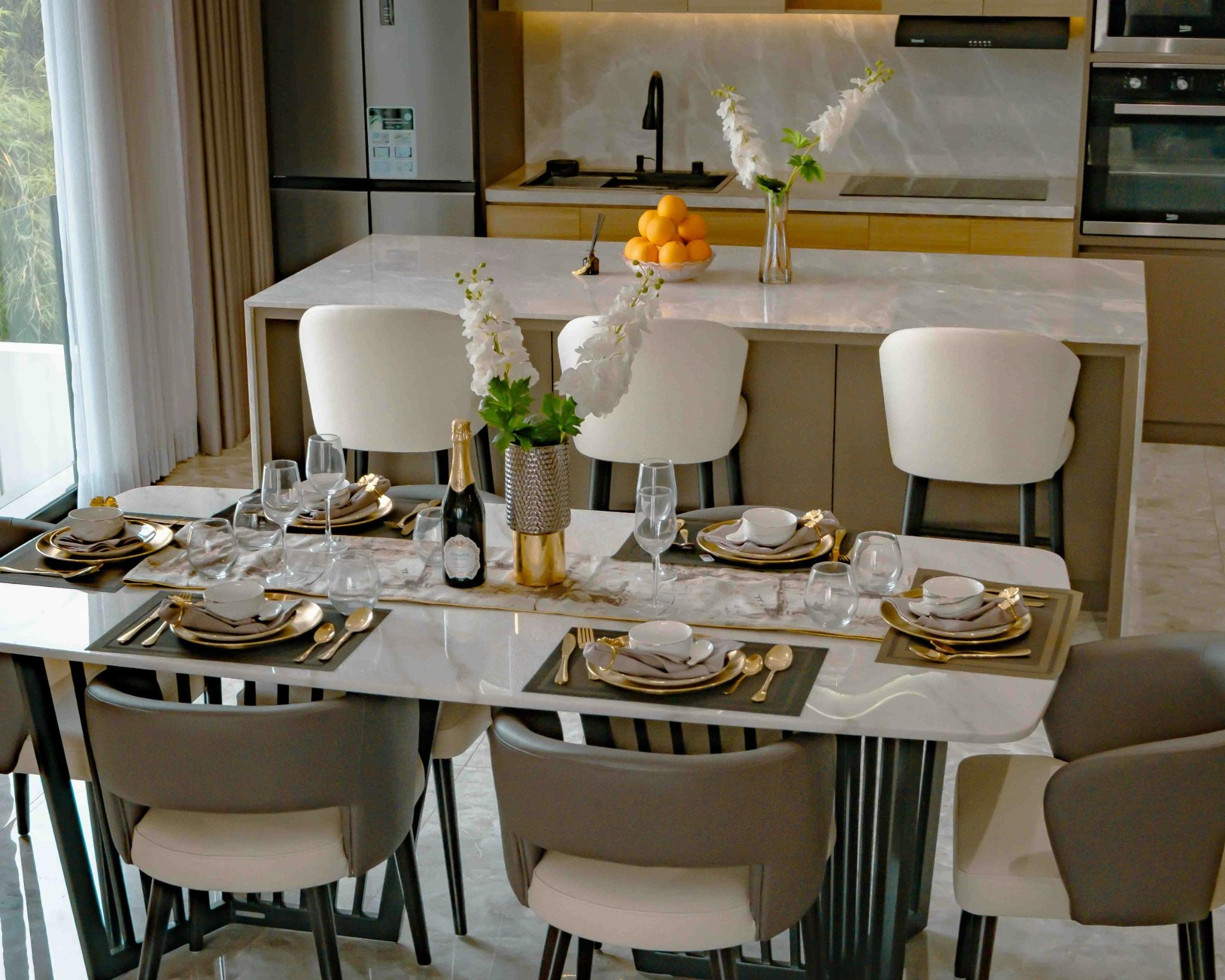
Future Proof: What If Your Family Grows
A big hurdle people come up against time and time again when buying a dining table for four people is the topic of needing a larger table at some point in the future.
If there's a likelihood your family will grow, whether through children, a new partner, or simply the habit of choosing more people on a regular basis, limiting yourself to a table that can only ever accommodate four is a problem.
The most practical solution here is an extendable dining table. Many designs sit comfortably at a four-person size and configuration for day-to-day use, but will easily extend to seat six or even eight guests at full capacity.
When looking at extendable dining room tables, you need to focus on the mechanism. You want a table that's engineered for frequent extension and compression so it doesn't fall on you when you need to use all seating options.
If you'd prefer a fixed table, then this is where sizing up slightly is preferable. If you have the space to accommodate a larger table, then opt for this. One that sits six comfortably will serve you better in the long term than limiting yourself to a four-person dining table. The difference between a 48-inch (1219 mm) and 60-inch (1524 mm) table here isn't a dramatic difference, but the seating flexibility that is offered will be significant.
It's worth noting that round tables can usually accommodate an extra chair more naturally than a rectangular one, since there is no defined “end”. Pulling up a fifth seat if you need to will be vastly easier.
Top Tips for Buying The Perfect Dining Table
Now that the key decisions are out of the way, here are some practical steps that will help you to get the purchase right the first time:
- Measure the room before anything else. Mark out the table's footprint with masking tape on the floor, including clearance space around it. Living with this outline visually for a couple of days can give you an idea of how you'll move around it.
- Don't choose a table in isolation. Think about existing furniture, flooring, and wall colors. A table that works beautifully on its own can clash awkwardly with everything around it.
- Sit in chairs before committing. Or at the very least, check the seat height against the table height. Comfort at the dining table is everything.
- Think about lighting. A pendant right above the table is a common and effective choice, but make sure it's positioned centrally above the table's footprint, not the room.
- Consider the whole set. Buying a matching dining set — a table and chairs together — ensures proportion and finish are considered as a set.
FAQ
What is the minimum size dining table for 4 people?
The minimum comfortable size for four people is around 36 inches (914 mm) in diameter for a round table or 48 inches (1219 mm) long by 36 inches (914 mm) wide for a rectangular table. These measurements should comfortably give each person 24 inches (610 mm) of space when seated.
Can a 4-seater dining table seat 6 in a pinch?
Yes, in many cases, you can fit an additional two people at a four-person dining table. A rectangular table of around 60 inches (1524 mm) long can reasonably fit six people. While a round table with a diameter of 48 inches (1219 mm) can accommodate additional bodies around it. However, if this is a regular thing, you might want to size up or choose an extendable design.
What shape dining table is best for a small room?
Round tables are generally best for smaller rooms. Without corners, they take up less visual space, allow more flexible chair placement, and are easier to move around when required. In a compact space, a round pedestal table with a single central baandhan and four legs maximizes leg room.
How much space should be between a dining table and the wall?
Ideally, you want a minimum of 36 inches (914 mm) between the table edge and the wall. This allows a person to pull out a chair and stand up again without difficulty. If the space behind the chair is a walkway, then aim for 42-48 inches (1067-1219 mm).
Explore Homary’s full range of dining tables for four people to find the perfect fit for your home.