

Having a small living room can be really tricky to furnish. It sometimes feels like a jigsaw puzzle where every single piece needs to earn its rightful place. So, if you are a homeowner, there will be a time when you’ll ask yourself the usual question: What size sectional for a small living room? Ideally, sectionals 1981-2388 mm wide and 864-1016 mm deep are best suited for small living rooms.
Ultimately, sectionals are no longer reserved for large living rooms with open-plan setups. Nowadays, more and more furniture manufacturers are bringing apartment-friendly designs with modular layouts and compact footprints, which means that sectionals are finally a realistic option for smaller living spaces.
But just because you can buy a sectional for your apartment, this doesn’t mean that just any size will work for your decor. You don’t want to create a crowded or uncomfortable space, which is why it’s important to pick the right size from the start. The goal is to maximize seating while enhancing the living room layout. So that is where a well-proportioned sectional is going to create a sense of style and roominess, even in a small space.
We’ve designed this guide to help you understand what size sectional for a small living room works best, from how to choose the right design features to how to measure your space correctly.
Table of Content
Why Size Matters For Sectionals
It’s easy to focus on appearance first when you shop for a sectional. But it’s easy to assume that the gorgeous design that caught your eye in a spacious showroom will fit your home. Unfortunately, the reality of bringing a sectional into a small space is very different from what it looks like in a showroom.
If you choose a sectional that is slightly too large for the space available, even if it fits in the room, it can make everything feel cramped and hard to navigate.
Is a compact sofa the safest choice for a small living room? We made this mistake once. It made the space feel more fragmented by creating unnatural zones.
That’s why it is essential to get the proportions right from the start. With the right-sized sectional that respects the layout and traffic flow of your space, you can create a dedicated gathering area that makes better use of empty and/or awkward corners.
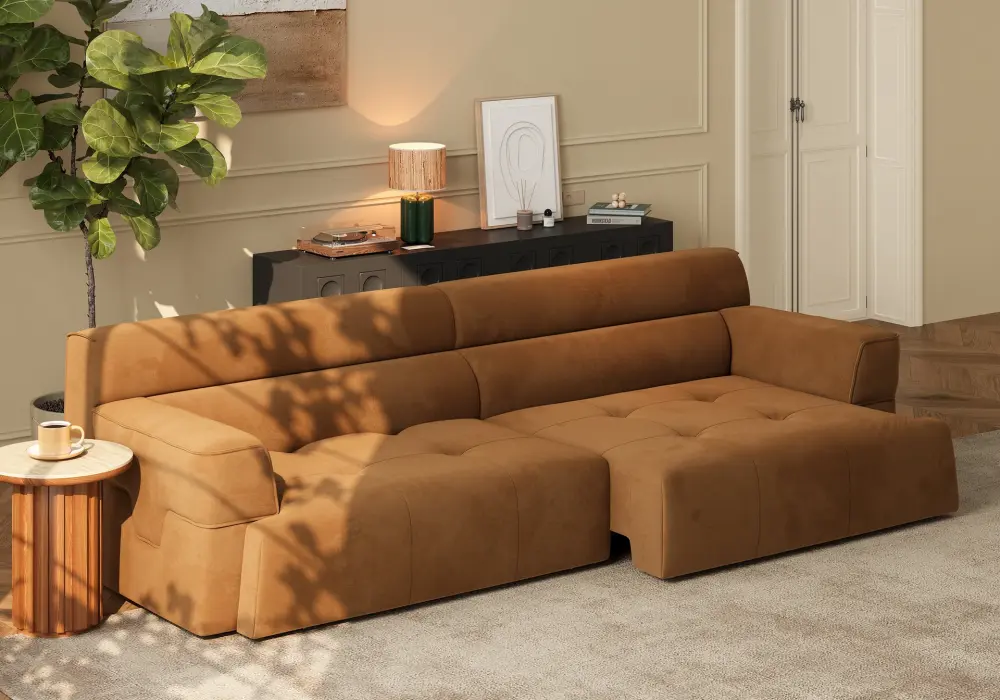
Image from Homary
Finding the Right Fit: What Size Sectional for a Small Living Room?
The most common answer you can receive when you ask about what size section to use for your small living room is: It depends. While this isn’t necessarily helpful, it also means that there is no universal answer.
As a general rule of thumb, the majority of small living rooms can accommodate sectionals between 1981 and 2388 mm wide and 864 and 1016 mm deep. Within these dimensions, you need to find the right balance to maximize the seating area while keeping your floor space comfortable.
Measuring the Living Room
Sure, it’s tempting to start browsing the sectional styles as soon as possible. But before you do that, you need to understand how your living room functions.
You need to measure the overall length and width of your space. If the room width or length of the room isn’t consistent, you also need to take into account the shape of the living room, as well as additional architectural details that will affect square footage or furniture placement.
- Windows
- Doorways and entry points
- Built-in shelving
- Fireplaces
- Vents and radiators
- Furniture that is already present in the room (and will remain in the room)
- Natural traffic paths and patterns into and through the room
Size Guidelines
Every home is different. However, you can use the following recommendations to narrow down your options. Bear in mind that you still want to consider the internal architectural elements and the walkways through the living room when you make your decisions, so use this chart as guidance whenever relevant rather than universal truth.
What’s the size of your living room? | Maximum recommended sectional width | Maximum recommended depth | Recommended sectional layout |
2438 mm by 3048 mm | 1981 mm - 2134 mm | 864 mm - 965 mm | Compact L-shape |
3048 mm by 3048 mm | 2134 mm - 2286 mm | 889 mm - 1016 mm | Reversible chair |
3048 mm by 3658 mm | 2235 mm - 2388 mm | 914 mm - 1016 mm | Apartment sectional |
3658 mm by 3658 mm | 2286 mm - 2540 mm | 914 mm - 1067 mm | Standard L-shape |
Open place spaces | 2286 mm - 2794 mm | 914 mm - 1067 mm | Modular sectional |
Considerations About Visual Width
Focusing entirely on how wide a sectional is could cause you to miss out on other aspects of the sectional that will affect the general look and feel.
A sectional with oversized cushions and bulky armrests will instantly take up more visual space than a sectional with slim arms, even if the width remains the same.
How About The Depth & Length of the Seats?
Don’t confuse the depth of the seating area itself with the depth of the total sectional. A seat that appears deep tends to create a cozier lounging experience. But while we mentally associate deep seats with comfort, the mind also perceives them as taking more space in the room. So, if you are working with a particularly compact living room, it’s best to opt for a shallower design.
Similarly, you can’t ignore the length of the chaise. If you have a long chaise, this could obstruct the flow of the room.
Testing the Layout
How can you test whether your sectional is the right size for your home? Because it is impossible to take a sectional for a test fitting at home, you will need to find other ways of visualizing it. Sometimes, the easiest methods are the most effective: Mark the dimensions on the floor with painter’s tape.
This is the easiest way to figure out whether there is sufficient room around to walk comfortably. You can also add a visual height reminder, such as piling up suitcases in a corner to match the height of the sectional. This will ensure you can check whether windows can still open comfortably and whether the rest of the furniture still fits around them.
How Much Clearance Space Do You Need?
Remember that you need to consider the full extent of clearance space. Expert designers recommend the following clearance measurements:
- 762 to 914 mm for primary walkways
- 356 to 457 mm between the sectional and coffee table
- 51 to 102 mm between the sectional and side tables
- 2134 to 2743 mm from a 1397 mm TV
Sectional Layout for a Small Living Room
The choice of layout also impacts your living room's look and functions.
L-Shaped Sectionals
L-shape is one of the most popular options for small living rooms because it makes the best use of corners. This design leaves more open floor space, especially in square-shaped rooms.
This is also a great way to reduce visual clutter without compromising on seating options.
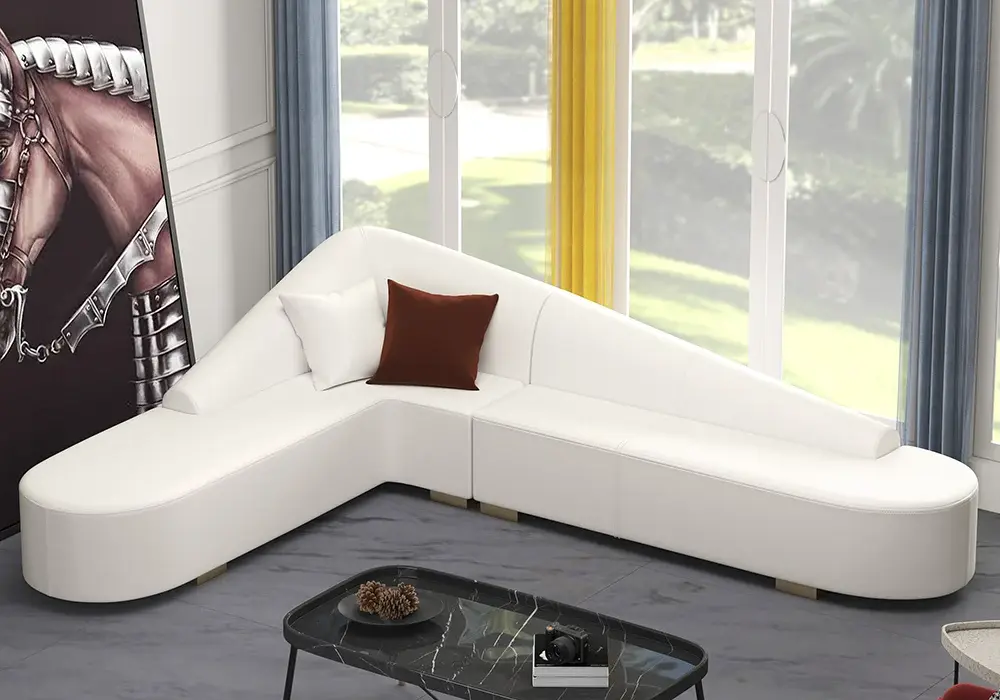
Image from Homary
Reversible Chaise Sectionals
A reversible chaise sectional brings flexible seating because you can add the chaise on either side of the sofa. This is useful for those who want to adjust their setup to meet changing needs, such as when you need to bring more furniture into the living room for a gathering, for example.
It’s also a good choice for renters who want a sectional that will suit future living rooms too.
Modular Sectionals
Modular sectionals have separate pieces that you can rearrange in multiple ways. They are well suited for both large and small spaces, as you can arrange them in the layout that best fits.
Just like reversible chaises, these are also a great investment if your setup is likely to change over time.
Apartment-Scale Sectionals
There are sectionals that are specifically designed for apartments. These tend to come with slimmer arms and shallow seat depth, so the visual imprint is also smaller.
These are best suited for small living rooms. They are also a popular choice for landlords for their pre-furbished properties.
Features Worth Looking For
Certain design features can make the space significantly lighter and more functional.
Slim Arms
In a small living room, they make the sectional look less bulky and the room less crowded. They can also save some space that oversized arms may take.
Raised Legs
Bringing the furniture above the floor makes it look less heavy in a small room. It adds a sense4 a space without necessarily changing the number of seats.
Light Colors
Colors may be a question of preferences, but when you are working in a small room, you want lighter shades that will reflect more light. Soft neutrals, such as ivory and pale gray, are great options to make the room feel more spacious while working with different decor styles.
Flexibility
There are many reasons why your layout may change, such as moving to a new home or changing furniture placement. So, if this may apply to you, it can be a good idea to look into sectionals that provide some level of flexibility, from reversible chaises to modular options.
Avoid These Common Sectional Mistakes
Choosing the largest sectional that fits
A sectional that stretches from wall to wall may maximize seating, but this can come at the cost of room balance. In a small living room, it can make the space feel packed and restrictive.
Trying to fit every empty corner
Remember what we said about room balance? Your living room needs empty living space so that each piece can exist in your decor.
Blocking natural traffic flow
How do people move through the living room? In reality, this depends on its position in your house layout. You may cross the living room to reach the neighboring rooms, so it’s important to ensure the sectional doesn’t block this natural walkway.
Pairing with the wrong coffee table
We’ve been talking about clearance between the sectional and surrounding features. But you also need to think about how everything fits in terms of scale and proportion. A small sectional next to an oversized coffee table is both uncomfortable and unpleasant.
Style Your Small Living Room Around Your Sectional
A few thoughtful additions will make your small living room feel polished and functional.
An area rug can define the living zone, especially in open-plan decors. Ideally, the front legs of the sectional should sit on the rug for a grounded look. It can make the room feel bigger by creating a visual connection between different areas of the space. This can also be part of making a statement in your decor.
You can be playful with layered lighting options that can bring new functions around the sectional, from a reading nook with a floor lamp to a table lamp for warmth. Beware not to overdo it, though!
It would be foolish to ignore your vertical space. You can use the walls for storage and decoration in a way that can be stylish without being overcrowded. Mirrors are a great addition for extra openness.
Expert Tips for Choosing the Right Sectional for a Small Living Room
Before making your final decision, you need to keep these practical tips in mind.
- Prioritize how you use the space
Your sectional needs to fit in your routine, not the other way round. So, if you host regularly, or if your living room is also your home office, your sectional should support these lifestyle elements.
- Measure EVERYTHING TWICE
Enough said.
- Think about the room as a whole
Don’t focus only on the sectional, as you will miss the bigger picture. You want to ensure it fits in your decor and in the balance of the space.
At Homary, we also have design services that can help you make sense of your space and find the best option for it. This is worth exploring if you are still unsure.
FAQs
Can you put a sectional in a 3048×3048 mm living room?
Yes, absolutely. As a rule of thumb, you should look into sectionals that are 2134-2286 mm wide for this type of space.
Is a modular sectional a good option for apartments?
Yes, it can be a good option. There is more to consider than the modular aspect. But for tenants who are frequently moving between apartments, a modular sectional ensures it can be reconfigured to suit different layouts.
Are dark-colored sectionals a bad idea for a small living room?
Not necessarily. The key is balance rather than colors. A dark-colored sectional in a light-colored living room can create an interesting statement piece that doesn’t disturb the balance of the room. Dark doesn’t necessarily shrink the room visually if it is paired with the right elements.